US fires Typhon missile in Philippines as China warns
The first Tomahawk live-fire from the US Typhon launcher in the Philippines turned a disputed deployment into a demonstrated capability and triggered a sharp Chinese warning.
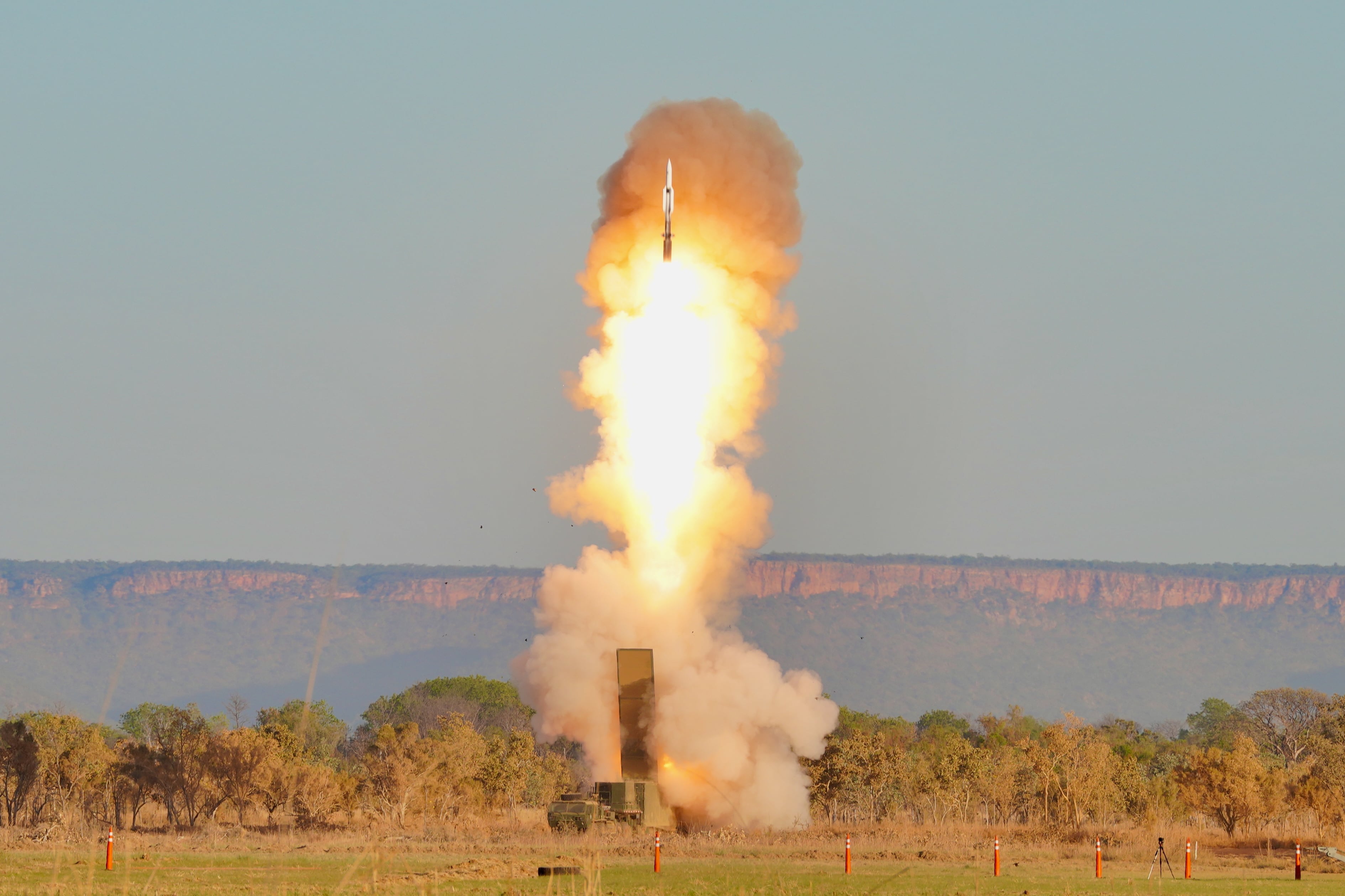
The United States and the Philippines test-fired a Tomahawk cruise missile from the Typhon mid-range system on Philippine soil for the first time this month. The live-fire, conducted during Balikatan 2026, drew immediate condemnation from Chinese military commentators, who labelled it the most serious U.S. provocation in the region in years.
Philippine and U.S. forces launched the missile on May 5 as part of the annual drill, according to Defense News. It was the first known Typhon shot from Philippine territory.
The launch gave concrete weight to a deployment that had unsettled Beijing since the battery arrived last year. Naval News reported that the Typhon system was first deployed to the Philippines in April 2024. Before the live-fire, the argument centered on a launcher parked on allied soil. Now the battery has fired a land-attack missile in a major regional exercise. Washington and Manila are treating the distinction as a readiness signal.
Beijing reads it differently: a U.S. missile presence creeping closer to Chinese territory.
Col. Dennis Hernandez, a Balikatan spokesperson for the Philippine military, said the shot struck its target. “The missile was very precise,” Hernandez said, according to Defense News’s account of the test. The Tomahawk flew about 600 kilometers to Nueva Ecija on Luzon during an exercise that involved roughly 17,000 troops. Stars and Stripes, citing the same launch, said the strike covered about 400 miles, a range that explains why the Typhon battery has drawn attention well beyond the training area.
The Typhon system gives the U.S. Army a land-based launcher for longer-range missiles including the Tomahawk. The hardware is among the more sensitive pieces of equipment fielded in joint U.S.-Philippine drills.
The South China Morning Post quoted Chinese military commentator Wei Dongxu calling the launch the “most serious military provocation” by the United States in the region in years. The phrasing went further than Beijing’s earlier objections, which had focused on the system’s presence rather than its use.
Philippine officials have described the deployment in narrower terms. Jose Manuel Romualdez, the Philippine ambassador to Washington, told the Daily Express US that the system was “purely for deterrence”. He framed it as a defensive move by an ally showing it can host more advanced U.S. capabilities. Manila is likely to stick with that line as it tries to justify closer military cooperation with Washington without casting the launcher as a trigger for conflict.
Why China objects
For Beijing, the problem is not simply that a U.S. launcher sits in the Philippines. The live-fire changes the facts. A deployed missile battery can be dismissed as temporary or experimental. A battery that has fired accurately during Balikatan cannot. The test showed the system was integrated into an allied drill and used at range, which is what Chinese commentators appear to find most destabilizing.
The May 5 shot also raised the political stakes. Since its arrival in April 2024, Chinese criticism centered on the system’s presence. Now Beijing can cite a specific event rather than a hypothetical risk. Manila and Washington can point to the same event as proof the battery works. Each time allied drills expand, the Typhon system is likely to sit at the center of arguments over the U.S. regional posture.
The two sides now describe the same event in irreconcilable terms. Hernandez pointed to precision and execution. Romualdez emphasized deterrence. Wei called it a grave provocation. After a single Tomahawk shot from Philippine soil, the Typhon battery is no longer just exercise hardware. It has become a live measure of how far Washington and Manila will push joint missile deployments over Beijing’s objections.

Theo Larkin
Defense correspondent covering US military operations, weapons procurement and the Pentagon. Reports from Washington.