Drone strike near UAE nuclear plant widens Gulf risk
A fire outside Barakah and Saudi drone interceptions pushed the Iran conflict into nuclear-adjacent civilian infrastructure, sharpening Gulf security fears.
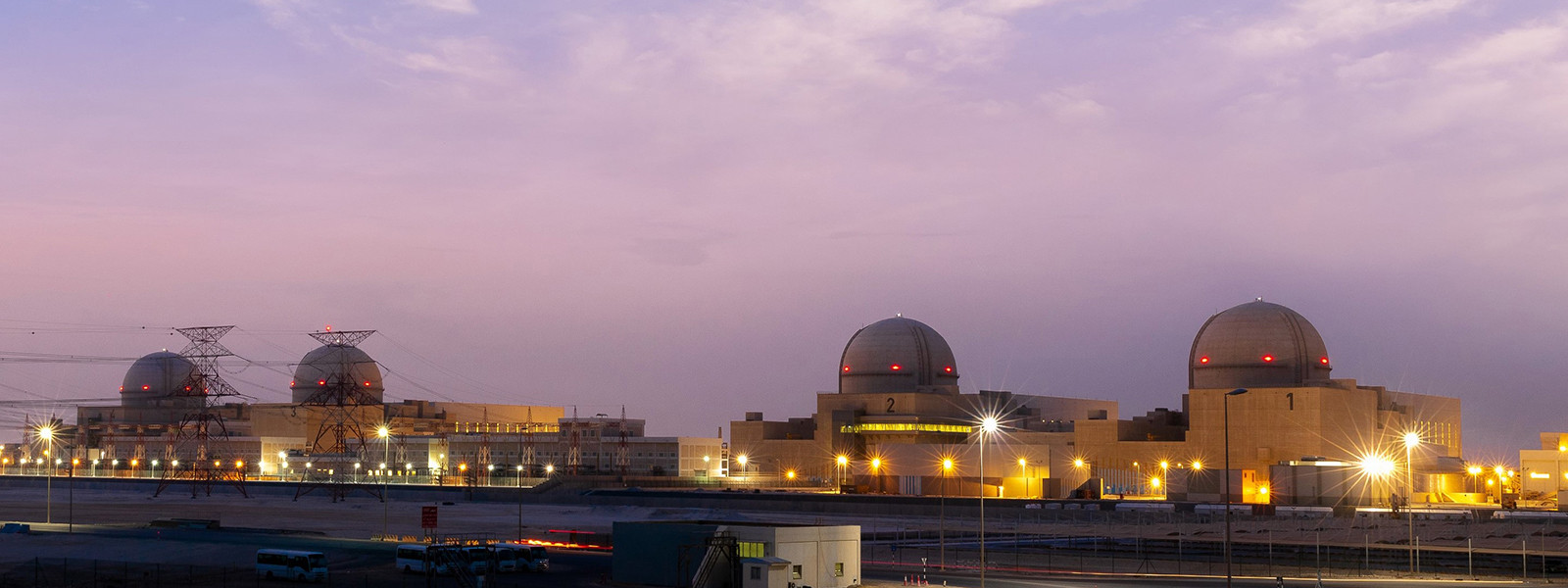
A drone hit an electrical generator on the perimeter of the Barakah nuclear power plant in the United Arab Emirates on Sunday, starting a fire and widening the regional risk from the Iran conflict into civilian infrastructure. Emirati authorities reported no injuries and no radiation release. Two other drones were intercepted before they could reach the site, Abu Dhabi said. Hours later, Saudi Arabia said it shot down three more drones launched from Iraqi airspace.
The strike is significant because Barakah is neither a shipping lane nor a military base. It is one of the most expensive civilian projects in the Gulf, and targeting it — even if the drone only reached the perimeter — signals that the conflict can reach assets governments had treated as out of bounds. Official accounts from Reuters and AP described a threat that has moved beyond tankers and missile corridors to power systems and installations whose disruption would reverberate far from a single blast.
Three drones approached from the UAE’s western border, Reuters reported. Two were intercepted. The third struck the plant perimeter and set fire to a generator. The blaze was brought under control, authorities said, and plant operations were not affected. No one claimed responsibility, and Abu Dhabi offered no public evidence linking the strike to a specific group. But Emirati officials said they were looking at Iran or one of its proxies.
Saudi Arabia’s separate statement made it harder to read the UAE incident as an isolated breach. Saudi forces shot down three drones coming from Iraqi airspace, Reuters reported, without identifying the intended targets. Together the two episodes suggested Gulf capitals face a wider threat than the one defined by shipping attacks or the direct exchanges between Iran and Israel. Border approaches, civilian energy sites and states that are not themselves combatants may now sit inside the same security perimeter.
Why Barakah matters
That is why Abu Dhabi reacted with the force it did. The Barakah project, built at an estimated $20 billion, has four reactors that went online in 2020 and supply roughly one quarter of the UAE’s electricity, according to PBS News/AP. A drone reaching its fence line tests whether one of the Gulf’s most prominent civilian installations can be kept clear of the war, and whether governments that depend on layered air defenses can still offer their publics reassurance after a near miss.
Anwar Gargash, a senior diplomatic adviser to the UAE president, called the strike “a dangerous escalation” whether Iran carried it out or used an intermediary. He stopped short of producing evidence. But the language left no doubt that Emirati officials see the episode as part of the wider fight that has already buffeted Gulf shipping and diplomacy. For governments trying to balance working relations with Tehran against reliance on American security pledges, holding that line has become harder.
The strike came as Washington kept up its own pressure. US President Donald Trump warned, in comments cited by PBS, that “the Clock is Ticking” for Iran and that “TIME IS OF THE ESSENCE!” The tone was uncompromising, and it narrowed whatever diplomatic room existed. If Gulf infrastructure is now being tested while American rhetoric hardens, neighboring states may have to prepare for a longer period of disruption — even if the main combatants do not formally widen the war.
An attack that reaches a nuclear site also forces a public test of deterrence and contingency planning — whether the defenses held or not.
For now the official facts stay narrower than the alarm they set off: a fire was extinguished, plant operations were reported unaffected, and both the UAE and Saudi Arabia said drones had been intercepted. No one was hurt and no radiation leaked. Those are material facts, but they may not erase the political damage if Gulf governments conclude that installations once considered out of bounds are now reachable. Sunday’s strike moved the conflict from tankers and military targets to the edge of a nuclear-adjacent power asset in one of the Gulf’s most heavily defended states. Whether it was a one-off warning or the first of a new pattern depends on what the Iran crisis produces next.

Yara Halabi
Foreign affairs correspondent covering the Middle East, the Gulf and US foreign policy. Reports from London.