Iran Guards UAE satellite route exposes sanctions gaps
Iran Guards UAE satellite route points to a wider sanctions problem as Gulf transit hubs and Chinese suppliers stay critical to the IRGC drone chain.
Records reviewed by the Financial Times show that Iran’s IRGC used a UAE-based company to obtain Chinese satellite equipment linked to Iran’s drone programme. To analysts tracking how Tehran sustains combat power, the more important point is not the invoice itself but the route. Taken together, the records suggest the IRGC’s battlefield reach still depends on commercial cover, Gulf logistics and foreign technology flows, even after months of war, sanctions and strikes on Iranian infrastructure.
Gulf security officials have reason to care because the story sits at the intersection of two security problems topofhournews readers already know, though not usually in the same frame. First is Iran’s use of drones and missiles across the Gulf. Second is the quieter question of how those systems are supplied, upgraded and retargeted. If the FT’s paper trail holds, the UAE was not just part of the neighbourhood being threatened. More broadly, it sat inside a procurement channel that could help the IRGC buy equipment with value for targeting, navigation or imagery.
Skepticism is still necessary. FT-described documents show a procurement network and a Chinese equipment sale. By themselves, they do not prove that one shipment directly produced a specific strike outcome. Such caution is built into this story. A narrower claim is still significant: a commercial route through the UAE appears to have helped the IRGC shop for higher-end satellite gear while the wider war exposed the limits of Gulf air defence and sanctions enforcement.
Set against the broader supply picture, that narrower claim lines up with a Washington Institute analysis of Iran’s drone strategy. Researchers there argued that more than 60 per cent of the electronics in Shahed-family systems were sourced from China. The analysis also estimated that Iran could restore mass long-range drone production within six to twelve months. Together, those two points help answer the policy question behind the FT revelation. Even with degraded launchers and factories, a distributed supplier network can keep the kill chain alive.
Washington’s latest sanctions package announced this month targeted individuals and companies it accused of aiding Iran’s weapons sector. Taken alone, the FT finding suggests the pressure point is not only the factory floor in Iran. More important are the intermediaries, resellers and logistics nodes that let dual-use equipment travel from Chinese suppliers to IRGC-linked programmes under commercial cover.
A Gulf node under fire
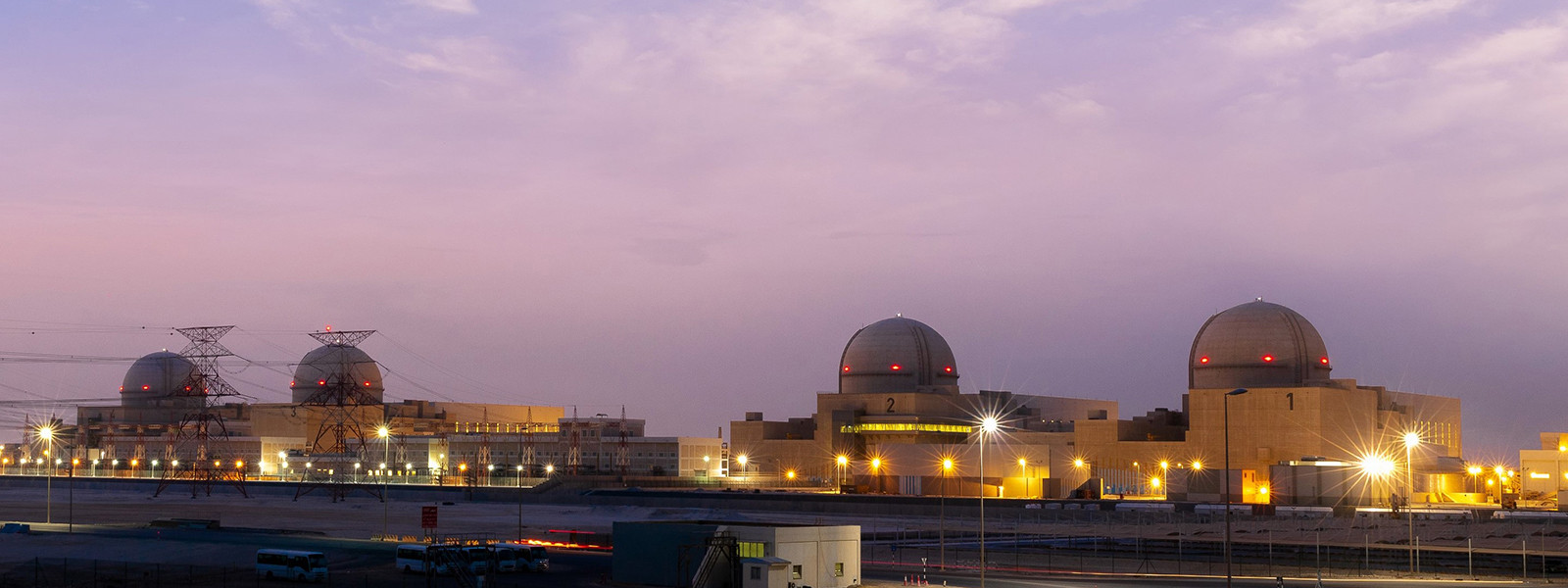
The UAE looks unusually exposed in this picture because it appears twice. On one side, it shows up as a business hub useful to procurement brokers. Elsewhere in the same conflict, it appears as a state already on the receiving end of Iranian coercion. In a Reuters report on the UAE’s interception of two drones from Iran, Abu Dhabi said its air defences had engaged aircraft launched from Iranian territory. In a separate FT report on a strike that caused a fire at a UAE nuclear plant, the newspaper said Iran had launched almost 3,000 drones and missiles against the UAE since the war began.

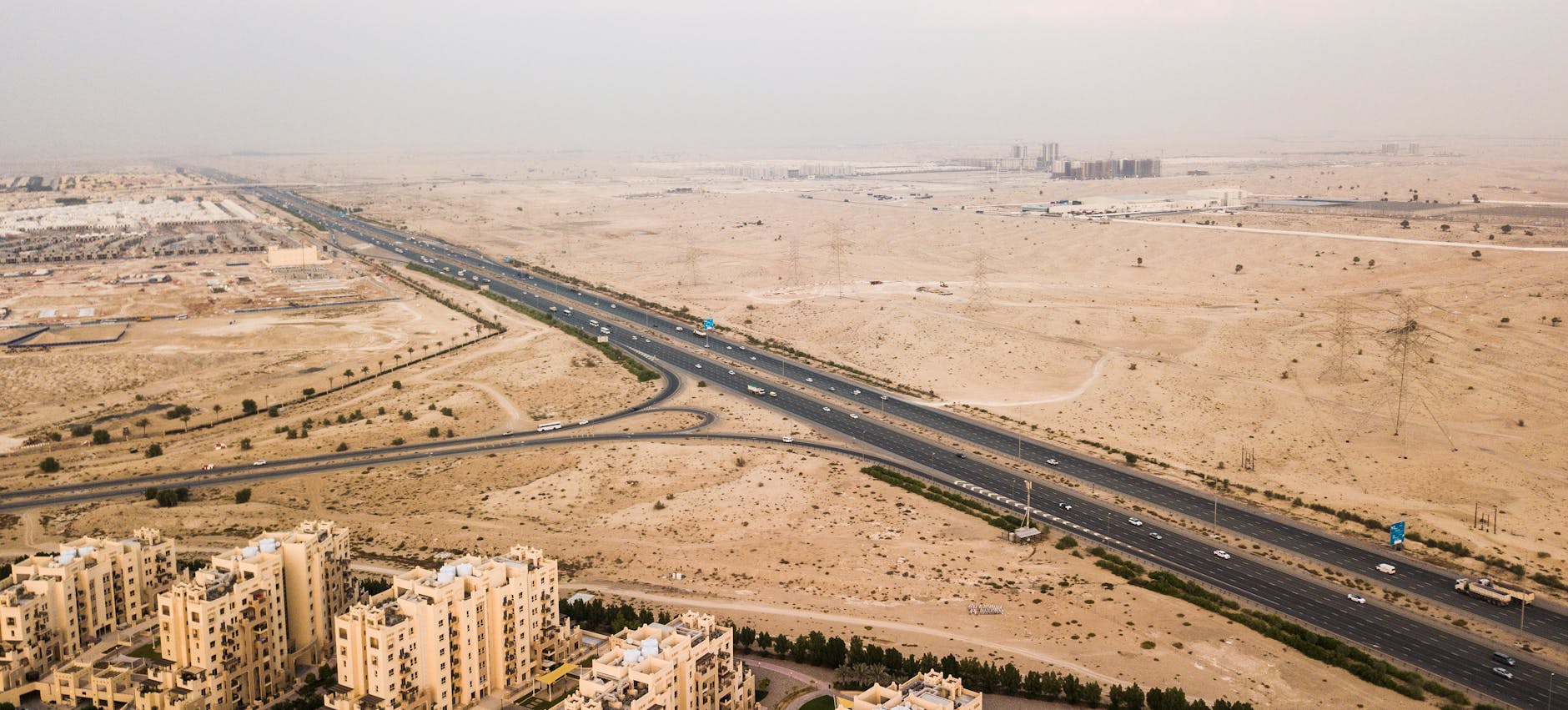
That dual exposure is the point. Instead of acting as a rear-area economy beside the conflict, the UAE doubles as a transit system, an insurance market, a port complex and an aviation network that can be exploited by the same war it is trying to contain. Analysts have been asking whether the UAE now functions as both a transit risk and a strike target. Current reporting points to yes. Geography that makes the country central to Gulf commerce also makes it useful for front companies and difficult to seal without disrupting legitimate trade.
China’s role is another implication. Earlier debate focused on generic dual-use components and drone electronics. Here, the case points to something more sensitive. If the equipment in question improves access to imagery, satellite communications or navigation, the issue is not simply whether Iran can build another airframe. What matters is whether the IRGC can sharpen targeting, improve strike planning and shorten the time between reconnaissance and attack. For Gulf states, that is a more serious intelligence problem than a simple parts-smuggling story.
A fair question remains: what is directly proved, and what is inferred? The FT investigation appears to establish the procurement channel and the nature of the equipment. Any leap from procurement to battlefield effect comes from the surrounding pattern, not from a single released operational record. It includes the Washington Institute assessment that Chinese-sourced inputs remain embedded across Iran’s drone ecosystem and Decode39’s analysis of overland corridors and dispersed supply chains. Read that way, the case is strongest as part of a network rather than as a standalone smoking gun.
Why sanctions keep missing the route
Sanctions officials face a straightforward problem. Putting names on entities after a deal is exposed is not the same as breaking the route that made the deal possible. If the IRGC can use commercial structures in the UAE to obtain Chinese equipment, then the supply chain is operating in the middle space between wartime interdiction and peacetime trade compliance. Enforcement tends to lag there.

Beijing responded publicly in Reuters reporting on China’s response to US sanctions. Chinese foreign ministry spokesperson Guo Jiakun said:
“We have always required Chinese enterprises to conduct business in accordance with laws and regulations, and will firmly safeguard the legitimate rights and interests of Chinese enterprises.”
— Guo Jiakun, Chinese foreign ministry spokesperson
Still, none of that proves wrongdoing by any specific Chinese company. Rather, the response shows the diplomatic problem facing Washington and Gulf partners. The more the procurement trail runs through nominally civilian transactions and third-country hubs, the easier it becomes for Beijing to frame US action as unilateral pressure on ordinary commerce rather than as a targeted response to military supply.
Washington’s case is also complicated by timing. After Donald Trump’s meeting with Xi Jinping, an FT report said the White House would press China to curb support for Iran. A procurement trail that appears to run from Chinese suppliers through a UAE company to an IRGC-linked programme suggests that diplomatic pressure is still trailing the commercial mechanics of the war.
Guo’s second public line was equally direct. There, in the same Reuters account, he said:
“The pressing priority is to prevent by all means a relapse in fighting, rather than using the war to maliciously associate and smear other countries.”
— Guo Jiakun, Chinese foreign ministry spokesperson
That answer underlines the policy gap. A regulator reading the file would ask which entities secondary sanctions would need to hit to matter. Published reporting points not only to end users in Iran but to brokers in the middle, the resellers around them and the trade corridors they depend on. Without that, enforcement may keep naming networks faster than it can close them.
This story cuts through because it is concrete. The focus is documents, routes and equipment, not rhetoric. Rather than recycle the familiar cycle of threat, retaliation and ceasefire speculation, it returns to a colder security fact: modern regional warfare is sustained by procurement architecture. Missiles and drones are the visible edge. Less visible are company formation, shipping, finance and satellite supply that make repeated strikes possible.
For Gulf states, that means the battlefield is not confined to launch sites, tankers or air defence batteries. The same contest also runs through trading firms, customs checks and the grey zone between legitimate electronics trade and military end use. For Washington, it means sanctions designed to punish a network after exposure may not be enough if the network can rebuild through fresh intermediaries within months. And for Iran’s adversaries, it means the IRGC’s resilience may depend less on one factory surviving a strike than on whether the region’s commercial plumbing stays open.

Yara Halabi
Foreign affairs correspondent covering the Middle East, the Gulf and US foreign policy. Reports from London.