Zelensky invites Putin to Ukraine ceasefire talks
Zelensky invites Putin to direct talks as Ukraine offers a full ceasefire, putting public pressure on Moscow to answer.
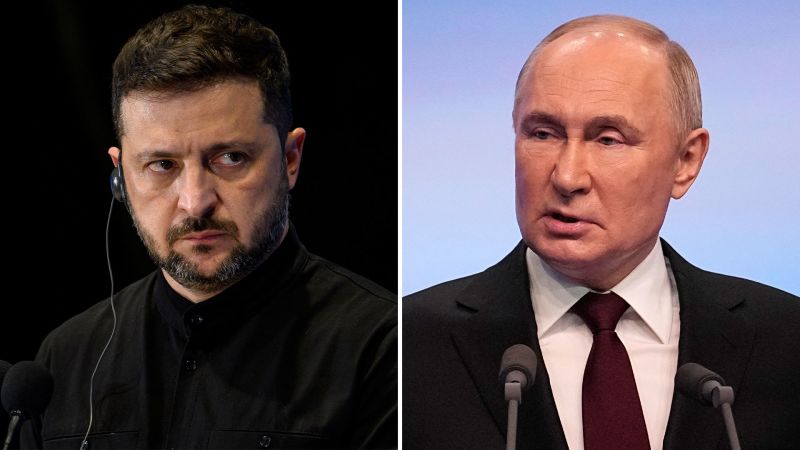
Volodymyr Zelensky challenged Vladimir Putin to meet in a neutral country and accept a full ceasefire while negotiations are under way, putting the next diplomatic move in Moscow’s hands after months of battlefield attrition.
In an open letter to Putin, the Ukrainian president said Kyiv would stop fighting for the duration of talks if Russia did the same. No summit has been arranged, and neither government has narrowed the gap over territory, security guarantees or the terms for halting fire. The public letter nevertheless moved the focus from private envoys to a direct challenge between the two leaders.
“Ukraine proposes ending this war through direct engagement between us — and you. I am proposing a meeting.”
Volodymyr Zelensky, president of Ukraine
Kyiv’s proposed pause was broad but conditional. Zelensky said Ukraine was ready for “a full ceasefire for the duration of the negotiations” and proposed a meeting in a neutral third country, not in either capital. He framed the offer as a test of whether Russia was prepared to end the war it began with the full-scale invasion of Ukraine in 2022, while also signaling to Western governments that Kyiv was not rejecting diplomacy.
Moscow’s first public answer pointed the other way. Kremlin spokesperson Dmitry Peskov said Putin would meet Zelensky only in Russia, telling CNN: “If Zelensky wants to meet Putin, he can come to Moscow.” The reply showed how far the two sides remain from agreeing on a venue or the terms of a ceasefire.
By naming Putin directly, Zelensky sharpened the political message. He accused the Russian leader of prolonging the war and cast the proposed talks as a question of personal responsibility after 26 years in power. A New York Times report said the letter blended a peace overture with taunts aimed at Putin, a combination that appeared designed to deny Moscow an easy claim that Kyiv was refusing dialogue.
The ceasefire test
The letter speaks to several audiences. European governments hear a leader offering talks. Washington sees a government trying to preserve support for aid. Russian citizens see the proposal without waiting for the Kremlin’s version of it. For Zelensky, the public form is part of the pressure.
A negotiation still appears remote. Russia holds occupied Ukrainian territory and has demanded conditions that Kyiv says would reward aggression. Ukraine has insisted that any ceasefire must not freeze the front lines on Moscow’s terms or let Russian forces regroup for another offensive. Those positions leave a wide gap between an offer to meet and a settlement that either government could defend at home.
Renewed Russian strikes gave the proposal an added edge. Kyiv has tried to pair military resistance with proof of diplomatic flexibility, especially as war fatigue deepens among some supporters and debates over aid continue in Western capitals. The letter lets Ukraine argue that it is seeking a ceasefire without conceding the political terms Russia has demanded.
Moscow now has the next visible decision. If the Kremlin rejects a neutral venue or refuses a ceasefire, Zelensky will have strengthened his argument that Russia is blocking talks. If Putin counters with conditions of his own, the exchange could still become the most direct leader-to-leader diplomatic track since the early months of the war.

Anya Voronova
Eastern Europe correspondent covering the war in Ukraine, Russia and the Caucasus. Reports from Warsaw.