CENTCOM chief rejects civilian-death reports in Iran campaign
Adm. Brad Cooper told senators the U.S. military could not corroborate reports of civilian deaths in Iran, intensifying scrutiny of the Pentagon's public case.
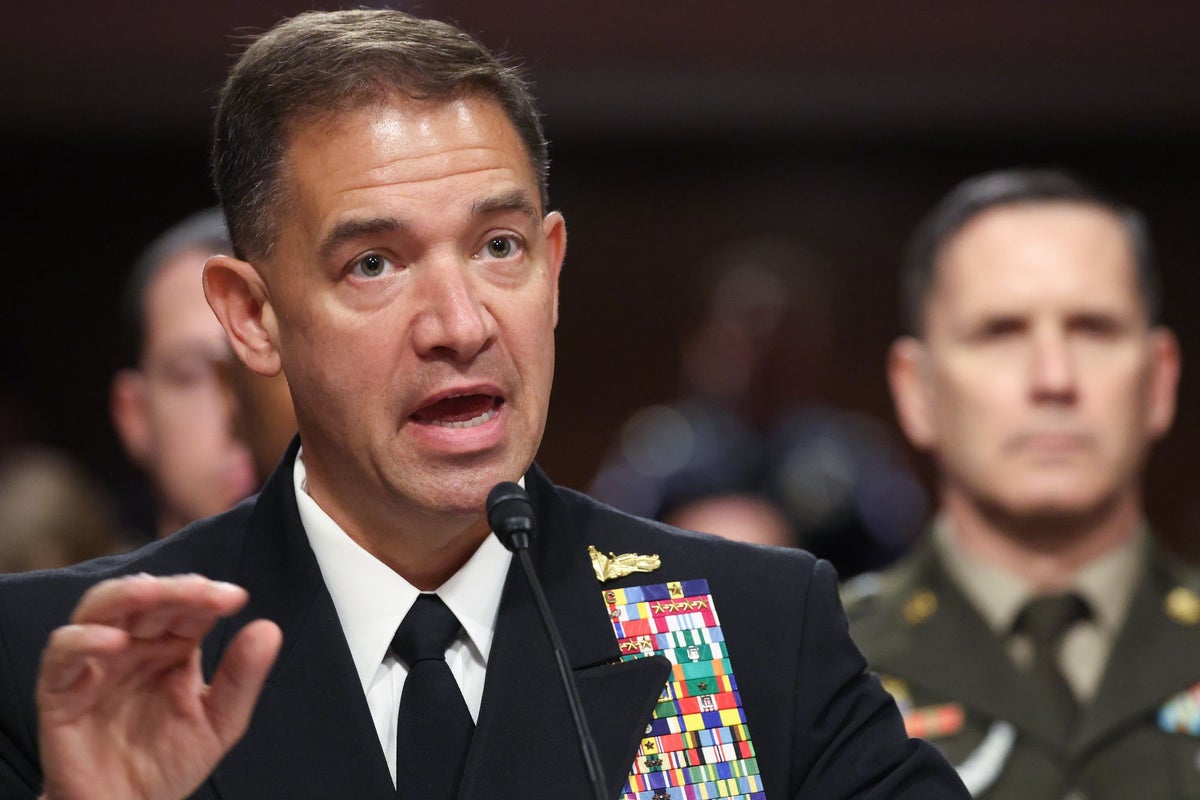
Adm. Brad Cooper, the head of U.S. Central Command, told senators on Thursday that reports of civilian deaths in Iran could not be verified, drawing a sharp line between the Pentagon’s account of the war and what outside monitors say they have documented. Cooper said the military had seen “no indication” that civilians had been killed, according to The Independent’s account of the hearing.
The exchange did not end the debate over civilian harm. It moved it onto new ground — from what American strikes achieved to how the military measures the cost.
Questioned by Sen. Kirsten Gillibrand at a Senate Armed Services Committee hearing, Cooper said: “There is no way we can corroborate that. No indication of that whatsoever, senator.” That statement put the Pentagon in direct conflict with reporting that schools and health facilities have been damaged during the war. It also closed off the kind of hedged language commanders sometimes use when acknowledging that civilian-casualty reviews are still open.
The New York Times reported it had verified damage to 22 schools and 17 health care facilities in Iran. Airwars, the London-based group that tracks civilian harm in conflicts, said it had recorded 300 civilian casualty events in the country. Those figures do not establish a final death toll on their own. They do make clear why a blanket denial from the top American commander in the region will draw sustained scrutiny from lawmakers, watchdogs and allies.
The two sides are counting differently. The military uses a narrow standard before it confirms civilian harm — it typically requires multiple corroborating sources within its own intelligence chain. Outside monitors build cases from local reports, images, hospital accounts and witness testimony, a method that captures a wider field of incidents but carries less certainty about any single one. Cooper left himself almost no room to walk the claim back. If the Pentagon eventually verifies even a small number of deaths, senators will almost certainly ask why the military spoke in absolutes first.
Scrutiny in Congress
Reuters reported in March that the Defense Department had elevated its investigation into an Iran school strike — a sign that at least one episode had already drawn enough concern inside the chain of command to warrant a deeper review. That history makes Cooper’s testimony more consequential than a routine budget-hearing exchange. The administration is defending its record while some incidents are still being sorted out.
Cooper also defended the scale of the campaign, saying U.S. forces had carried out 13,600 strikes. At the same hearing, he said the military’s civilian-harm staff had shrunk by a ratio of 10 to 1. For Congress, those two numbers sit uneasily together. A campaign that large generates a wide trail of allegations, battle-damage assessments and follow-up reviews. A smaller civilian-harm team can make the Pentagon sound certain in public while leaving important claims unresolved in private files.
Airwars has argued the problem is the scope of the inquiry, not just the answer it produces. Emily Tripp, the group’s executive director, told The New York Times: “The idea that they only are looking into one is pretty ridiculous.” Her criticism cuts to the center of the oversight fight now taking shape. If commanders examine only a narrow set of cases, the military can say it has found little evidence of civilian harm even while independent trackers, journalists and local institutions point to a broader pattern of damage.
The stakes go beyond one senator’s exchange with a commander. President Donald Trump’s administration has to keep making a public case for a war that already carries questions about cost, duration and regional escalation. Civilian-harm findings affect how allies judge American targeting discipline and how Congress weighs support for the next phase of operations.
What comes next is likely a fight over records. Lawmakers will want to know which strikes were reviewed, what intelligence underpinned target approval, what post-strike evidence was collected and why the Pentagon believes it can dismiss casualty reports so flatly. Cooper gave the administration a clear public line. He also fixed a standard that future disclosures will now test.

Theo Larkin
Defense correspondent covering US military operations, weapons procurement and the Pentagon. Reports from Washington.