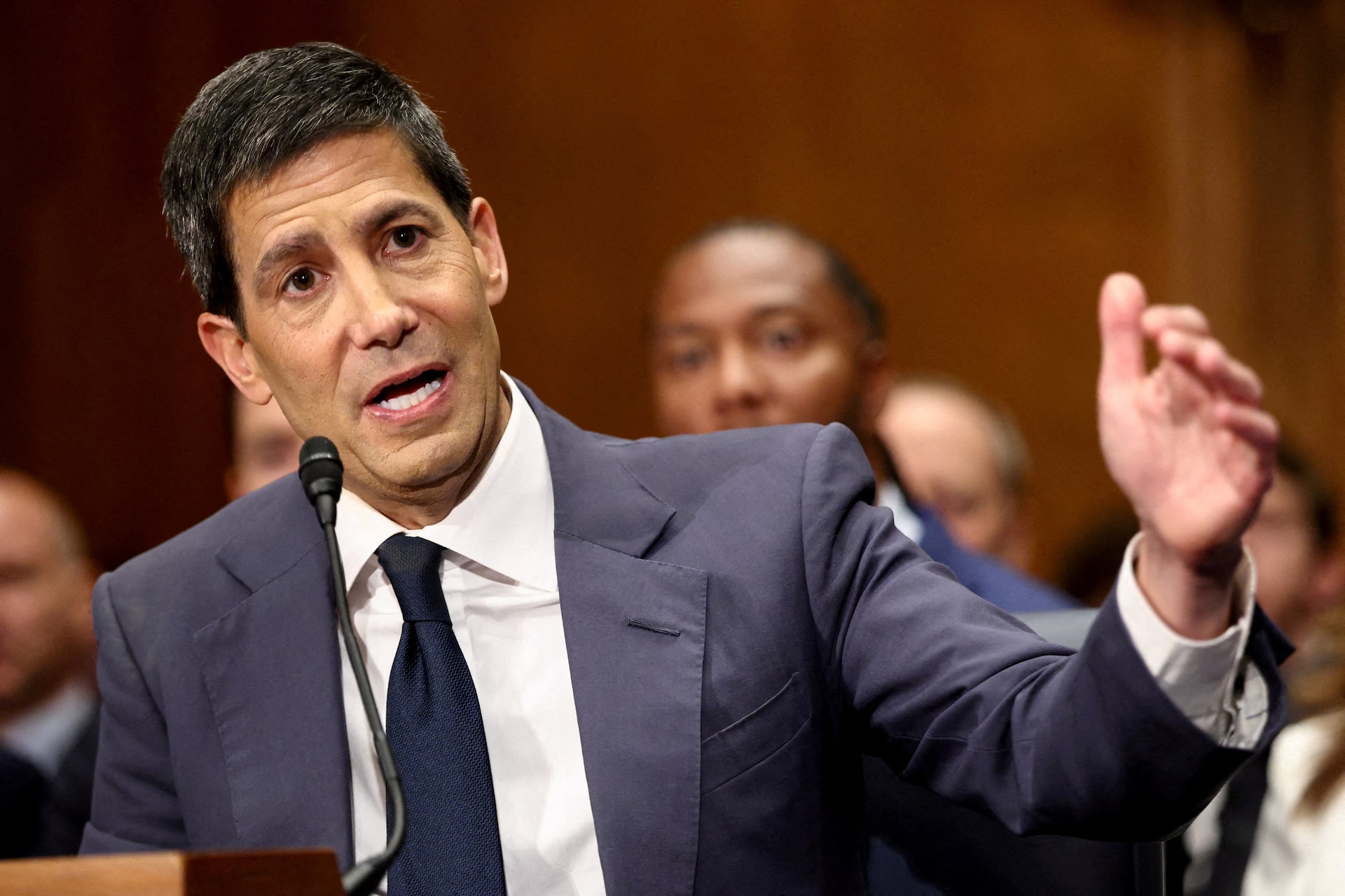
Warsh's Fed shrinkage plan hits Treasury debt wall
Warsh wants a smaller Fed footprint, but heavy Treasury issuance, a 5.8 per cent deficit and still-crucial reserve balances complicate that retreat.
Kevin Warsh’s vision of a leaner Federal Reserve is running into a constraint before it is fully tested: Washington’s debt load is so large that stepping back from Treasury markets too quickly could drain reserves, lift yields and leave the central bank pulled back in when stress returns.
A Reuters report on Friday framed the conflict plainly. Warsh has argued that the Fed should retreat from a role that looks too close to debt management, yet the Congressional Budget Office’s fiscal 2026 deficit estimate of 5.8 per cent of output points to years of heavy issuance. For bond investors, the question is whether Treasury supply, reserve demand and market stability will let the central bank have a smaller footprint — not whether it wants one.
The tension runs deeper than one personnel change. A deficit at 5.8 per cent of output means the Treasury must keep financing Washington at a scale that works best when balance sheets across the system are deep and predictable. If the Fed keeps stepping away, more of that supply lands with banks, money funds, foreign reserve managers and asset managers that will demand compensation for taking it.
Former Richmond Fed president Andrew Lacker told Reuters that a Fed retreat from activities that “amount to debt management” would clarify expectations and make the Treasury market more resilient. A smaller portfolio should reduce the impression that monetary policy is being used to absorb government borrowing and force private investors to price Treasury risk more directly.
The problem is that the current balance sheet is still doing heavy plumbing work. The weekly H.4.1 release showed the Fed holding $4.443 trillion of U.S. Treasury securities outright on May 13, while reserve balances at Federal Reserve Banks stood at $3.103 trillion. Reuters put total Fed assets at about $6.7 trillion, down from roughly $9 trillion in 2022. That is a large retreat already, and it has not produced a market structure that looks ready to absorb steadily rising Treasury supply without official ballast.
Those figures matter because balance-sheet shrinkage removes more than bonds from the Fed’s books. It drains reserves from the banking system. Officials can tolerate lower reserves than they held during the pandemic build-up, but they still need enough cash in the system to stop short-term funding markets from jumping when Treasury settlements surge or dealers need to finance inventory.
Where the constraint sits
Under the Fed’s ample-reserves system, officials do not need reserves to be scarce for policy to work. They need them abundant enough that money-market rates stay orderly. Bill Nelson, chief economist at the Bank Policy Institute and a former Fed staffer, told Reuters the supply of reserves may not be high enough to keep shrinking comfortably if Treasury financing needs keep expanding. A smaller Fed portfolio is durable only if the reserve floor sits lower than markets currently appear to need.
Stanford finance professor Hanno Lustig sketched the other side of that trade-off in the Reuters piece. If the government keeps issuing debt faster than private balance sheets want to absorb it, somebody must carry more duration risk. When the Fed refuses that role, investors may demand a higher term premium instead — one route to a healthier price signal, but also a route to tighter financial conditions, higher borrowing costs and a Treasury market that can look fragile precisely because it is being asked to stand on its own.
Friday’s market action offered a live illustration. CNBC reported that the U.S. 10-year Treasury yield climbed to 4.544 per cent as bonds, stocks and silver sold off together. Lauren Hyslop of Eaglebrook Advisors said rising bond yields were “once again imposing their will on markets, tightening financial conditions and sapping risk appetite across asset classes.” That move was not caused solely by Warsh’s balance-sheet views, but it showed how little room policymakers have to treat higher long-end yields as an abstract adjustment. In real time, they hit risk assets, financing conditions and confidence.
What investors will watch
Market specialists have treated the balance-sheet question as a sequencing problem, not just a destination. TwentyFour Asset Management argued that decoding Warsh’s plans is difficult partly because the Fed can shrink holdings in several ways while Treasury issuance and money-market demand keep changing underneath it. J.P. Morgan Asset Management has described the investment consequences of quantitative tightening as a function of reserve scarcity, funding conditions and the capacity of private investors to take down duration.
For investors, the practical test is not whether Warsh can announce a smaller Fed footprint — he almost certainly can. The test is whether the central bank can keep reducing holdings without pushing reserves toward an uncomfortable floor or allowing Treasury yields to rise fast enough that financial conditions do some of the tightening for it. In a world of persistent federal deficits, those outcomes are linked: more issuance can mean more duration for the market to digest, and more duration can mean a larger premium demanded by buyers who no longer assume the Fed is nearby as a stabilising holder.
The tension is more about market capacity than ideology. Warsh’s allies can argue that a central bank should not be the government’s quiet debt manager. Traders can argue that the modern Treasury market has been built around a large reserve base and a Fed portfolio big enough to steady the system in stress. Both can be true at the same time, which is why the balance-sheet debate is shaping up as one of the first hard tests of his tenure.
Warsh’s message carries that collision. Politically and institutionally, distancing the Fed from anything that resembles debt management is appealing. Operationally, the Treasury market has become so large that a full retreat is harder to stage cleanly. The bigger Washington’s borrowing need grows, the less the Fed’s balance sheet looks like a temporary legacy of crisis programmes and the more it looks like the system’s shock absorber — even when officials would prefer otherwise.
The next clues will come from the path of reserve balances, the pace of Treasury issuance and the behaviour of long-dated yields, not from rhetoric alone. If reserves hold steady and private demand absorbs supply at manageable yields, Warsh will have more room to press his case. If funding conditions or the term premium lurch higher, the debt reality Reuters highlighted may prove stronger than the theory of a smaller Fed.

Marcus Holloway
Markets editor covering UK gilts, sterling and the Bank of England. Previously a fixed-income strategist in the City.