Trump revives Project Freedom convoy as Saudi Arabia and Kuwait restore US airspace access
Defense Secretary Pete Hegseth said American destroyers are on station after Riyadh and Kuwait City reversed earlier restrictions blocking US sorties.
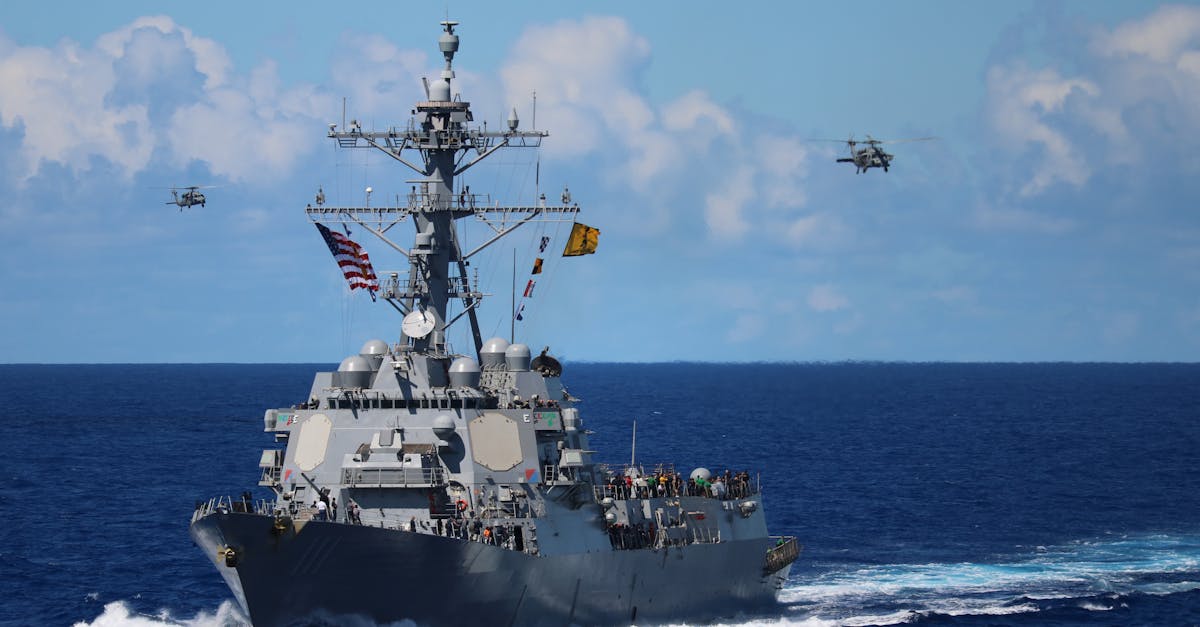
President Donald Trump on Thursday revived Project Freedom, the US Navy convoy operation he scrapped 48 hours earlier, after Saudi Arabia and Kuwait reversed course and restored American access to their airbases and airspace over the Persian Gulf.
The restart, announced Thursday afternoon, returns Washington to the same plan Defense Secretary Pete Hegseth had pushed since Sunday. The original Project Freedom rollout collapsed Tuesday when both Gulf states blocked US sorties, citing fears of Iranian retaliation against their oil and population centres. After phone calls Thursday from Secretary of State Marco Rubio and Crown Prince Mohammed bin Salman of Saudi Arabia, the airspace restrictions were lifted.
"American destroyers are on station, supported by hundreds of fighter jets, helicopters, drones and surveillance aircraft, providing 24/7 overwatch for peaceful commercial vessels," Hegseth said in a statement Thursday.
The Strait of Hormuz carries roughly a fifth of the world's seaborne crude. It has been mostly closed to commercial traffic since Iran began seeding mines and harassing tankers three weeks ago. Shell chief executive Wael Sawan told CNBC on Thursday that the global market was now short close to 1 billion barrels and that the deficit "deepens every day" the chokepoint stays shut.
Trump's threat to escalate if Iran refuses a US-backed peace framework remained on the table. "If they don't agree, the bombing starts, and it will be, sadly, at a much higher level and intensity than it was before," the president posted on social media earlier in the week.
Iran has not formally responded to the Project Freedom restart. Foreign Minister Abbas Araghchi spent Thursday lobbying United Nations Security Council members against a US-Bahraini draft resolution demanding Iran halt mining and tanker attacks, calling the text "one-sided and provocative" in a letter to Secretary-General Antonio Guterres. Beijing and Moscow have signalled they will veto if the resolution reaches a vote.
Pakistan, mediating between the two capitals, said Thursday the parties were close to a temporary truce. Foreign Ministry spokesman Tahir Andrabi told reporters in Islamabad: "We expect an agreement sooner rather than later." He added: "We hope the parties will reach a peaceful and sustainable solution that will contribute not only to peace in our region but to international peace as well." Iranian Foreign Ministry spokesman Esmaeil Baghaei said on state television Wednesday that "Tehran was still examining the latest US proposal."
The Project Freedom restart caps a week of mixed signals from the White House. Trump has cycled through a near-deal, a threatened bombing campaign, a scrapped convoy operation and now a revived one inside seven days. Pentagon officials briefed on the talks have said carrier groups now stationed off the Gulf are running heavier sortie rates than originally scheduled.
Trump flies to Beijing on May 14 for a summit with Chinese President Xi Jinping. Chinese Foreign Minister Wang Yi met Iran's Araghchi in Beijing this week and urged a swift reopening of the Strait of Hormuz. Erin Murphy of Redpoint Advisors, a former US official focused on Asia-Pacific policy, told reporters this week: "I don't think the Chinese are going to do anything to embarrass Trump. It would just be more, you know, 'we share views on stability.'"
The Pentagon has not disclosed which warships will lead the first US-escorted convoy or how many tankers are queued up. The operation is expected to depart from a holding zone off the United Arab Emirates coast.

Yara Halabi
Foreign affairs correspondent covering the Middle East, the Gulf and US foreign policy. Reports from London.