Three US Navy Destroyers Came Under Iranian Fire in Strait of Hormuz
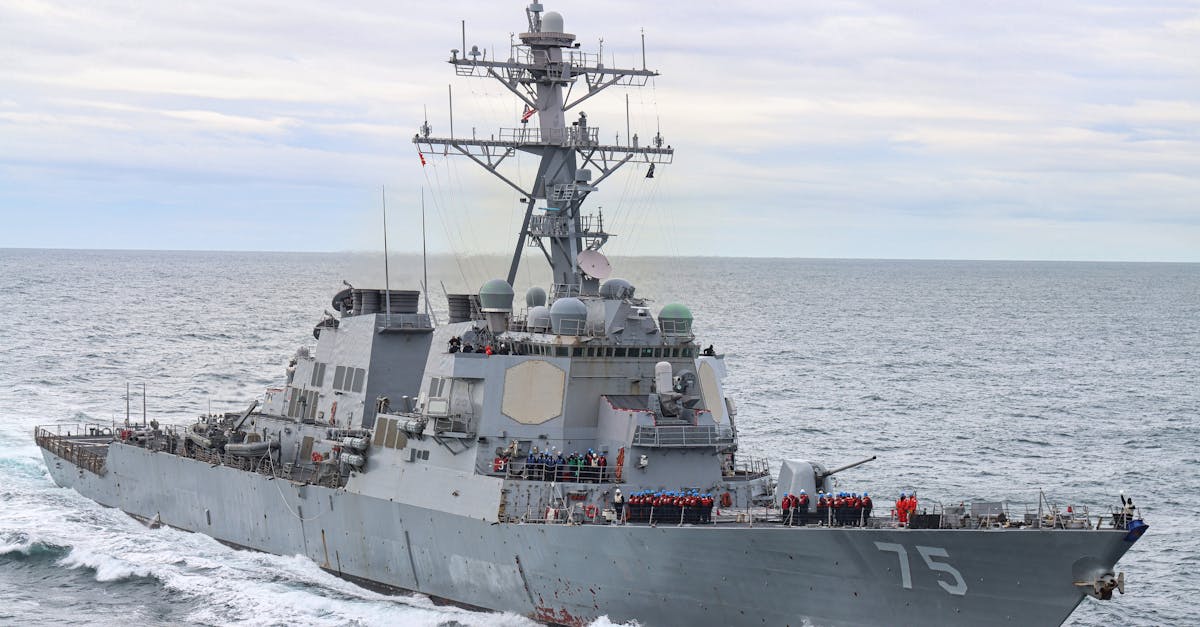
Three US Navy destroyers came under missile and drone fire from Iranian forces in the Strait of Hormuz on Thursday, the most serious breach of the month-old ceasefire between Washington and Tehran. No American vessels were struck, and the US military responded with self-defense strikes against Iranian launch sites.
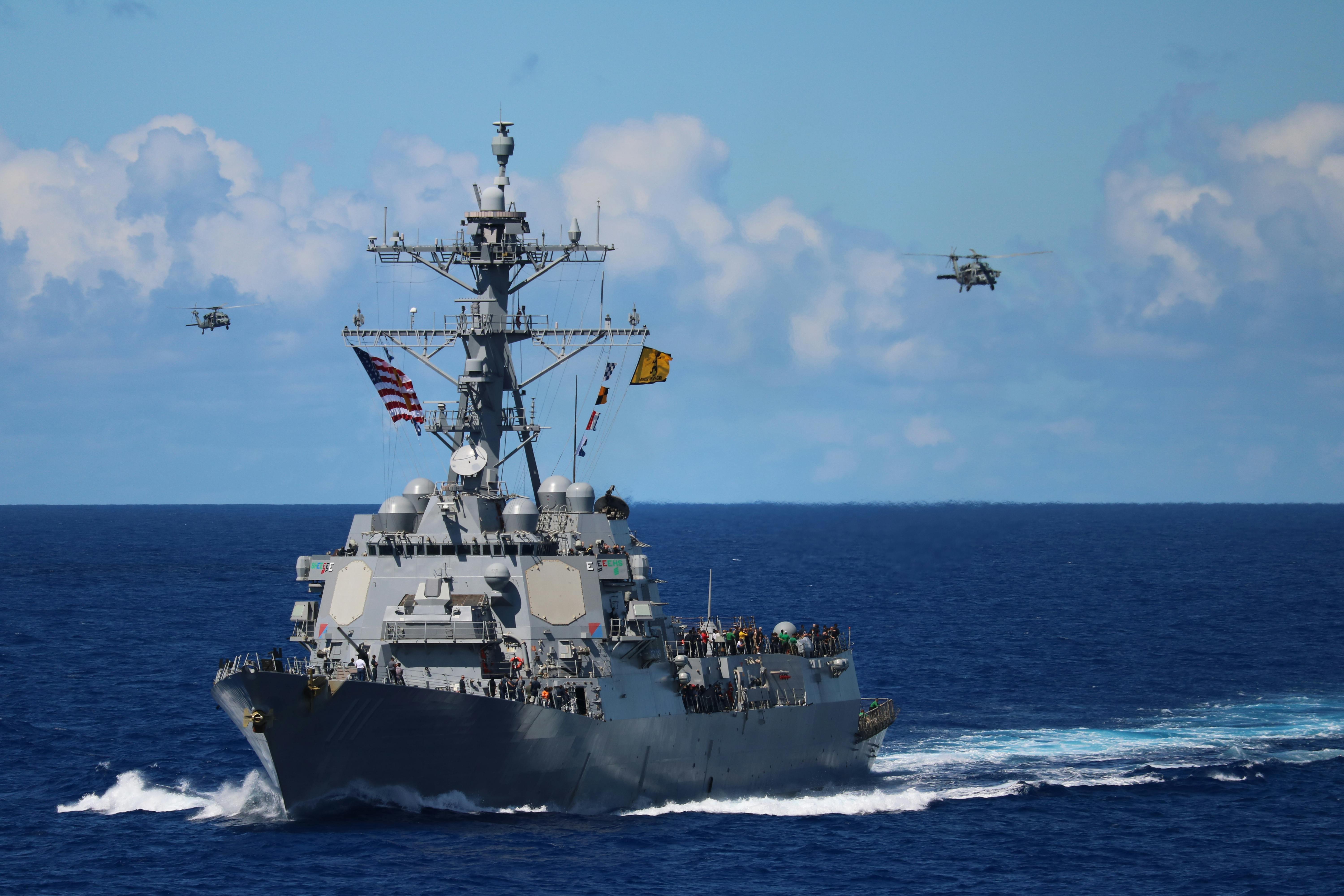
Three US Navy destroyers came under missile and drone fire from Iranian forces in the Strait of Hormuz on Thursday, the most serious breach of the month-old ceasefire between Washington and Tehran. No American vessels were struck. The US military responded with self-defense strikes against Iranian launch sites.
The exchange risked unraveling a truce brokered through Pakistani mediation in early April that halted direct combat operations between the two countries. Both sides accused each other of violating the agreement.
US Central Command said three guided-missile destroyers, the USS Truxtun, USS Rafael Peralta and USS Mason, were transiting the strait toward the Gulf of Oman when Iranian forces launched “multiple missiles, drones and small boats” at the vessels. CentCom said American forces “eliminated inbound threats and targeted Iranian military facilities responsible for attacking US forces.” The strikes hit missile and drone launch positions, command-and-control nodes and intelligence, surveillance and reconnaissance sites. CentCom said it “does not seek escalation but remains positioned and ready to protect American forces.”
It was the first direct exchange of fire since the ceasefire took effect on April 9. The truce had been fragile from the start, with Iran attempting to seize ships and deny passage while the US Navy imposed its own maritime security operations in the waterway.
President Donald Trump confirmed the strikes on Truth Social, writing that US forces dealt “great damage” to Iranian targets. He described Iranian drones falling “like a butterfly dropping to its grave.” In a subsequent post, Trump said: “We’ll knock them out a lot harder, and a lot more violently, in the future, if they don’t get their Deal signed, FAST.”
Despite the exchange, Trump insisted the ceasefire remained in effect. He described the US strikes as a “love tap” and said both sides should return to negotiations. His administration has been pressing Iran to accept a framework agreement that would limit its nuclear and missile programs in exchange for sanctions relief.
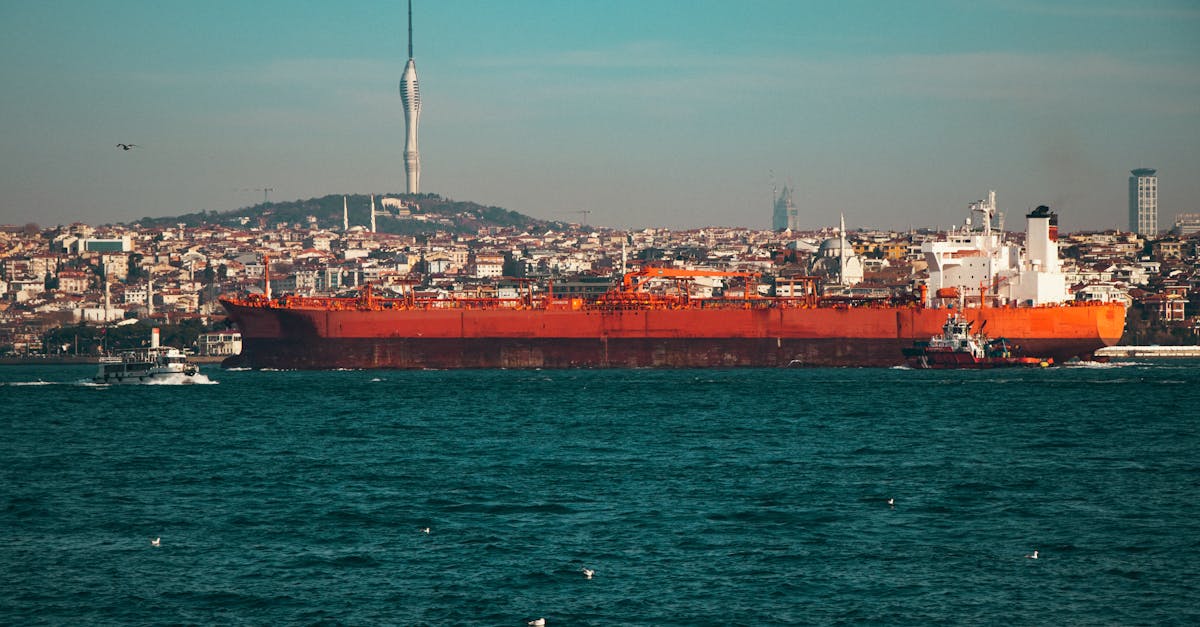
Iran’s central military command accused the United States of violating the truce by attacking an oil tanker and another vessel earlier on Thursday. It said Tehran’s forces “immediately and in retaliation attacked American military vessels.” The Iranian account could not be independently verified.
Background
The ceasefire reduced but did not eliminate tensions in the waterway that carries about a fifth of the world’s oil supply. Since the truce took hold, both sides have periodically accused each other of violations, though Thursday’s exchange was by far the most serious.
The three destroyers involved are part of a larger US naval presence maintained in the region since the United States launched military operations against Iran in March. That deployment included the revival of Project Freedom, a maritime security initiative authorising US destroyers to escort commercial vessels through the strait against Iranian interference. Saudi Arabia and Kuwait had initially restricted US sorties from their territory but reversed those restrictions earlier this week.
The Arleigh Burke-class destroyers are equipped with the Aegis combat system and carry Tomahawk cruise missiles, Standard Missile interceptors and close-in weapon systems for anti-missile defence. All three vessels are forward-deployed to the US 5th Fleet area of responsibility.
Market reaction
Brent crude traded lower on the news, with West Texas Intermediate down 0.65 per cent at $93.65 a barrel. The limited price moves suggested traders judged the exchange unlikely to escalate into a broader conflict or disrupt oil flows through the strait.
Deutsche Bank earlier this week flagged what it called inconsistent pricing across asset classes linked to the Iran conflict, warning that markets may be underestimating the risk of a sustained disruption.
Diplomatic channels remain open
US and Iranian officials have continued indirect talks through Omani and Pakistani intermediaries despite the latest clash. Trump has signalled willingness to meet Iranian leaders for direct negotiations, though no date has been set. Iran’s foreign ministry said in a statement that it was examining the latest US proposals but that any deal must recognise Tehran’s right to freedom of navigation in the strait.
The incident comes as Trump prepares for a summit with Chinese President Xi Jinping scheduled for May 14 in Beijing. Kurt Campbell, the former US deputy secretary of state, said this week that Trump may seek Xi’s advice on managing relations with North Korea during the meeting. The summit was confirmed despite the Iran escalation, according to administration officials.
The view from Tehran
Iran’s Supreme National Security Council said the United States had violated the ceasefire by targeting an Iranian oil tanker and another vessel earlier on Thursday. Washington denied the claims. The IRGC Navy has operated independently of the regular Iranian navy throughout the conflict. Its commanders have at times taken a harder line than the political leadership in Tehran.
State media carried the military command’s statement accusing the US of aggression but also reported that diplomatic channels remained open. Analysts in Tehran said the exchange may have been intended by hardline factions to test the ceasefire’s limits rather than to restart hostilities.
What to watch
The next 48 hours will determine whether the ceasefire can absorb this level of violation or whether tit-for-tat exchanges spiral back toward open conflict. Iran’s response to Trump’s insistence that the truce remains in force will be the first indicator.
The United Nations Security Council is scheduled to meet on Friday. A draft resolution circulated by the United States earlier this week would impose new sanctions on Iran if it fails to extend the ceasefire. Russia and China have signalled they would veto any Chapter VII measure.
Any sustained disruption to shipping through the Strait of Hormuz would have immediate consequences for global energy markets and insurance rates on Gulf transit. The UN’s International Maritime Organization has said roughly 1,500 vessels remain trapped in the Gulf because of the conflict, unable to transit the strait safely.

Yara Halabi
Foreign affairs correspondent covering the Middle East, the Gulf and US foreign policy. Reports from London.