Taiwan defense budget stalls for third time as Trump-Xi summit nears
Taiwan's ruling and opposition parties on Tuesday failed for the third time to break a deadlock over a NT$1.25 trillion ($40 billion) special defense budget, with the latest negotiation collapsing days before US President Donald Trump's mid-May trip to China for a summit with Xi Jinping.
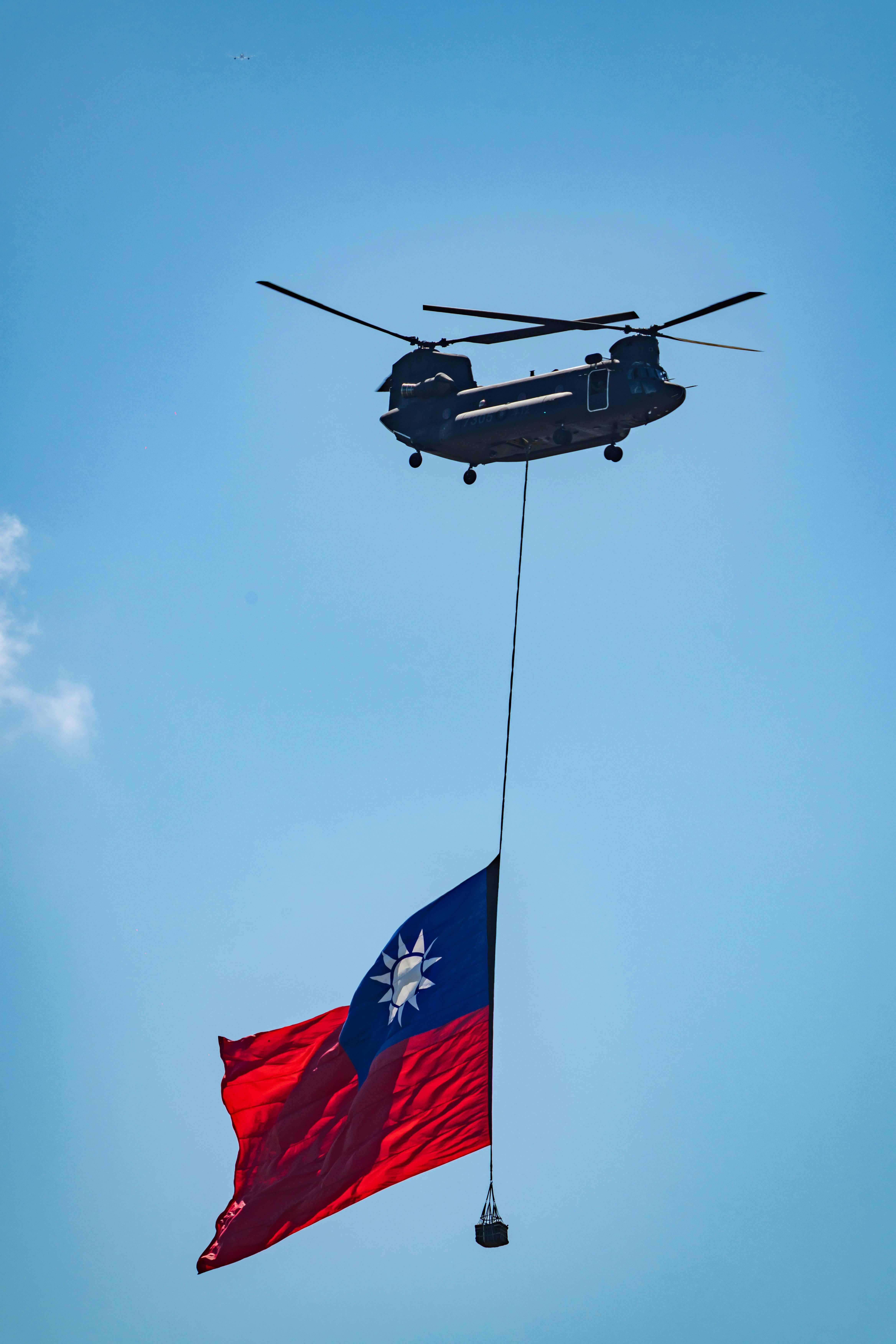
Taiwan's ruling and opposition parties on Tuesday failed for the third time to break a deadlock over a NT$1.25 trillion ($40 billion) special defense budget, with the latest negotiation collapsing days before US President Donald Trump's mid-May trip to China for a summit with Xi Jinping.
Legislative Speaker Han Kuo-yu announced that a fourth round of talks would convene on Wednesday. The dispute, now entering its sixth month, has begun to draw urgent attention from Washington, where senior officials have privately warned that further delay risks costing Taiwan its priority slot in the production schedule for US-made weapons systems.
"Taiwan needs to demonstrate its determination and capability for self-defence; otherwise, it will be difficult to convince the American public to continue supporting Taiwan," said Lien Hsien-ming, president of the Chung-Hua Institution for Economic Research, in a Facebook post on Friday. Lien has been a key conduit between Taipei legislators and US think tanks visiting the island, several of whom warned about the strain on US weapons inventories created by the recent emergency arms package to Israel and the Gulf.
Taiwan's Executive Yuan, controlled by President Lai Ching-te's Democratic Progressive Party, has proposed an eight-year, NT$1.25 trillion "Strengthening Defense Resilience and Asymmetric Capabilities" special budget. The package would cover US arms purchases, domestically developed drones, and Taiwan's "T-Dome" integrated air and missile defense system. The DPP wants the budget to pass intact.
The opposition Kuomintang has split internally between two competing proposals — a "NT$380 billion plus N" framework, where the supplemental amount would be determined later, and a more aggressive NT$800 billion package. Both KMT proposals would restrict the special budget primarily to US arms purchases, excluding NT$300 billion of domestically produced systems including naval shipbuilding and aircraft programs.
The smaller Taiwan People's Party has proposed its own variant, splitting the difference between the two KMT factions.
Washington's growing impatience
The American Institute in Taiwan, the de facto US embassy, said in an unusually public statement last week that "a comprehensive special budget is crucial for establishing Taiwan's deterrence capability in the coming years and sending an important signal to the international community."
Reuters reported on Friday that several US officials had told Taipei legislators that delays in passing the budget could result in Taiwan losing priority in the production and delivery schedule for US weapons. Bipartisan US officials have made multiple visits to Taiwan in the past month, including a delegation led by senior staff from the House Armed Services Committee.
The political stakes have intensified because of Trump's planned visit to Beijing for talks with Xi Jinping in the second half of May. US scholars who have visited Taipei in recent weeks have warned that if Trump perceives Taiwan as uncooperative on defence spending heading into the summit, his response could include sudden cancellations of arms sales, demands for additional Taiwanese investment in the United States, or unilateral changes to US-Taiwan tariff arrangements.
"Trump is extremely, extremely busy dealing with domestic politics and international conflicts, and Taiwan is not among his top priorities," Lien wrote. "Therefore, Taiwan's best strategy is to keep a low profile and avoid drawing Trump's attention unless necessary."
If Taipei fails to clear the budget before the summit, Lien added, "his negotiation style relies on maximum pressure and involves few constraints on tactics. It's hard to predict what he might do to express dissatisfaction."
Procurement, not principle
The deadlock in Taipei is not, at its core, a dispute about whether to spend more on defence — both major parties favour higher spending — but about how the money will be spent and to whom it will flow. The KMT and the public are concerned about transparency and accountability in Taiwan's defence procurement system, which has historically suffered from opaque local prime contractors and limited competitive tendering.
In recent years, Taiwanese journalists have documented absurd cases of companies with no apparent defense expertise — including tea shops and snack bars — appearing as bidders or middlemen for sensitive ammunition contracts. The cases have hardened public scepticism about domestic procurement and made the legislature reluctant to authorise large lump-sum allocations to local prime contractors.
US officials have privately expressed similar concerns. "There is a significant information gap when it comes to Taipei's procurement politics," wrote Kevin Ting-chen Sun, a senior legislative policy adviser in Taiwan's Legislative Yuan, in a National Interest analysis published on Tuesday. Sun argued that Foreign Military Sales — a structured government-to-government channel — provided clearer accountability than alternative paths such as direct commercial sales or "domestic commissioning," in which a Taiwanese prime contractor procures US-made components.
"If Foreign Military Sales cases had already been formalised through that channel, the special budget would have high legitimacy, and the legislature might well have approved the funds by now," Sun wrote. "However, because these FMS cases have not yet been finalised, a political and procurement vacuum has emerged."
The drone problem
Particular friction surrounds Taiwan's "Drone National Team," a domestic industrial coalition the government has held up as a model of defence autonomy. The coalition is meant to build large-scale unmanned systems for Taiwan's asymmetric warfare strategy. Taipei has earmarked billions of US dollars for it. The KMT and TPP have demanded more transparency on prime contractor selection, technical capability validation, and pricing benchmarks.
"When a project is shielded by the 'National Team' narrative, it becomes harder for outsiders to verify if the local prime is actually capable of delivering or if they are merely buying a limited software license and calling it technology transfer," Sun wrote.
The drone industry sits at the intersection of every politically potent label — asymmetric warfare, indigenous production, supply-chain decoupling from China — and is therefore the most resistant to the kinds of competitive bidding the legislature is now demanding.
What's at stake
If Wednesday's talks fail, Taipei is likely to enter Trump's Beijing summit with no agreed defence supplement at all. That would deprive the US president of an obvious "big win" announcement on Taiwan-US relations, and could prompt him to redirect attention toward Taiwan's trade surplus, semiconductor supply chains, or US-Taiwan tariff arrangements — none of which Taipei wants on the table.
Lien suggested a path forward. Taipei could pass the larger framework, while making clear that the funds would flow primarily through Foreign Military Sales or through direct commercial sales with credible US prime contractors and verifiable pricing.
"Most US think tanks currently still support Taiwan, but there are also some who believe Taiwan should not create strategic risks in US-China relations because of its tensions with China," Lien wrote. "This is also the hardest position for them when speaking up for Taiwan."
For Taiwan, the political cost of inaction is rising fast. The Trump-Xi meeting begins in less than three weeks.

Theo Larkin
Defense correspondent covering US military operations, weapons procurement and the Pentagon. Reports from Washington.