Republican-led states race to redraw maps after Supreme Court guts Voting Rights Act
Republican legislators in Louisiana, Alabama and Tennessee moved this week to redraw their congressional maps after a Supreme Court decision hollowed a core provision of the 1965 Voting Rights Act. The moves could yield Republicans an additional dozen House seats before November.
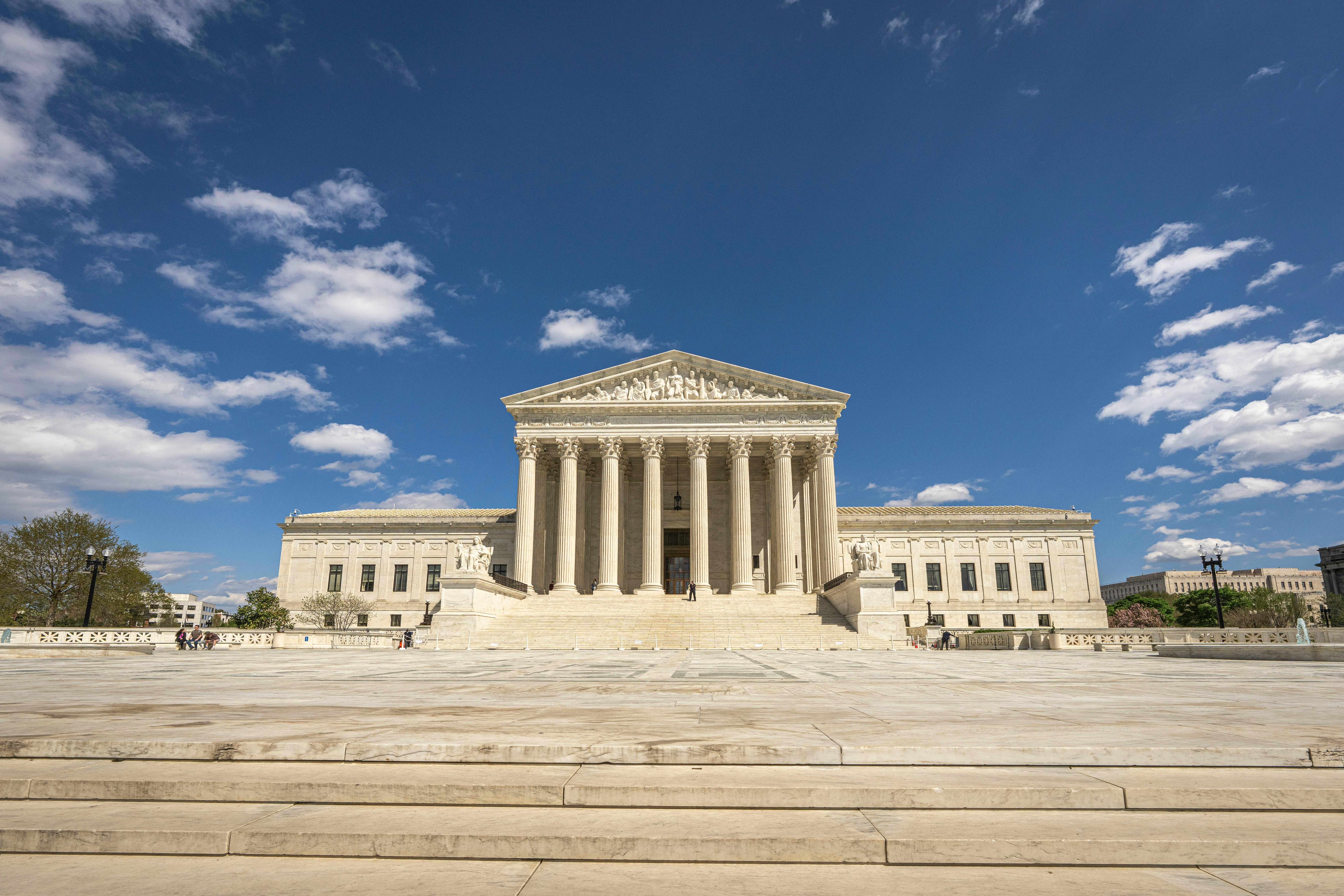
Republican legislators in Louisiana, Alabama and Tennessee moved this week to redraw their congressional maps in the wake of a US Supreme Court decision that hollowed a core provision of the 1965 Voting Rights Act, opening the door to changes that could deliver Republicans an additional dozen House seats before the November midterms.
The court's decision last week in Louisiana v. Callais struck down Louisiana's congressional map, which had created a second majority-Black district under the Voting Rights Act, as an "unconstitutional racial gerrymander." The ruling weakened Section 2 of the law, which has for six decades required states to draw districts that give racial and ethnic minorities a meaningful chance to elect representatives of their choice.
Within days, the governors of Louisiana, Alabama and Tennessee called special legislative sessions to take advantage of the ruling. President Donald Trump, who first triggered the redistricting battle last year by pressing Republican-led states to redraw their maps to expand his party's House majority, urged further action over the weekend.
"We should demand that State Legislatures do what the Supreme Court says must be done," Trump posted on Truth Social on Sunday. "The byproduct is that the Republicans will receive more than 20 House Seats in the upcoming Midterms!"
Louisiana acts first
Louisiana Governor Jeff Landry signed an executive order on Saturday suspending the state's May 16 congressional primaries and instructing legislators to draw a new map by the end of the regular session in early June. The state Supreme Court on Monday granted Landry's request to expedite the redistricting process, allowing the state to put a new map in place before the November general election.
"The best way to end race-based discrimination is to stop making decisions based on race," Landry said in a statement. "Allowing elections to proceed under an unconstitutional map would undermine the integrity of our system and violate the rights of our voters."
Trump praised Landry on Truth Social on Monday "for his leadership on the very important Callais case, and for moving so quickly to fix the Unconstitutionality of Louisiana's Congressional Maps." Republicans currently hold four of Louisiana's six House seats; Democrats hold two. Both chambers of the state legislature are controlled by the GOP.
Louisiana state Senator Royce Duplessis, a Democrat, condemned the rapid pace of the redistricting effort. "It's going to cause mass confusion among voters — Democrats, Republicans, white, Black, everybody," he said.
Alabama and Tennessee follow
Alabama Governor Kay Ivey called a special legislative session on Friday to consider legislation that would allow the state to hold special primary elections if the courts lifted a prior injunction blocking Alabama's 2023 congressional map.
That map was thrown out in 2023 after a court found it diluted Black voting power in violation of the Voting Rights Act. A court-drawn replacement map created a second majority-Black district, currently represented by Democratic Representative Shomari Figures. The Voting Rights Act ruling makes it possible for Alabama to ask federal courts to reinstate the 2023 map ahead of the May 19 primaries — a move that would change the boundaries of Figures's district significantly.
"By calling the Legislature into a special session, I am ensuring Alabama is prepared should the courts act quickly enough to allow Alabama's previously drawn congressional and state maps to be used during this election cycle," Ivey said. Republicans hold five of Alabama's seven House seats; Democrats hold two.
Tennessee Governor Bill Lee called his own special session on Friday, hours after Ivey's announcement. The Tennessee plan reportedly under discussion would dismantle the state's only Democratic-held House seat, which includes the majority-Black city of Memphis.
"After consultation with the Lt. Governor, Speaker of the House, Attorney General, and Secretary of State, I believe the General Assembly has a responsibility to review the map and ensure it remains fair, legal, and defensible," Lee said in a statement on Friday. Trump said the day before that he had had a "very good" discussion with Lee, who, the president said, "stated that he would work hard to correct the unconstitutional flaw" in Tennessee's House maps.
Republicans hold eight of Tennessee's nine House seats. The state's primaries are scheduled for August 6.
House math
The combined effect of the moves under way in Louisiana, Alabama and Tennessee, on top of Florida Governor Ron DeSantis's signature on a new Florida congressional map on Monday, could yield Republicans at least four to six additional House seats before the November midterms, according to estimates from political analysts at the Brennan Center.
That math matters. Republicans hold a razor-thin House majority, and the sitting president's party historically loses seats at the midterms. Trump's approval rating has dropped to the lowest level of either of his terms, with disapproval at the highest, according to recent polls. Without redistricting changes, Democrats appear to be on track to retake the House.
The Voting Rights Act ruling does not, by itself, force any state to redraw its map. It permits states to argue, with greater chance of success, that maps drawn to ensure minority representation are themselves unconstitutional. House Speaker Mike Johnson urged Republican-led states to take advantage. "All states who have unconstitutional maps should look at that very carefully," he said following the decision.
Democrats' counter
Democrats are not standing still. House minority leader Hakeem Jeffries dispatched a senior emissary to Albany this week to press New York Governor Kathy Hochul and the state legislature to redraw New York's congressional map to favour Democrats. New York's constitution generally bars mid-decade redistricting, but Democrats argue that the Voting Rights Act ruling represents a "changed legal landscape" that justifies action.
The push faces opposition inside New York's Democratic establishment. Hochul has previously signalled reluctance to engage in mid-decade redistricting on the grounds that it would invite Republican retaliation in states the GOP does not currently dominate. The Brennan Center's analysts said in a Monday memo that, even with aggressive redistricting in California and New York, Democrats would struggle to match the Republican gains underway in the South.
California's congressional map was drawn under a voter-approved independent commission that limits legislative interference. Other Democratic-leaning states with similar constitutional or statutory protections include Colorado, Michigan, Virginia and Washington — none of which can move quickly enough to make a difference in November.
The Brennan Center's net estimate, revised after Monday's Supreme Court order expediting Louisiana's redistricting, is that Republicans now stand to gain a net of four to seven seats from mid-decade redistricting nationally before the November vote. That would be more than enough to offset typical midterm losses for the party in power.
What happens next
Three things are likely to follow. First, expect a wave of lawsuits. The legal challenges to the new Louisiana, Alabama and Tennessee maps will be filed within days of their adoption. Second, expect intense pressure on Hochul and other Democratic governors to find ways around state-level redistricting restrictions — something Democrats have so far been unwilling to do. Third, expect the Supreme Court to be asked, again, to clarify what is left of Section 2 of the Voting Rights Act after Callais."
The court's six-justice conservative majority has narrowed the scope of the Voting Rights Act over the past decade in cases such as Shelby County v. Holder (2013), which gutted Section 5, and Brnovich v. Democratic National Committee (2021). The Callais decision, by limiting the use of Section 2, completes a process that critics say has effectively dismantled the legal architecture the law was built to enforce.
For now, however, the immediate consequence is political, not jurisprudential. The Republican-led states racing to redraw their maps are betting that the Voting Rights Act ruling gives them enough cover to lock in a House majority before voters get a say. Democrats are betting that the courts, the public and a few Democratic-led states can blunt that effort. The midterms are 184 days away.

Eli Donovan
Supreme Court and legal affairs correspondent covering the federal judiciary and constitutional law. Reports from Washington.