Inside Anduril: how a quiet engineer-CEO is building America's $31bn defense startup
Brian Schimpf, the soft-spoken former Palantir engineer who co-founded Anduril with Palmer Luckey in 2017, runs a $30.5 billion private weapons company whose Lattice software is being written into nearly every major Pentagon counter-drone program.
Brian Schimpf, the soft-spoken former Palantir engineer who co-founded Anduril Industries with Oculus creator Palmer Luckey in 2017, has built one of the most consequential weapons companies in the United States. The company is a $30.5 billion private business. Its Lattice software is being written into nearly every major Pentagon counter-drone program, and its Ghost Shark autonomous submarine is under a long-term contract with the Royal Australian Navy.
In a profile published by Fortune on Tuesday, Schimpf hands the reporter a warhead at a secretive Anduril test range in West Texas. The image captures something the defense industry has not seen in a generation: a Silicon Valley founder, in jeans and a polo, owning a chunk of the kinetic kill chain. The Costa Mesa, California company has raised roughly $6.3 billion in cumulative funding. It ended 2025 with about 7,000 employees. Revenue is on track for the low billions this year, Schimpf told a Cornell University audience in November.
"The question isn't whether we can build the next Lockheed Martin, it's whether we can avoid becoming the thing we're trying to replace," Schimpf told Fortune.
From Palantir to the Pentagon
Schimpf is an unusual figurehead for a weapons company. He spent close to a decade at Palantir Technologies after graduating from Cornell in 2007, rising from a custom-engineering hire to director of engineering and product. He built and shipped Foundry, the data-integration product now in use across the US intelligence community and allied militaries. Luckey was fired from Meta in 2017 after his support for an anti-Hillary Clinton meme group made him a pariah in liberal Silicon Valley. Trae Stephens, a Founders Fund partner, serves as Anduril's executive chairman.
Where Luckey is the public face and Stephens controls the capital, Schimpf runs the company. He picks the products, recruits the engineers, and decides which Pentagon doors to push on. The Cornell audience saw the engineer-as-operator playbook in plain language. "Good people do well if you give them hard, ambitious stuff to do," Schimpf told them. Of his decision to leave Palantir, he said: "How many potential opportunities will I get like that?"
That posture is most of why investors increasingly treat Anduril as the only serious candidate to disrupt a defense industrial base dominated for half a century by Lockheed Martin, Raytheon, Northrop Grumman, Boeing and General Dynamics. There is no Stark Industries theatre. The work is software-first.
The $20 billion Pentagon footprint
The financial proof points have arrived in clusters. In June 2025, Founders Fund led a $2.5 billion Series G that took Anduril from a $14 billion valuation to $30.5 billion. Stephens told Bloomberg Television it was the largest single check in Founders Fund's history. The round was reported to be more than eight times oversubscribed.
The contracts are bigger. In January 2025 the Pentagon placed a $250 million order for 500 Roadrunner autonomous interceptors, the truck-launched air-defense weapons designed to shoot down cheap Iranian-style attack drones at a fraction of the cost of a Patriot missile. In February 2026 the US Army reassigned a multi-year augmented-reality headset program away from Microsoft and to Anduril, a deal with a budget ceiling of about $22 billion over its life. In March 2026 the Army awarded Anduril an initial $87 million task order on a 10-year contract vehicle for counter-drone command and control. The vehicle's ceiling is $20 billion. Lattice is the reference architecture.
That same month, Anduril acquired ExoAnalytic Solutions, adding more than 400 ground-based space-surveillance telescopes to Lattice's sensor fusion layer. The company was also selected for a US Navy program to demonstrate the Dive-XL extra-large autonomous undersea vehicle. A reported $8 billion raise at a $60 billion valuation has not been formally disclosed. If confirmed, it would roughly double Anduril's paper value in nine months.
Lattice, Roadrunner, Fury and the rest
Anduril's portfolio now spans 15 business lines, Schimpf told the Cornell audience. The product map starts with Lattice, the AI-driven command-and-control platform that ingests feeds from radars, cameras, jammers and weapons and presents a single 3D operating picture to a soldier or a sailor. Lattice has been chosen by the US Space Force for surveillance networks and by the Army's Defense Innovation Unit as the framework for robotic combat-vehicle payloads.
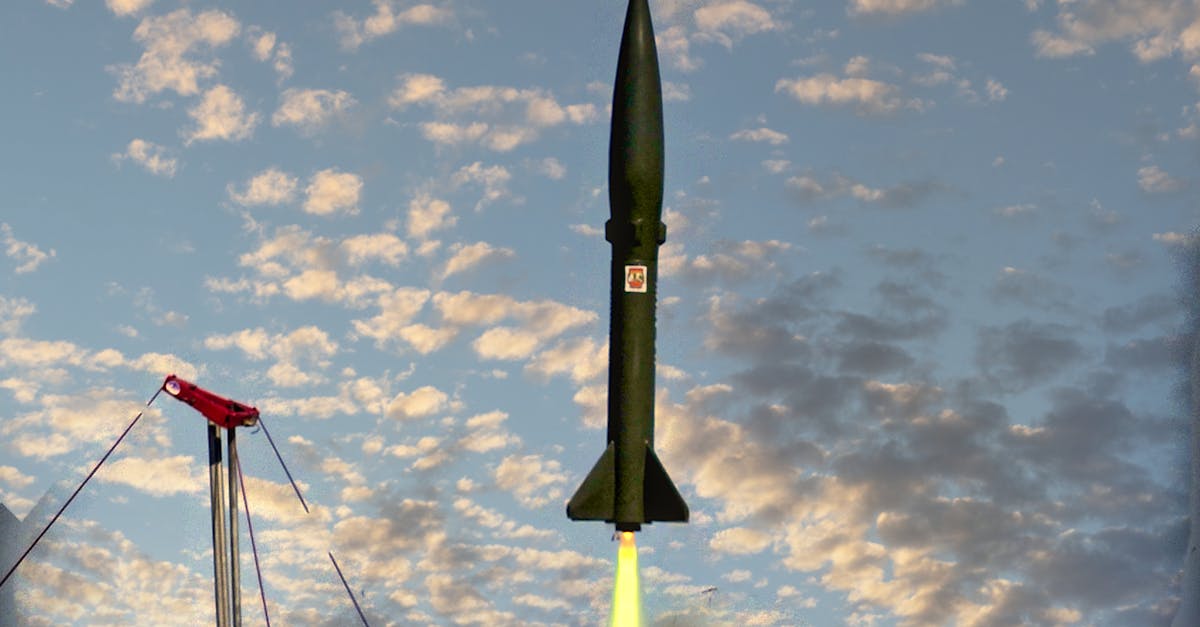
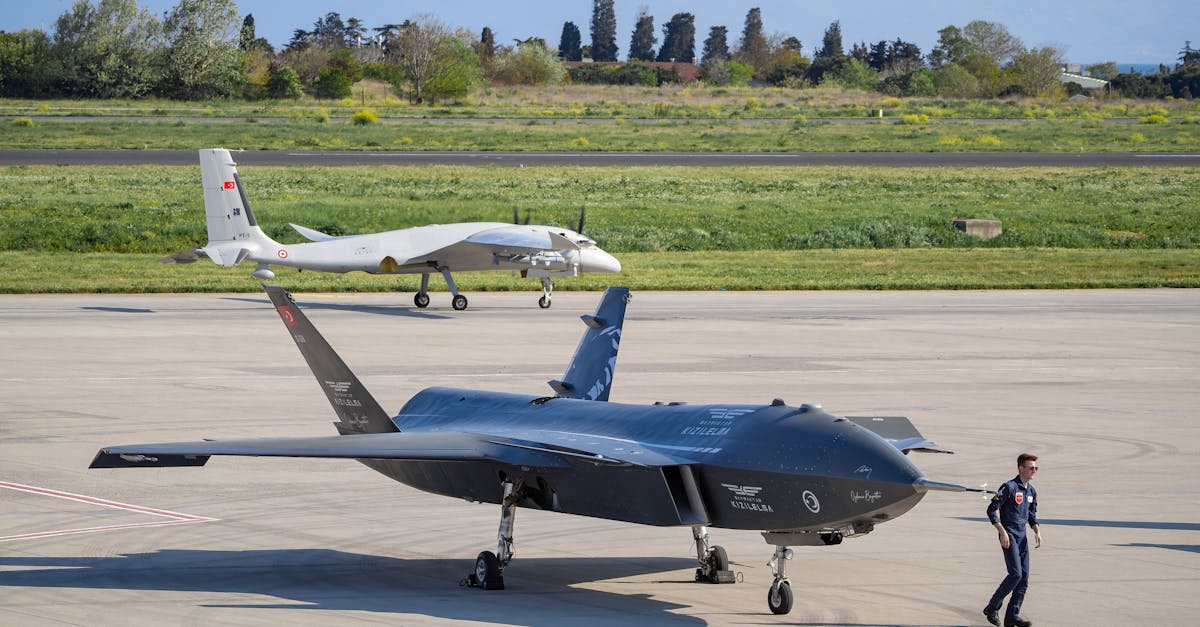
Around the software sit the kinetic systems. The Roadrunner interceptor and the Pulsar electronic-warfare pod handle counter-drone work. ALTIUS loitering munitions and the Bolt strike drone, the model Schimpf was test-firing in West Texas, supply the strike side. Underwater, the Dive-LD and the larger Ghost Shark and Dive-XL extend the same autonomy stack into the maritime domain. In the air, Anduril's Fury aircraft is one of two designs selected for the US Air Force's Collaborative Combat Aircraft program, an initiative that aims to field unmanned wingmen for crewed fighters before the end of the decade. Production for Fury is supposed to begin in the second quarter of 2026 at Arsenal-1, a 1.7 million square foot factory in Ohio that has no real precedent in the defense startup world.
The legacy primes have noticed
The legacy primes are not blind to any of this. Lockheed, Raytheon and Boeing have all opened venture arms. They have all signed teaming agreements with various Silicon Valley shops. They have all announced their own AI-driven sensor-fusion roadmaps. None of them, as of May 2026, has a comparable autonomous-systems franchise priced at fixed-price contract terms. None controls a vertically integrated factory the size of Arsenal-1. And none has a chief executive who can credibly claim to have spent his twenties writing code for the same intelligence agencies that now sign his contracts.
That asymmetry shows up in how the Pentagon is now writing deals. As Fortune's Jessica Mathews argued in a separate analysis in March, the Department of Defense is moving from pilot programs to fixed-price production contracts with a select few startups. That structural change pulls revenue toward Anduril and away from incumbents. The Army's emergency $2.1 billion APKWS rocket sale to Israel, Qatar and the United Arab Emirates, authorized on May 1, made the strain tangible. Iranian-pattern drone attacks on the Gulf have drained Western interceptor stockpiles faster than incumbents can refill them. The cheapest replacements, Roadrunner among them, are the only ones that can be built fast enough to matter.
The risks the engineer is watching
Schimpf is candid about the failure modes. He has told several audiences that bankruptcy is not the danger for Anduril. Ossification is. The slow drift toward becoming a smaller, faster Lockheed is the thing he warns recruits about. His line about avoiding what the company is trying to replace is half a recruiting pitch and half a strategic frame. Arsenal-1, the 1.7 million square foot Ohio factory, is the test. Ship Fury aircraft on schedule at fixed price and Anduril clears a bar that has stopped every defense startup of the past 30 years. Slip, and the legacy primes will argue the only company that can build at scale is the one that has been doing it since the Cold War.
Political risk is lighter than it was. In 2017 Luckey, Stephens and lead investor Peter Thiel were treated as outcasts in Silicon Valley for backing Donald Trump. Today Anduril announces partnerships with Meta on military extended-reality headsets. It recruits openly from Google and Apple. BlackRock is among its later-stage backers. The taboo on selling weapons software has, in Schimpf's words, "shifted." A decade ago, he told the Cornell audience, "nobody ever believed there would be state-on-state conflict again." Russia in Ukraine and Iran in the Gulf changed the macro.
What to watch next
Three milestones land before year-end. The Air Force will complete its full Collaborative Combat Aircraft downselect. A win turns Fury into a multi-billion-dollar program of record; a loss leaves it a sunk-cost reminder of how thin Anduril's product line really is. Arsenal-1 has to begin Fury production in the second quarter, the most aggressive defense-manufacturing ramp on the calendar. And the Series H, if it lands at $60 billion, would set a private-market valuation that puts Anduril above L3Harris and within reach of the smaller listed primes.
For now Schimpf is still walking around West Texas test ranges with warheads in his hand, still telling investors that the danger is not too little growth but too much complacency. The Pentagon, the venture-capital industry and the legacy primes are betting he is right.

Theo Larkin
Defense correspondent covering US military operations, weapons procurement and the Pentagon. Reports from Washington.