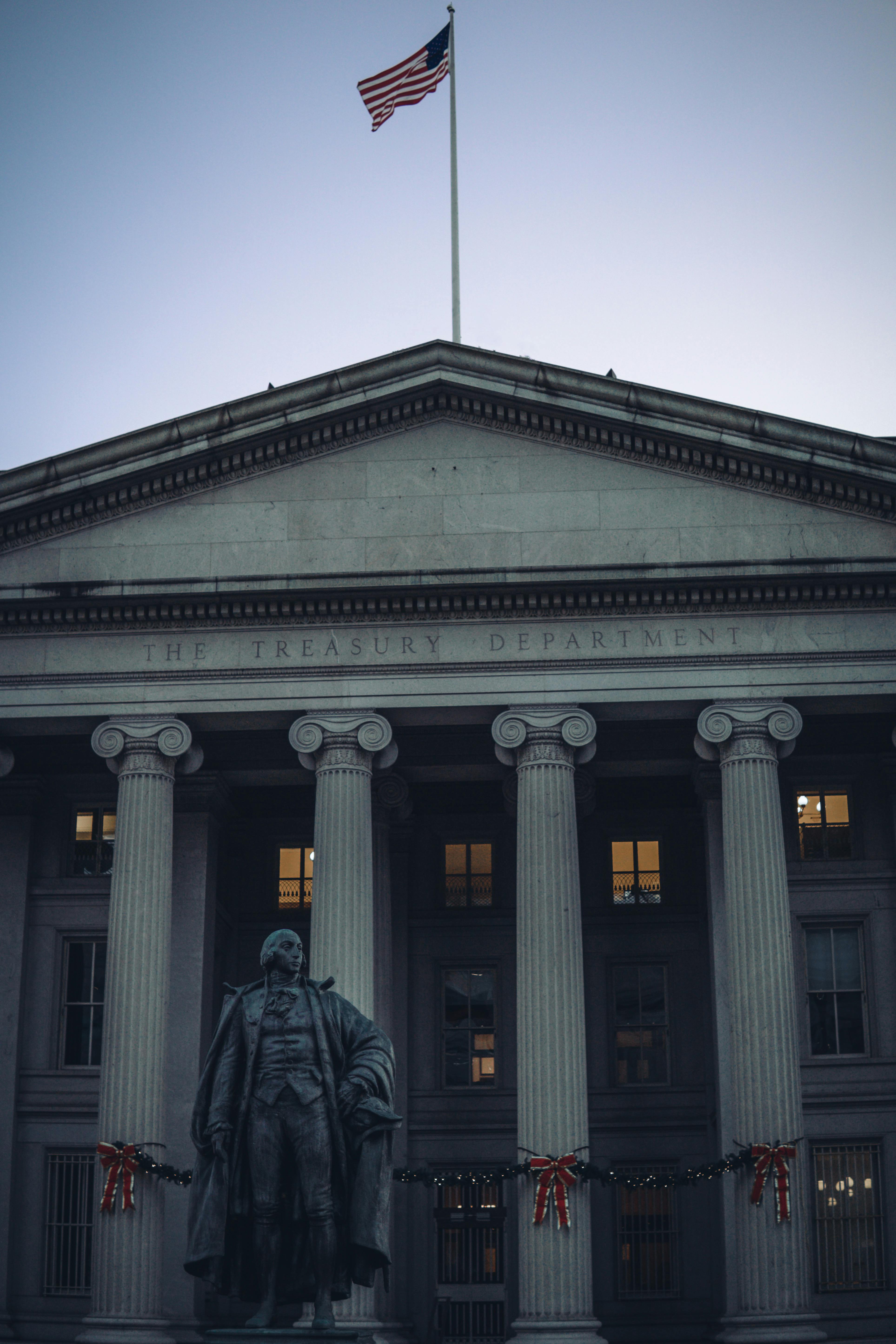
Long bonds crack 5% then ease as Treasury holds $125bn refunding line
The 30-year US Treasury yield touched 5.03 per cent on Monday, its first break above the threshold since July, before pulling back. On Wednesday Treasury kept its $125 billion refunding plan flat and held the line on its forward guidance.
The 30-year US Treasury bond yield punched through 5 per cent on Monday for the first time since July 2025. It touched 5.03 per cent intraday before easing back. The trigger was a fresh oil shock and a sharply higher quarterly borrowing estimate that landed on the same afternoon, knocking the long end of the curve.
By Wednesday the bond had clawed back below 5 per cent. The 30-year yield fell as much as four basis points to 4.98 per cent in early trading. The 10-year slid to about 4.35 per cent, per Bloomberg data. Buyers stepped in at the higher rate. Then the Treasury Department published its quarterly refunding plan: $125 billion of notes and bonds for the May to July window, with auction sizes left flat. The forward-guidance sentence Wall Street had spent a fortnight parsing also survived intact.
Auction sizes for the May refunding stayed at $25 billion for the 30-year bond, $42 billion for the 10-year note and $58 billion for the 3-year. Those are the same numbers Treasury has issued since early 2024. The auctions price on May 11, 12 and 13, with the 30-year going on the Wednesday.
"Treasury anticipates maintaining nominal coupon and FRN auction sizes for at least the next several quarters," the May 6 statement read. The department has used that language for more than a year. JPMorgan, Wells Fargo and Deutsche Bank had all flagged a meaningful chance the words "at least" would be cut. Removing them would have told dealers that bigger auctions were closer than the central case. Citi and Goldman Sachs took the other side. On Wednesday morning Citi and Goldman were right.
Why the 5% break mattered
Two shocks fed into the Monday selloff. Iran was reported to have struck oil and gas infrastructure in the United Arab Emirates around 11am Eastern. The attack pushed WTI crude back above $105 a barrel and lifted the December 2026 Brent contract to a fresh post-conflict high. The Treasury revised its net borrowing estimate for the April-June quarter up to $189 billion the same afternoon, an $80 billion increase on the $109 billion penciled in at February's refunding. Weaker-than-expected tax receipts were the main driver, the department said.
Yields jumped across the curve. The 2-year, the most rate-sensitive Treasury note, climbed as much as 11 basis points to 3.99 per cent on Monday before easing. Interest-rate swap pricing implied roughly an 80 per cent probability of a Fed hike by April 2027, a sharp turn from the rate-cut path markets had embraced in late 2025. Barclays cut its rate-cut call to a single move in March 2027. Morgan Stanley pushed its expectation back into 2027.
"They can't keep saying 'at least several quarters' forever," Jack McIntyre, portfolio manager at Brandywine Global Investment Management, told Bloomberg ahead of the announcement. "They'll try to drag it out, but one day they'll have to consider increasing long-end issuance."
For now the answer is no. Treasury Secretary Scott Bessent, who criticised the issuance playbook of his predecessor Janet Yellen during the 2024 campaign, has so far kept it intact. He is leaning on Treasury bills and the buyback program to absorb the swings rather than enlarging coupon auctions. The department's statement on Wednesday signalled net bill supply will fall by $250 billion to $300 billion through early May as the April 15 tax date drains the General Account. Borrowing is projected to rebuild to $671 billion in the third quarter.
The Fed quietly bid
A different buyer has shown up. The Federal Reserve has purchased $237 billion in Treasuries since December, according to the Kobeissi Letter's reading of FRED data. That is the central bank's first sustained accumulation of US debt since the end of quantitative tightening. The buying has helped offset a wave of supply BlackRock's Rick Rieder, the firm's chief investment officer for global fixed income, characterised in a Bloomberg interview as "$520 billion a week of trade of gross supply of Treasuries".
Rieder described the Fed support as a shock absorber rather than a buying signal. "Equities have a whole lot more upside than interest rates do today," he said. He pointed to the structural mismatch between heavy corporate buybacks on one side and a flood of fresh government paper on the other. Rieder expects the Fed will eventually cut rates as housing and manufacturing weaken, and forecasts the 10-year yield drifting toward 4 per cent over time. BlackRock is staying in the belly of the curve for now rather than extending duration into the long bond. The 10-year traded at 4.35 per cent on Wednesday, a level he considers fair given the supply backdrop.
The International Monetary Fund has been less sanguine about the bills-heavy issuance mix. In an April working paper the Fund warned that leaning on short-dated debt to finance a near-$2 trillion annual deficit leaves federal interest costs unusually exposed to a sudden rates move. The Treasury Borrowing Advisory Committee has wrestled with the same concern since its February meeting, when it described "robust" discussions of how and when to start lifting auction sizes.
What to watch next
The next refunding statement lands on August 5, after Friday's nonfarm payrolls print and the May 11 to May 13 auction round. If the Iran-driven oil premium keeps fading, with Brent already back below $111 a barrel after the UAE's exit from OPEC, the inflation impulse that helped drag yields above 5 per cent should thin. That would take some pressure off the long bond. The supply story is harder to wish away. Goldman Sachs and Citi both expect Treasury to begin enlarging coupon auctions in early 2027. The TBAC has signalled it could endorse increases sooner if the financing gap widens.
Bessent inherits a dynamic Yellen never had to manage. The Federal Reserve is in the middle of its own leadership transition. The central bank's bid for Treasuries is running alongside the issuance plan rather than against it. Wednesday's $125 billion refunding bought him another quarter to keep that balance. The 30-year bond, having tagged 5 per cent and stepped back, is the price of admission.

Marcus Holloway
Markets editor covering UK gilts, sterling and the Bank of England. Previously a fixed-income strategist in the City.