Treasury hikes Series I bond rate to 4.26% as inflation jumps to 3.3%
The U.S. Treasury raised the Series I savings bond rate to 4.26 per cent on Thursday after a March CPI report that showed annual inflation jumping from 2.4 to 3.3 per cent. Almost all of the move traces to a single variable: the price of oil.
The U.S. Treasury Department raised the headline rate on Series I savings bonds to 4.26 per cent on Thursday, lifting the inflation-linked portion after a March consumer price report that vaulted annual inflation to 3.3 per cent in a single month.
It was the largest one-month repricing of household cost data in nearly two years.
The new composite rate applies to Series I bonds purchased between May 1 and October 31. It replaces the 4.03 per cent rate that ran through April 30 and pairs a 0.90 per cent fixed component, unchanged since November, with a 3.34 per cent annualised variable component derived from inflation readings between October 2025 and March 2026.
For retail savers who bought when the 9.62 per cent rate hit TreasuryDirect in May 2022, the latest reset is far more modest. But the speed of the shift in the underlying inflation print is what financial advisers have spent the past 48 hours trying to explain to clients. Annual headline CPI was 2.4 per cent in February. It was 3.3 per cent in March. Almost the entire jump traces to one variable: the price of oil.
What the CPI report showed
The Bureau of Labor Statistics on April 10 reported that the Consumer Price Index for All Urban Consumers rose 0.9 per cent on a seasonally adjusted basis in March. Over the 12 months ending in March, the all-items index climbed 3.3 per cent, up from 2.4 per cent for the year ending in February. That is the highest annual reading since April 2024.
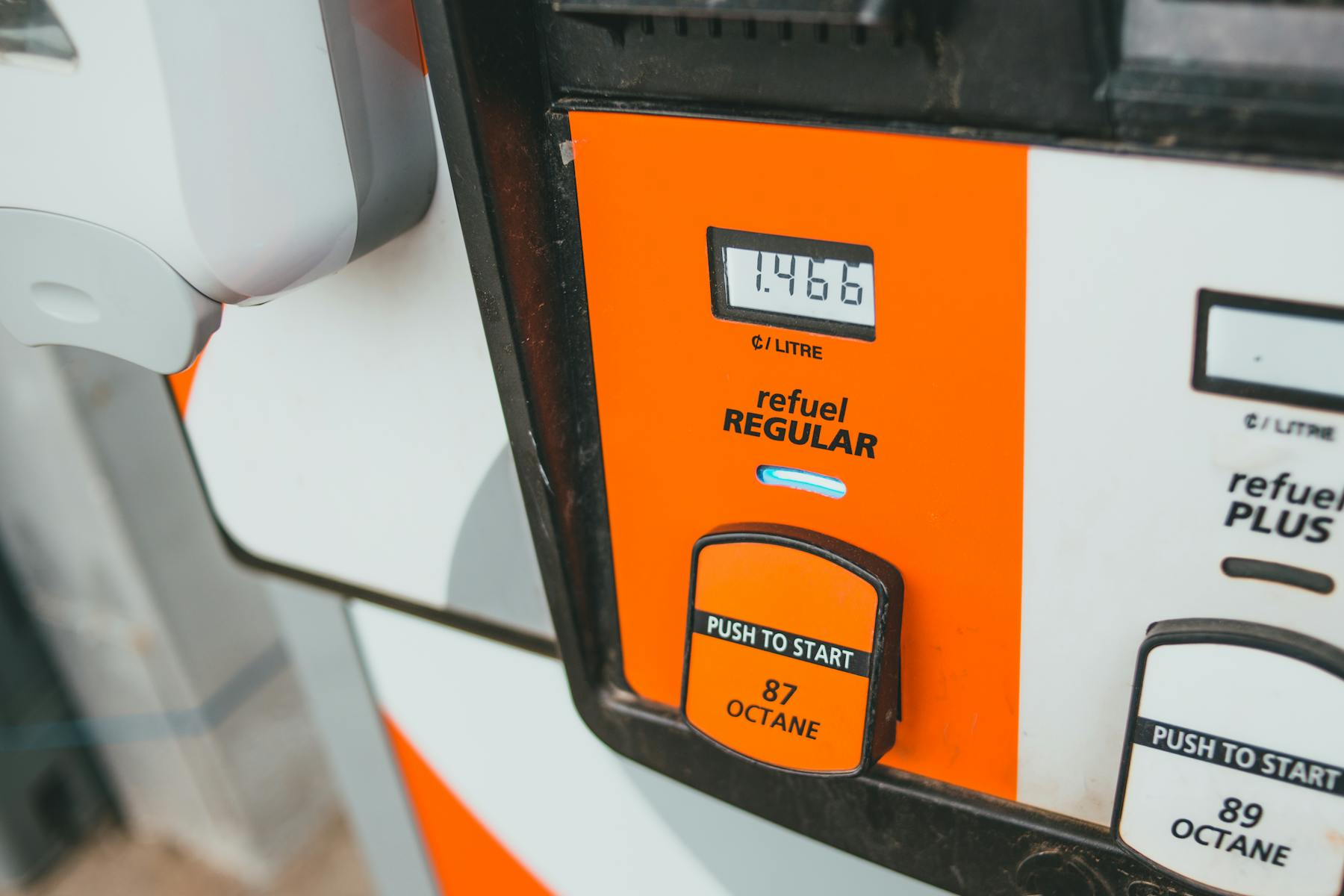
Energy did almost all of the work. The energy index rose 10.9 per cent in March alone, with gasoline up 21.2 per cent on the month. The BLS said gasoline accounted for nearly three-quarters of the headline March increase, and even that figure understates the eventual toll. National average pump prices started March near $3.15 a gallon and finished above $4.16, a 32 per cent move that the BLS index only partially captured. Prices have continued rising into April.
Core inflation, which strips out food and energy, told a calmer story. The core index rose 2.6 per cent on the year, only a tenth above February. The 0.7-percentage-point gap between headline and core CPI is, in the words of one Wall Street strategist this week, "the most important number in the report" because it isolates the inflation shock to a single channel rather than letting it diffuse through services and rents.
That single channel is the Iran war, which began on February 28 and has disrupted shipping through the Strait of Hormuz. The chokepoint normally moves about a fifth of the world's seaborne oil.
Why the I bond rate moved
The mechanics of the I bond reset are formulaic. Treasury sets a new variable rate every May and November based on the change in non-seasonally adjusted CPI over the prior six months. From October 2025 to March 2026 the index rose 1.67 per cent. Doubled and combined with the unchanged 0.90 per cent fixed rate under Treasury's standard formula, that produces the 4.26 per cent composite advertised this week.
The fixed rate is the piece long-term holders watch most closely. At 0.90 per cent, it is among the most generous offered since October 2007. It stays attached to the bond for its full 30-year life and pays a real return above whatever inflation prints over the next three decades.
"I bonds are no longer a 'no-brainer' like they were in 2022, but they are still a simple way to help part of your savings to beat inflation," Jeremy Keil, a certified financial planner at Keil Financial Partners, said in remarks reported by TheStreet.
David Enna, founder of Tipswatch.com, noted that the new 4.26 per cent composite outpaces the roughly 3.75 per cent yield on 12-month Treasury bills as of late April, making the bonds competitive again on a short-horizon basis. The trade-off is liquidity. I bonds cannot be redeemed for at least 12 months, and any sale before the five-year mark forfeits three months of interest.
How worried economists are
Plenty. Mark Zandi, chief economist at Moody's Analytics, told CBS News that the economic damage from rising energy costs has already been substantial and that oil prices are unlikely to retrace to pre-conflict levels even if the ceasefire holds. Scott Lincicome, vice president of general economics at the Cato Institute, said the Personal Consumption Expenditures index could reach 4 per cent by the end of 2026, double the Federal Reserve's target.
Research published by the Federal Reserve Bank of Dallas estimates that a sustained disruption to the Strait of Hormuz could add 0.6 percentage points to headline PCE inflation on a fourth-quarter basis in 2026. Another 0.2 points would filter into core inflation as transport costs reach non-energy goods.
Markets are taking the warnings seriously without panicking. The 10-year Treasury yield trades near 4.29 per cent, well above its late-February low of 3.97 per cent but still inside a range that suggests bond investors view the energy shock as temporary. Polymarket traders price a 63 per cent chance that headline CPI exceeds 4 per cent at some point in 2026, and a 35 per cent chance it touches 5 per cent.
A tighter spot for the next Fed chair
The CPI print also lands in the middle of a Fed handover that has consumed Washington for the past fortnight. Jerome Powell is preparing to leave the chairmanship on May 15 after his last press conference, where he warned that the Trump administration's "illegal attacks" on the central bank risked compromising monetary policy. His successor, Kevin Warsh, inherits an inflation print running well above target on his first day.
Markets have already priced rate cuts almost out of 2026. Futures imply roughly one quarter-point reduction at most for the rest of the year, with timing tied to whatever the May 12 CPI release shows. Kathy Bostjancic, chief economist at Nationwide, said in a note after the March print that headline CPI in April is likely to rise by a similar amount. "Even if a long-lasting deal to end the war is reached and the Strait of Hormuz is fully re-opened, it would take months for oil, gasoline, diesel and other commodity supplies to snap back to pre-war levels," she wrote.
What savers should watch
Two dates anchor the next move. The April CPI release is scheduled for May 12 and will tell investors how much of March's gasoline jump worked into food and shipping costs. The November 1 I bond reset will use inflation readings through September to set the next variable rate. A continued energy run-up could push the composite higher again.
For buyers who plan to hold for years rather than months, the 0.90 per cent fixed rate is the line item that matters. The composite headline is the inflation hedge. The fixed component is the real return. On that measure the May 2026 issue is the most attractive Treasury has offered since George W. Bush's first term.

Marcus Holloway
Markets editor covering UK gilts, sterling and the Bank of England. Previously a fixed-income strategist in the City.