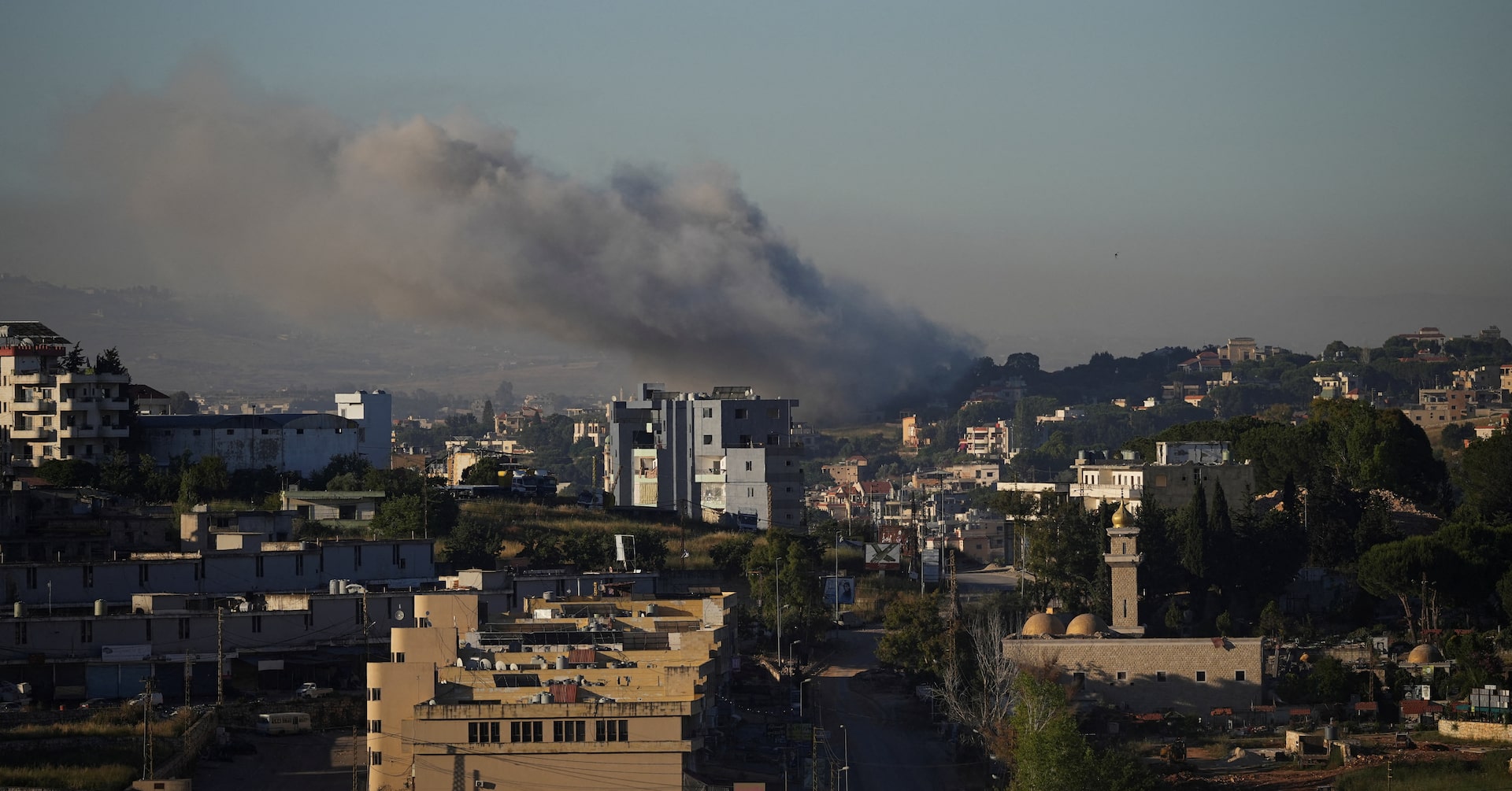
Israel steps up Hezbollah strikes as Iran talks advance
Prime Minister Benjamin Netanyahu said Israel would intensify strikes against Hezbollah in Lebanon as Washington kept pursuing diplomacy with Iran.

Prime Minister Benjamin Netanyahu said Monday that Israel would intensify strikes against Hezbollah in Lebanon as Washington pressed ahead with diplomacy with Iran, widening military pressure in the region while US negotiators kept working on a possible deal.
The statement tied a battlefield decision in Lebanon to the broader debate over whether talks with Tehran can calm the region. With US-Iran talks still active, the Trump administration has presented any accord as part of a wider regional realignment. Netanyahu’s remarks showed Israel was prepared to keep raising pressure on an Iran-backed group while that effort continues.
Speaking in remarks carried by the BBC, Netanyahu said the campaign would deepen.
“But what this requires of us now is to increase the strikes, to increase the intensity.”
— Benjamin Netanyahu, BBC News
In comments reported by The New York Times, Netanyahu said, “We are at war with Hezbollah,” and said Israeli forces had killed more than 600 Hezbollah militants in recent weeks.
Lebanon’s health ministry said 3,185 people had been killed and 9,600 wounded since fighting resumed in March, according to the same Times report. The BBC reported that more than one million people had been displaced in Lebanon and that 10 Israeli soldiers had been killed since the initial ceasefire with Lebanon was agreed. The scale of those losses helps explain why fighting in Lebanon keeps feeding back into the wider discussion about Iran and regional security.
The remarks suggested Israel does not see the current pace of operations as sufficient. They also indicated that the northern front remains active even as Washington argues that diplomacy with Tehran could reduce the risk of a wider war.
Why the timing matters
Reuters reported that President Donald Trump had linked any Iran agreement to a broader push around the Abraham Accords, the normalization deals between Israel and Arab states that Washington wants to revive and expand. Trump has cast that diplomacy as part of an effort to lower tensions while reshaping regional alliances.
Netanyahu did not address the talks directly. Still, his pledge to intensify strikes showed how exposed the diplomatic effort remains to fighting outside the negotiating room. Any US-Iran accord would have to contend with an active conflict on Israel’s border with Lebanon.
Hezbollah matters in that calculation for both sides. Israel sees the group as the immediate military threat on its northern frontier. Iran sees it as one of the regional partners that gives Tehran influence beyond its own borders and as part of the network that shapes how any deal is judged in practice.
That overlap means Lebanon is likely to be one of the first places where any diplomatic agreement is tested. Washington and Tehran may be able to produce terms on paper. The harder measure will be whether combat on the northern border slows, holds or intensifies in the days after any breakthrough.
For now, Netanyahu’s message was direct: Israel plans to hit Hezbollah harder while the diplomatic channel with Iran remains open. Lebanon, in turn, is likely to stay central to the region’s next phase.

Yara Halabi
Foreign affairs correspondent covering the Middle East, the Gulf and US foreign policy. Reports from London.