Oreshnik missile raises pressure on Ukraine air defences
Oreshnik missile use over Kyiv points to a bigger problem for Ukraine: mixed salvos can drain scarce interceptors faster than allies can replace them.
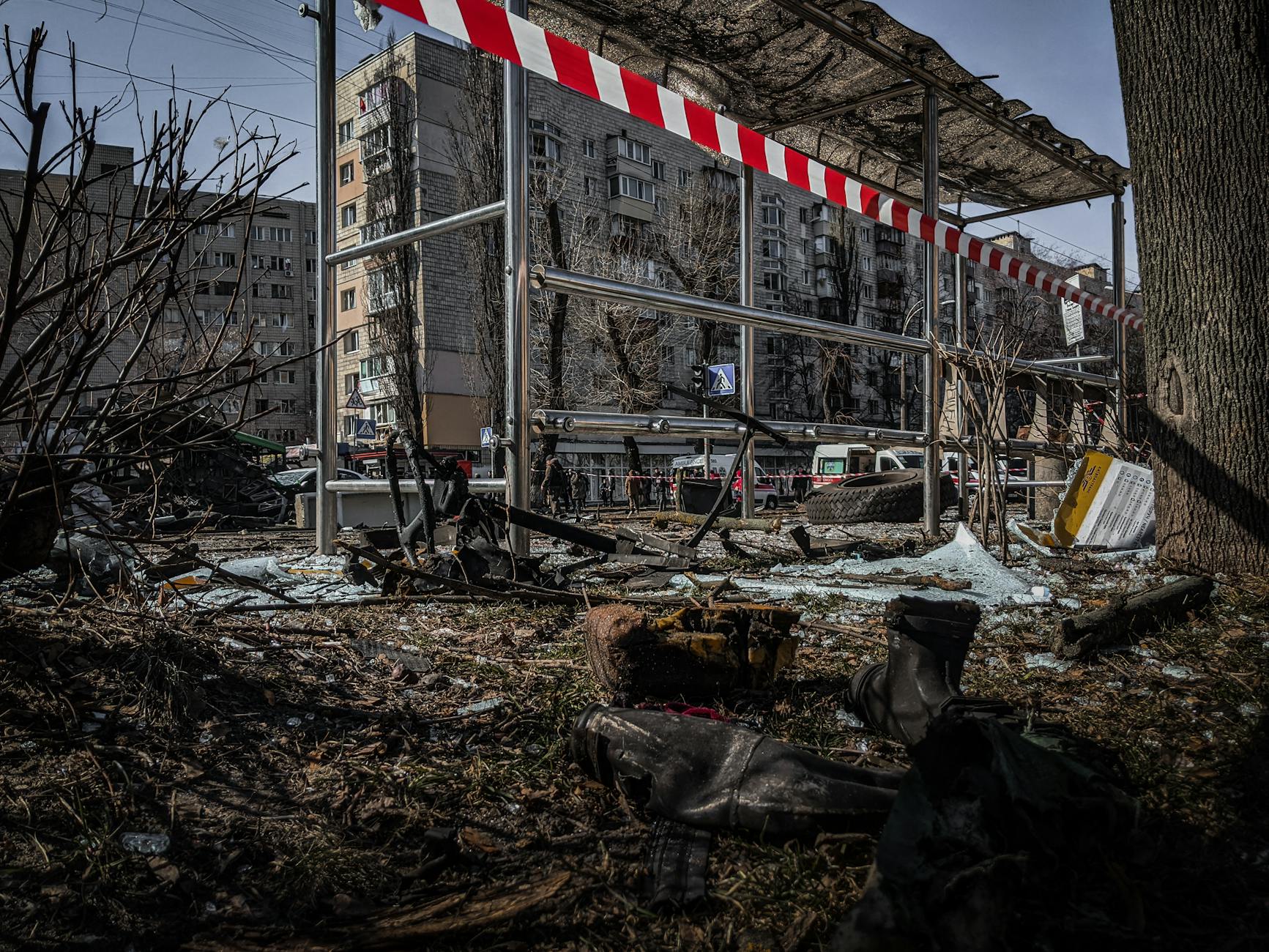
For Ukraine, Russia’s overnight barrage on Kyiv stood out not only for its scale but for what it suggested about the next air-defence problem facing the country. By folding an Oreshnik launch into an assault that Ukrainian and Western coverage said involved 90 missiles and 600 drones, Moscow turned a familiar night of strikes into a harder test of how long Kyiv could absorb mixed salvos without thinning the interceptors it needs for the most dangerous threats.
The bigger point is not novelty alone. Russia may have killed only a handful more people by using Oreshnik than it would have with another ballistic missile, and open-source analysts remain doubtful that the weapon changes battlefield accuracy in any decisive way. Even so, the launch fit a broader Russian method: pair drones, cruise missiles and harder-to-stop ballistic systems in the same window, force Ukraine to make expensive defensive choices at speed, then leave European capitals to decide whether they are watching a military innovation or a coercive rehearsal.
Even then, that framing needs a counterweight. The missile itself looks less like a war-winning breakthrough than an instrument of intimidation. In analysis by Fabian Hoffmann at Missile Matters, Oreshnik’s value lies less in pinpoint destruction than in the pressure it creates for defenders confronting a dual-capable system that is fast, difficult to classify early and politically charged the moment it is launched. Open-source weapons analysts have made a similar point from the other direction: if the missile’s conventional accuracy remains limited, the military effect is niche even as the signalling effect grows.
A day earlier, Ukrainian President Volodymyr Zelensky had warned that Russia appeared to be preparing a combined strike on Kyiv and other targets.
“We are seeing signs of preparation for a combined strike on Ukrainian territory, including Kyiv, involving various types of weaponry.”
— Volodymyr Zelensky, president of Ukraine, via Reuters
That warning matters because the latest launch was widely described as the third known wartime use of Oreshnik. Three uses do not prove that Russia has found an ideal strike weapon. They do suggest that Moscow sees value in keeping the system in circulation often enough to remind Ukraine and its backers that the missile can appear with little warning and force another round of debate about escalation.
After the strike, EU foreign policy chief Kaja Kallas called the launch “political scare-tactic and reckless nuclear-brinkmanship.”
“political scare-tactic and reckless nuclear-brinkmanship”
— Kaja Kallas, EU foreign policy chief, via BBC News
For Europe, her choice of words went to the heart of the policy question. The best answer to whether Oreshnik matters more as a coercive signal than as a precise strike weapon is yes, at least so far. Russia does not need the missile to land with perfect conventional accuracy for it to shape Western decision-making. It only needs the launch to inject ambiguity into the night sky over Kyiv, raise the possibility of scarce high-end interceptors being spent, and remind Europe that an intermediate-range threat has re-entered the theatre in practice, not just on paper.
The saturation problem
Inside Ukraine’s air-defence network, the issue is less one missile than the arithmetic around it. Even where interceptors work, the burden is cumulative. Ukraine’s air force said 55 missiles and 549 drones were shot down or intercepted, but it also said 16 missile and 51 drone hits were recorded in 54 locations. That is the saturation problem in one line: a defence can perform impressively and still allow enough through to damage cities, infrastructure and command rhythm.
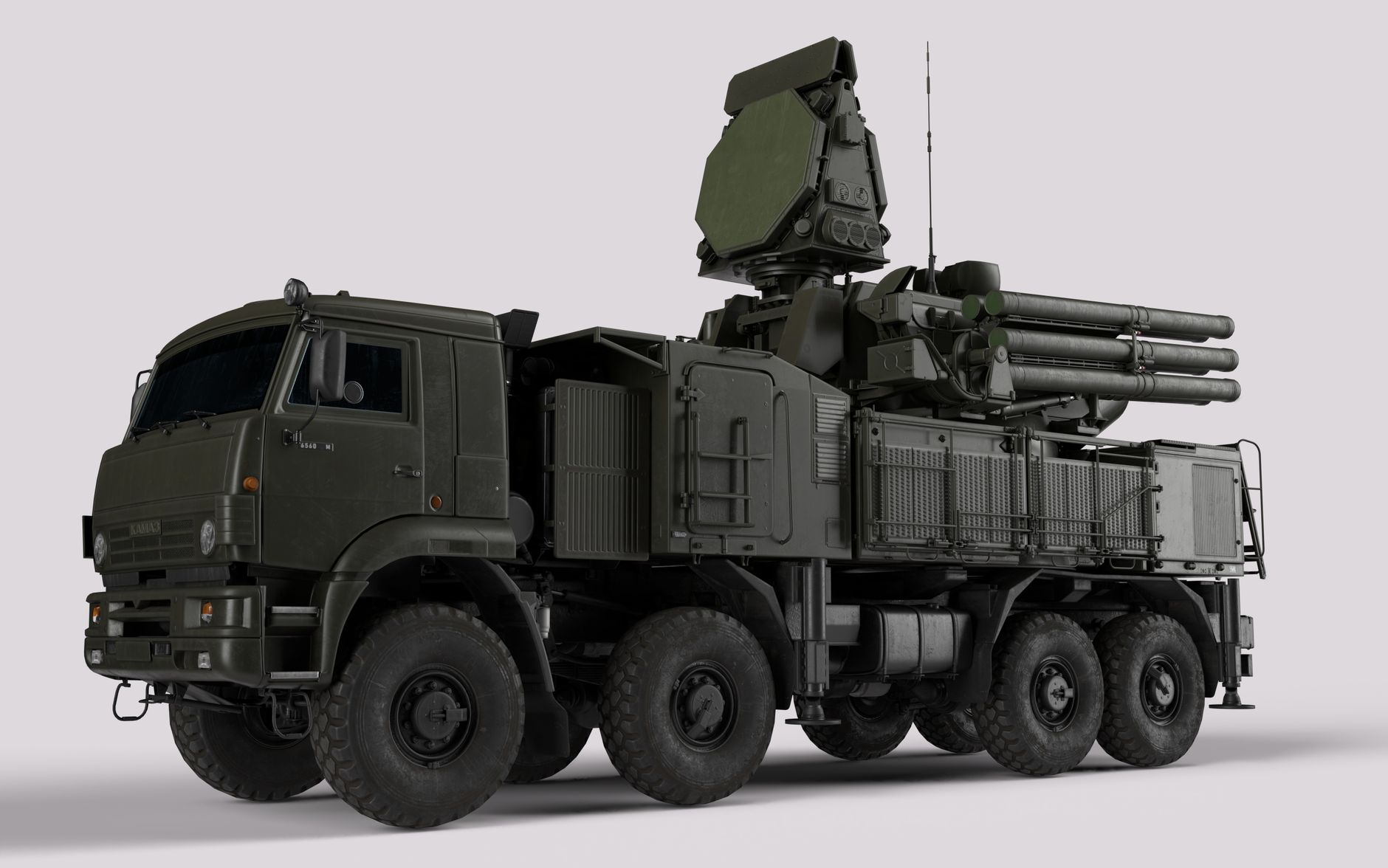
Combined raids make that arithmetic worse. Slow drones can draw fire, clutter radar pictures and force mobile teams to stay active for hours. Cruise missiles add route complexity. Ballistic systems compress decision time further. The point is not that every layer of Ukraine’s shield fails at once. A combined raid can make even a capable shield spend the wrong assets at the wrong moment, particularly if commanders have to think about whether a fast track might be carrying something more politically charged than a standard strike package.
Industrial capacity matters as much as the launch itself. The New York Times reported this month that Patriot interceptor missiles can take up to 36 months and cost about $4 million to build. A recent CSIS analysis argued Europe needs an emergency air-defence push precisely because the industrial base for high-end interception remains too slow for the tempo of modern missile war. If Russia can keep presenting Ukraine with mixed salvos, the question is not whether Kyiv can stop some of them. It is whether the West can replace the defensive effort at the pace required.
Kyiv is trying to answer part of that problem with cheaper layers. Recent reporting from Business Insider on low-cost interceptor missiles and from BBC News on drone-hunting adaptations points to the same lesson: save the most sophisticated interceptors for the hardest targets, then push drones and lower-end threats down to cheaper systems, mobile teams and improvised counters. That helps answer one of the Ukrainian air force’s implicit questions, how much of a mixed raid can be defeated before stocks thin. The answer is more if the cheaper layers hold, much less if the expensive layers have to do everything.
From Moscow’s perspective, that makes Oreshnik useful even if it remains rare. Russia does not need to fire the missile every week for it to support a broader attritional campaign. Used sparingly, alongside larger drone and missile waves, it can sharpen the sense that Ukraine’s shield is being tested at its most expensive edge. That is a more plausible military purpose than the idea that Oreshnik alone is about to transform the strike war.
The message to Europe
For European policymakers, the issue starts with geography and warning time. Earlier commentary on the missile’s design and basing logic has tied Oreshnik to a revived intermediate-range threat for European capitals and Nato planners. The concern is not only that Ukraine has to defend against one more track. Europe is being reminded how little time a dual-capable system can leave for political judgement once a launch is detected.

Seen that way, the latest barrage looked like more than another heavy night over Kyiv. Semafor described it as part of a new wave of escalation, and that reading fits the pattern better than treating Oreshnik as a standalone marvel weapon. Russia threatened retaliation, telegraphed the possibility of an Oreshnik strike, then used the missile inside a wider raid. The sequence put pressure on Ukraine’s defences, but it also tested how much rhetorical and material response Europe would offer once the missile actually appeared.
Skeptics still have a case. If the system is expensive, conventionally limited and best suited to area effects or signalling, Russia may keep it as a theatre-level psychological tool rather than a mainline strike asset. That would be consistent with the evidence so far. Yet that does not make the problem smaller for Ukraine. A niche missile can still be strategically useful if it forces an already stretched defender to reserve top-end interceptors, recalculate warning windows and worry that the next combined salvo may be denser, faster or more varied.
The practical lesson for Ukraine and its backers is uncomfortable but clear. The next escalation phase may not be defined by a constant stream of Oreshnik launches. It is more likely to be defined by Russia using the missile selectively inside bigger saturation raids, exploiting the fact that every such launch carries military uncertainty and political weight at the same time. Ukraine’s air-defence challenge, in other words, is no longer just about shooting down what flies. It is about making sure Russia cannot turn scarcity, ambiguity and production lag into a weapon of their own.

Anya Voronova
Eastern Europe correspondent covering the war in Ukraine, Russia and the Caucasus. Reports from Warsaw.