Congo Ebola outbreak widens after mob burns treatment center
A mob burned an Ebola treatment center in eastern Congo, disrupting efforts to contain a rare Bundibugyo-virus outbreak that WHO has declared an international emergency.
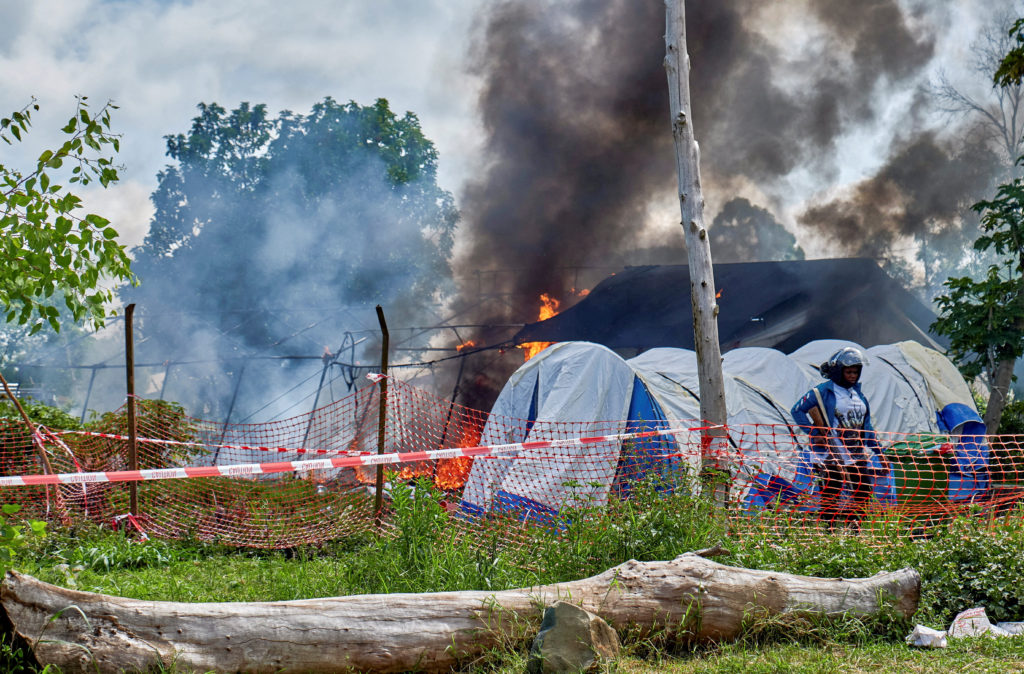
A mob burned an Ebola treatment center in eastern Congo after hospital staff refused to release the body of a suspected victim, disrupting efforts to contain a rare outbreak that health officials say they are still tracing.
The attack in Ituri province added a security crisis to an outbreak that the World Health Organization said last week had become a public health emergency of international concern in Congo and Uganda. The New York Times reported that several hundred people gathered at the hospital gates to demand the body for funeral rites.
The dispute centered on funeral customs and the strict burial rules used in Ebola outbreaks to limit transmission from infected remains. Jean-Claude Mukendi, a police officer helping coordinate security for the response, told Reuters that relatives and other young people wanted to take the body home despite the restrictions.
“His family, friends, and other young people wanted to take his body home for a funeral even though the instructions from the authorities during this Ebola virus outbreak are clear,” Mukendi told Reuters.
Reuters said six patients were being treated in the tents that were burned. Alexis Burata, a local student who witnessed the attack, told AP that police tried to calm the crowd but failed.
“The police intervened to try to calm the situation, but unfortunately they were unsuccessful,” Burata told AP.
The case numbers show why the disruption matters. AP reported 671 suspected cases in Congo’s two affected provinces, while Reuters, citing health ministry data, said the outbreak had been linked to 160 suspected deaths. WHO said eight cases in Ituri had been confirmed by a laboratory.
The wide gap between suspected and confirmed cases leaves officials trying to enforce burial restrictions and trace contacts while investigators are still establishing the scale of the outbreak. In Ebola outbreaks, suspected deaths can trigger controls before laboratory confirmation is complete.
Eastern Congo has repeatedly seen public-health measures collide with insecurity and mistrust of authorities. That leaves responders trying to protect treatment sites and persuade families to accept safe-burial rules at the same time.
Containment under pressure
Jean Kaseya, director-general of Africa CDC, said the response was still centered on finding cases and tracing transmission chains rather than declaring the outbreak under control. In comments carried by AP, he said investigators were still searching for patients.
“We are still in the phase where we are intensifying the investigation, searching for cases,” Kaseya said.
WHO’s May 17 emergency declaration covering Congo and Uganda suggested officials were already planning for a response beyond a single district. Bundibugyo virus is a rarer Ebola species than the Zaire strain behind some earlier outbreaks in Congo, which raises the pressure on early containment even with a low confirmed tally.
Officials say the fire matters beyond the loss of one treatment site. A damaged clinic can interrupt isolation, sample collection and patient monitoring while response teams try to rebuild facilities and keep track of new cases.
For Congo’s authorities and international health agencies, the next test is whether they can restore enough trust to keep patients in treatment, secure burial procedures and protect staff trying to investigate new infections.

Yara Halabi
Foreign affairs correspondent covering the Middle East, the Gulf and US foreign policy. Reports from London.