Hawkish Fed minutes complicate the transition to Warsh
Fed minutes showed more officials open to another rate increase if war-driven inflation persists, leaving Kevin Warsh to inherit a hawkish committee.
Wednesday’s release of the latest Federal Reserve minutes showed a broader bloc of officials prepared to raise interest rates again if inflation stays hot, a shift that matters less for what it says about one meeting than for what it says about the committee Kevin Warsh is about to inherit. Already, investors knew policymakers were uneasy about an oil shock tied to the Iran war and about tariffs feeding price pressure. More notable in the new readout was the balance of opinion: the minutes showed a majority prepared to contemplate “some policy firming” if inflation stayed above target, turning what had looked like a debate over how long to hold rates into a debate over how quickly the Fed might need to lean the other way.
Across the handover from Jerome Powell to incoming chair Kevin Warsh, that shift is the real point. Trump has pressed for easier money, but the committee Warsh is walking into looks more hawkish than markets expected a few weeks ago. According to Reuters’ account of the minutes, four dissents accompanied the decision to hold the target range at 3.50 per cent to 3.75 per cent, the most on a Fed vote since 1992. Separately, a Reuters market report showed traders lifting the implied odds of a higher policy rate by January to about 60 per cent.
Seen from a rates desk, the main question is how much of the hawkish turn is already in the front end of the curve. Inside the building, the more important issue is whether statement language shifts before any actual vote. From the skeptic’s side, the question is whether a 50 per cent jump in front-month crude becomes a broader core-services problem or fades before the Fed has to act.
“some policy firming would likely become appropriate if inflation were to continue to run persistently above 2 percent”
— Fed participants, minutes of the Federal Open Market Committee
The hawkish signal is in the wording
More than the steady-rate decision itself, the most market-moving line in the minutes was the way the committee described its reaction function. A rate hold is backward looking. Future-guidance language is not. At an institution that changes course a word at a time, the move from a few hawkish outliers to a documented majority matters because it tells traders the bar for resuming hikes is no longer theoretical.
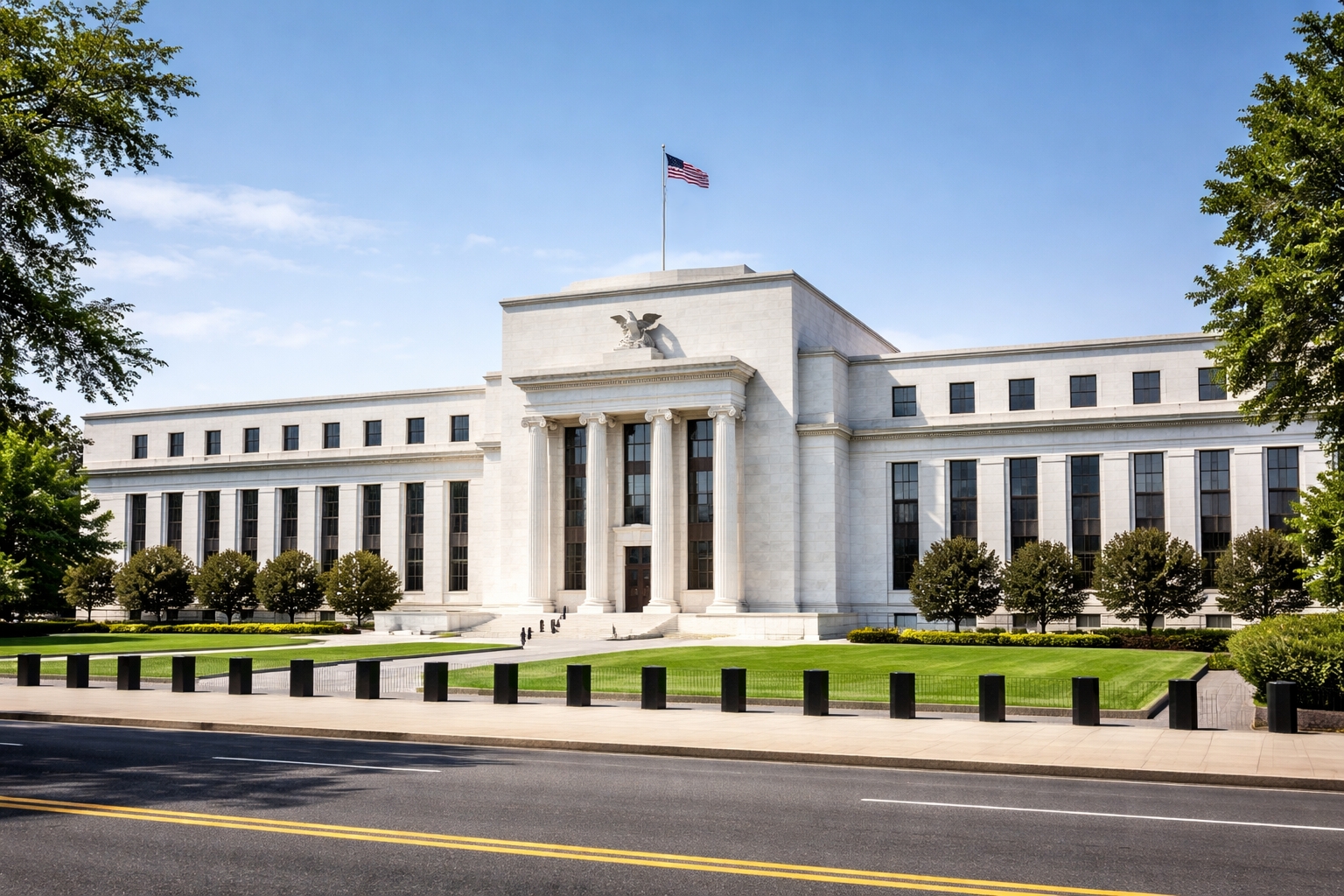
Equally revealing was the push to strip the easing bias from the statement. Rather than a quarrel between one or two regional presidents and everyone else, it looked like a sign that the internal argument has moved on from whether inflation is uncomfortably high to whether the Fed’s public guidance is still too soft for the data in front of it. In CNBC’s coverage, officials’ willingness to discuss higher rates was tied directly to the risk that the Iran war keeps adding to price pressure. By the minutes’ own telling, the concern runs through energy costs, freight pressure and the risk that households and businesses start treating a new inflation burst as durable.
“many participants indicated that they would have preferred removing the language from the postmeeting statement that suggested an easing bias”
— Fed participants, as reported by Reuters
Skeptics are not arguing that the Fed is inventing the problem. Their point is that oil shocks can distort the picture before they spread. If higher petrol, freight and import costs stay concentrated, the committee can wait. Once those pressures bleed into services prices and wage demands, waiting becomes harder. That is why the minutes matter. They show more officials are prepared to assume the broader transmission risk is real unless the next data prints prove otherwise.
Warsh may change the tone before the rate path
No incoming chair likes inheriting a committee that has already started repositioning itself for the possibility that policy is not tight enough. For Warsh, that makes communications the first battlefield. At his first meetings, he may not want his defining act to be a rate increase. He may still have to signal that cuts are off the table for longer, or that the statement no longer carries any residual easing bias, just to keep up with the centre of gravity inside the FOMC.

From an insider’s perspective, the sequence matters as much as the vote count. The move from a few officials worrying about renewed inflation to many, and now a majority willing to consider firming, is how the Fed usually prepares markets before it does anything mechanical. That progression suggests Warsh’s first challenge is not persuading doves to become hawks. It is managing a committee that may already have moved further in that direction than the White House would like.
Politics makes that harder. Trump chose Warsh expecting a more responsive central bank. Yet reporting on Warsh’s plans for the Fed has already suggested he wants to remake how the institution communicates and how it measures underlying inflation, not simply deliver quick cuts. In The New York Times’ account, the document read as evidence that a majority was willing to contemplate higher rates. That is not an easy backdrop for a new chair who must prove independence on day one.
Markets have priced a warning, not a verdict
Still, the market response argues against treating the minutes as a done deal. The front end moved, with the 2-year Treasury yield touching 4.10 per cent and futures markets shifting toward a higher path. Even so, the same market pricing cited by Reuters still put the chance of a higher fed funds rate by January at roughly 60 per cent, not something close to certainty.
For analysts, that partly answers whether the minutes alone are enough. They are enough to force repricing. They are not enough to settle the argument. Traders still appear to want another hot inflation report, or a clearer sign that energy-driven pressure is leaking into the categories the Fed cares about most, before fully embracing the idea of renewed tightening. In other words, the minutes shifted the burden of proof. They did not eliminate it.
Days before the release, the bond market had already been warning that policymakers may be behind the curve. Earlier CNBC analysis described investors pushing yields higher on the view that the easing bias no longer fit the inflation backdrop. Wednesday’s minutes did not invent that fear. They validated it. What markets heard was not that a hike is coming at the next meeting, but that the committee now sees a plausible path to one and is prepared to say so in writing.
The handover is now part of the policy signal
Beyond the next meeting, Warsh’s transition itself has become a market variable. Usually, a leadership change at the Fed matters over quarters. Here, it matters immediately because it arrives while the committee is rethinking its bias in real time. If Warsh tries to echo Trump’s desire for lower rates, he risks colliding with a committee whose published minutes now point the other way. If he leans into the committee’s hawkish mood, he risks making his independence the story before he has taken formal ownership of the institution.
Watch the communications first. Markets will watch whether the statement language changes, whether Warsh elevates measures of underlying inflation in speeches, and whether officials keep talking about upside price risks instead of policy patience. Those signals will tell investors whether the latest minutes were a snapshot of a nervous committee or the opening document in a new tightening argument.
War-driven inflation shocks rarely wait politely for a transition to finish. The minutes showed more officials are prepared to react if the pressure persists. That does not guarantee another hike. It does mean the handover at the central bank now looks less like a reset and more like an argument Warsh is joining in progress.
Marcus Holloway
Markets editor covering UK gilts, sterling and the Bank of England. Previously a fixed-income strategist in the City.