Argentina's China swap exit tests US strategy in Latin America
Argentina's reported unwind of a Chinese swap line under US pressure turns a reserve-management tool into a test of how Washington can challenge Beijing's leverage in Latin America.
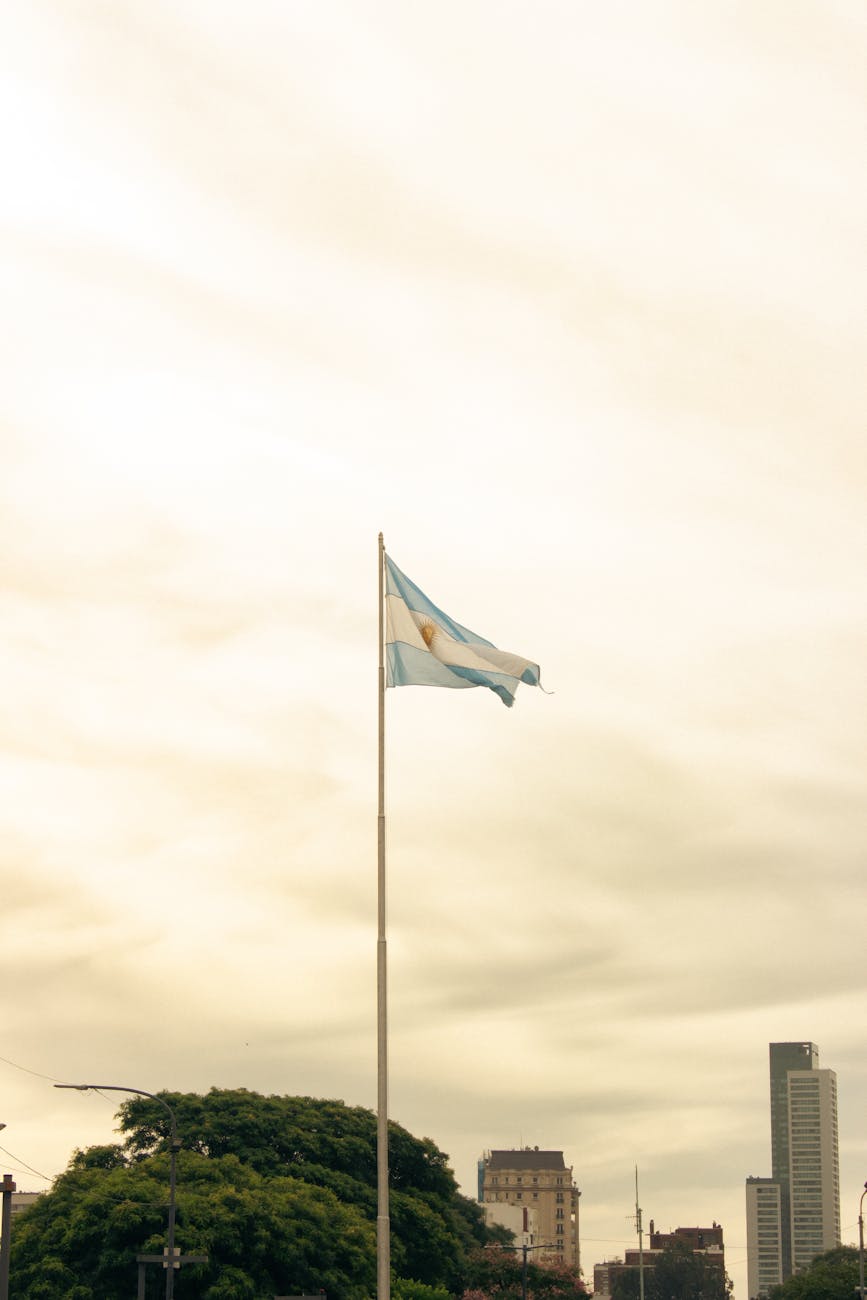
President Javier Milei is moving to unwind Argentina’s currency swap line with China after pressure from President Donald Trump, turning what had been a central-bank rescue valve into a contest over who gets to provide emergency finance in Latin America. The plan matters beyond Buenos Aires. The swap, valued at about $18 billion, was one of Beijing’s clearest demonstrations that it could keep a crisis-hit government liquid when Western lenders were constrained or politically cautious — and it was a bilateral accounting tool, not aid.
Officials in Buenos Aires told local media, as first reported by the South China Morning Post, that nearly 90 per cent of the activated portion of the facility had already been repaid and the balance should be cleared by mid-2026. The Buenos Aires Times reported that the activated slice was $5 billion, drawn in 2023 when Argentina was short of reserves. At the same time, a separate SCMP report said Washington had offered a $20 billion counter-swap on condition Buenos Aires cut the Chinese line. That shifts the story from debt management to alignment. A financing backstop becomes a foreign-policy choice.
That is the pivot.
Argentina’s arrangement with Beijing always had a technical purpose: it helped the central bank shore up reserves, settle some trade and reduce immediate dollar pressure. But the Al Jazeera account of Argentina’s yuan lifeline and a Harvard Kennedy School paper on the geopolitics of swap lines both describe a wider pattern in which crisis liquidity doubles as statecraft. Countries accept a swap because they need room to breathe. The lender gains something harder to price: relevance when other sources of cash are uncertain, slow or politically costly.
The Milei case tests whether that Chinese advantage can be rolled back with direct pressure and an alternative balance sheet. Trump’s own language has been blunt. In a January interview with CNN he said of Argentina, “If we didn’t do this, China would have been there and Russia would have been there … but they’re not going to be there now.” The quote treats financial support as a way to deny strategic space to rivals, not as a stabilisation instrument. If the administration is willing to swap dollars for influence, the US response to Chinese finance in the region is no longer mainly diplomatic rhetoric. It is becoming transactional.
China’s hold on Argentina rested on timing as much as size. The money was useful when reserves were scarce and IMF politics were hard. The Harvard paper argues that these facilities matter precisely because they sit outside the formal architecture of the IMF and the Federal Reserve’s own swap network. They can be activated when orthodox channels are narrow or unavailable. For governments under market stress, that flexibility is part of the attraction.
Beijing has made clear that it sees the US push as coercive, not routine competition. In the SCMP report on Washington’s $20 billion offer, Chinese policy scholar Xu Shicheng warned that “If Argentina succumbs to coercion from the United States, the greatest loss will be borne by Argentina itself.” Beijing has an interest in saying that, but the argument deserves attention. A swap line is valuable even when it is not being drawn. It matters because it exists. Removing it changes the borrower’s negotiating position the next time markets seize up or political talks with creditors turn difficult.
A rescue line becomes leverage
Repayment is not the same as freedom.
The fact that Argentina has repaid nearly 90 per cent of the activated funding does not settle the bigger question. The Buenos Aires Times account suggests the country may soon exit the emergency use of the line, but ending the standby relationship is something else. One is a repayment story. The other is an insurance story. Giving up a backstop narrows a government’s options before the next shock arrives. It is not simply closing an account.
The regional signal matters more than the Argentine one. A CSIS analysis on US strategy toward China in Latin America argues that Washington has left a strategic vacuum that Beijing has learned to fill through lending, infrastructure and commercial ties. If the Trump administration can persuade a high-profile partner to step back from a Chinese financial lifeline and replace it with a US-backed facility, other governments will read that as proof that Washington is prepared to compete with its own instruments, not just warnings. But if the offer is highly personal, politically conditional or difficult to repeat elsewhere, the lesson may cut the other way. States may conclude that Chinese financing remains the more dependable fallback because it is available in moments when Washington still hesitates.
Milei is left with a narrower set of choices than the optics suggest. He can present repayment as a sovereign clean-up and a sign of closer ties with the United States. Yet the cost of that shift may be a deeper dependence on the preferences of a single US administration. Argentina would not be escaping the politics of emergency finance. It would be switching patrons. For a government that has spent years juggling the IMF, capital controls and recurrent reserve stress, that is not a trivial distinction.
The immediate question is whether the reported US counter-swap materialises on the terms described. If it does, Argentina’s move will rank among the clearer recent examples of Washington using financial support to contest China’s place in the western hemisphere. If it does not, Buenos Aires may find that it surrendered a useful option in exchange for backing that was more political than durable. Either way, the episode shows how little separation now exists between central-bank plumbing and great-power rivalry. In Argentina, a swap line once sold as a lifeline has become a measure of who gets to shape the country’s room for manoeuvre.

Yara Halabi
Foreign affairs correspondent covering the Middle East, the Gulf and US foreign policy. Reports from London.