San Diego mosque killings sharpen focus on anti-Muslim violence
The shooting killed three people at the Islamic Center of San Diego and is being investigated as a suspected hate crime, putting renewed scrutiny on anti-Muslim violence in the US.
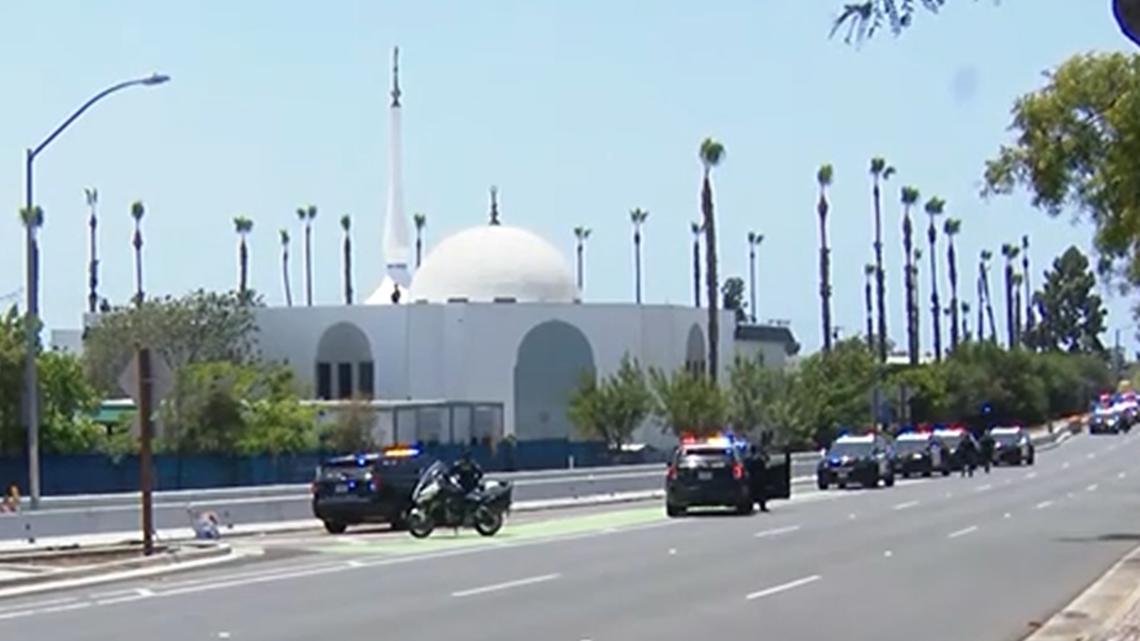
Three people were killed at the Islamic Center of San Diego on Monday night in an attack that police and the FBI are treating as a suspected hate crime. Two teenage suspects were later found dead, BBC News and the Associated Press reported.
Within hours, the attack on one of Southern California’s largest Muslim communities had become a case with national implications. Investigators said one suspect left a note containing general hate rhetoric. Muslim civil-rights groups said the killings should force a harder reckoning with what the Council on American-Islamic Relations called a wider climate of hostility toward American Muslims.
San Diego Police Chief Scott Wahl said officers at the scene did not fire their weapons. “There were no officers involved in firing their weapons,” Wahl told BBC News. Police received a call from the mother of one suspect at 9:42 p.m. local time before the attack, the BBC reported. Authorities identified the gunmen only as teenagers. BBC and AP said the pair were 17 and 18; Al Jazeera reported one as 19. Even that small discrepancy in ages showed how few details had been publicly confirmed as the case drew national attention.
Early reports identified the dead as three men who had come to the mosque for evening prayer. The Islamic Center serves as both a prayer space and a gathering point for Muslim families across the San Diego area. Taha Hassane, the center’s director, said the attack was an assault on the right to worship in safety. “It is extremely outrageous to target a place of worship,” Hassane told BBC News.
Police said the FBI was assisting because the killings were being investigated as a suspected hate crime. Beyond the call from the suspect’s mother and officers later finding the two suspects dead, investigators have released no full chronology of the attack. They have also declined to describe any broader network or ideological affiliation beyond the hate rhetoric cited in the note. Two parallel efforts are now underway: establishing the facts of the shooting and determining whether warning signs were missed before three worshippers were killed.
Community and political response
Ahmed Rehab, executive director of CAIR-Chicago, said the attack had rattled Muslim communities far beyond San Diego. “No mosque or any house of worship should have to go through this,” Rehab said in a statement from CAIR-Chicago. CAIR’s national office demanded that politicians “end” what it called a campaign of hate against American Muslims. The group urged community members to stay alert and pressed public officials to respond in language that matched the gravity of the attack.
CAIR’s posture explains why the case will carry weight beyond California. A mass killing at a mosque starts as a local criminal investigation. When the initial evidence points to bias and the target is a house of worship, it also forces authorities to state plainly how they will describe anti-Muslim violence. Civil-rights groups have argued that the war in Gaza and wider Middle East tensions have deepened hostility toward Muslims in the United States. The San Diego shooting, with three dead at a prominent mosque and investigators already using hate-crime language, gives that argument its most visible test.
Scrutiny of prevention is certain to intensify as well. BBC reported that the mother of one suspect contacted police before the shooting. That detail will raise questions about what information officers had before gunfire erupted and whether there was a window to intervene. Officials have not yet released a detailed account of that sequence. Until they do, the pre-attack call will remain one of the most closely watched facts in the case.
What is publicly known remains narrow. Three people are dead at a mosque, two teenage suspects were found dead at the scene, and investigators are treating the attack as a suspected hate crime. The case has already become a national test of how plainly authorities describe anti-Muslim violence. As police and federal agents release details on the victims, the suspects and the note one of them left behind, community leaders and national Muslim groups are expected to press for tighter security and a clearer official account of how the attack unfolded.

Theo Larkin
Defense correspondent covering US military operations, weapons procurement and the Pentagon. Reports from Washington.