Alabama voting-rights rally thrusts redistricting into 2026 fight
Thousands rallied in Montgomery as Alabama's map fight and a fresh Supreme Court ruling put Black political representation back at the center of 2026 politics.
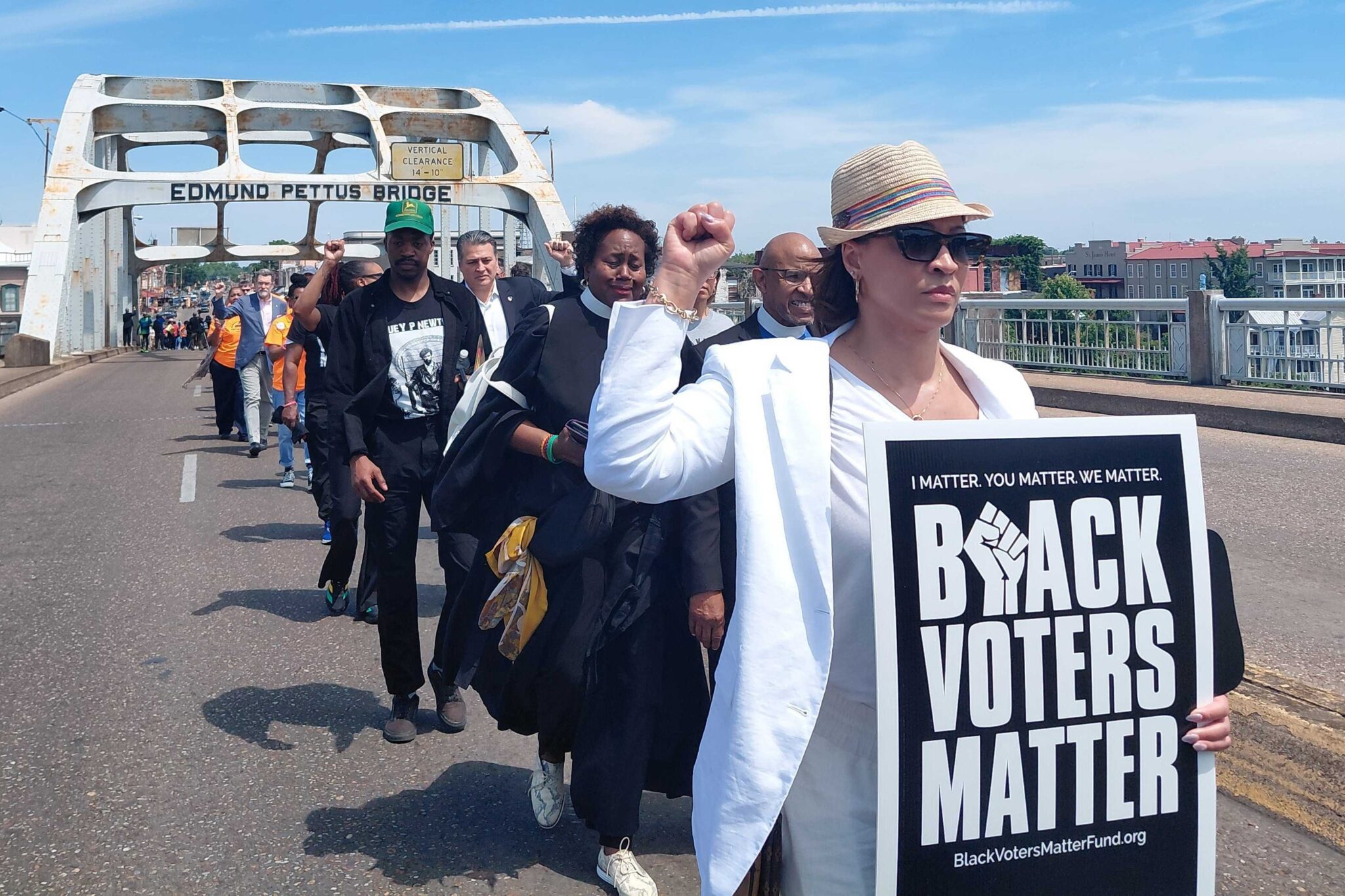
Thousands of voting-rights advocates rallied in Montgomery, Alabama, on Saturday to defend Black political representation, putting the state’s congressional map fight back at the center of the 2026 midterm debate. Organisers said the turnout proved that Alabama’s long court battle over district lines still carries national weight.
The march at the state capitol followed years of litigation over Alabama’s House map and came days after a Supreme Court ruling in a Louisiana redistricting case sharpened fears that protections for Black voters could narrow across the South. In an emergency filing and public statement, the ACLU and allied groups said Alabama’s court-ordered map gives Black voters a fair opportunity to elect candidates in two congressional districts, a change they say remains vulnerable. For organisers in Montgomery, that made the rally less a symbolic show than a warning that a hard-won map could still be weakened before another federal election.
The rally ran for four hours, according to AP. Speakers framed it as a direct answer to the latest court fight. Civil rights leader Bernice King told the crowd that the ruling was “a moral disgrace and a shameless assault on Black political power.” Her remarks stayed on representation, not commemoration, and organisers used the Montgomery setting to argue that the state is still where voting-rights law gets tested, more than six decades after the civil-rights movement changed national politics.
Montgomery carries symbolic weight in any voting-rights fight. The city was central to the civil-rights movement, and speakers drew a straight line from the battles over ballot access to the current fight over how districts translate Black population into seats. The crowd’s attention stayed on electoral stakes, not on an anniversary retelling.
Shalela Dowdy, one of the Alabama plaintiffs, told marchers in remarks carried by PBS NewsHour: “We are not going down without a fight. We are not going back to Jim Crow maps.” The dispute in Alabama has centered on whether Black voters have a realistic chance to elect their preferred candidates under the state’s congressional plan. PBS reported that 27 per cent of the population in Alabama’s 2nd Congressional District is Black, a figure that has remained central to the argument over how much electoral opportunity the map creates.
The legal stakes
Federal judges previously ordered Alabama to use a map with two districts where Black voters would have a fair chance to elect candidates of their choice. Advocacy groups said the recent Supreme Court move in the Louisiana dispute reopened worries that lower-court wins in the South could face new pressure as appeals continue and election calendars tighten.
The Alabama case is now a reference point in voting-rights litigation across the region. Lawyers and organisers look to it when courts weigh whether a map gives minority communities a practical route to representation. If the Alabama standard shifts, the effect will be felt in other Southern disputes where Black voters are challenging district lines before the 2026 campaign begins in earnest.
Representative Shomari Figures of Alabama, who also spoke at the rally, warned against treating the state’s recent gains as settled. “People tell us that we are not who we once were. That is true, but we certainly aren’t where we need to be,” he said, according to AP. His message tracked the organisers’ argument: the map fight is about leverage in the next Congress and whether Black communities can convert population strength into seats.
The Alabama rally also fit a wider Southern campaign. Axios reported that demonstrations over voting rights and redistricting were set to sweep Texas, Alabama and Mississippi this week, giving activists a multi-state platform as the 2026 campaign season accelerates. District lines shape where money goes, where candidates travel and which House races become plausible battlegrounds. Organisers in Montgomery argued that Alabama is an early signal, not an isolated case.
The question now is whether the legal gains that produced Alabama’s revised map endure through another election cycle. The crowd in Montgomery could not decide that. But it showed that voting-rights groups still have the capacity to turn a court fight into a campaign issue. With candidate recruitment and turnout efforts already under way for 2026, Alabama’s struggle over representation is moving from the courthouse to the stump.

Ramona Castellanos
US politics correspondent covering Congress, primaries and the Trump administration. Reports from Washington.