Lawmakers press Trump on Taiwan after Xi summit
Lawmakers urged Donald Trump to clarify support for Taiwan after he left Beijing without resolving a delayed arms package, turning summit optics into an immediate test of deterrence policy.
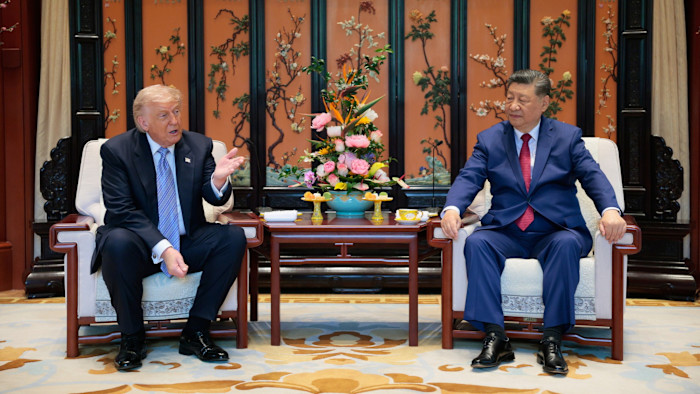
U.S. lawmakers pressed President Donald Trump to state whether he will move ahead with military support for Taiwan, a day after he wrapped up his summit with Chinese President Xi Jinping in Beijing. The demand from Capitol Hill deepened questions about whether the White House is sending mixed signals on deterrence.
The unresolved weapons package quickly became one of the summit’s most visible loose ends. At stake is not just whether Taipei receives additional hardware. A pause after a leader-level meeting leaves both Beijing and Taiwan reading the tea leaves on Washington’s commitment to the island’s defense.
Trump told reporters he had not decided whether to sign off on the package, saying he would make a determination.
He offered no timeline.
The White House had limited room to argue afterward that the Taiwan file was closed. The visit was framed in part as a bid to steady ties between the world’s two largest economies — but flashpoints remain, and Taiwan is among the sharpest.
On Capitol Hill, lawmakers made the case that delay is itself a signal. Michael McCaul said the United States should “arm Taiwan so they can defend themselves for deterrence against Chairman Xi,” while Gregory Meeks, the ranking member on the House Foreign Affairs Committee, said “it is important for us to make sure that Taiwan does have what it needs to defend itself”. Together, their remarks put public pressure on Trump to demonstrate that the summit had not softened Washington’s backing for Taipei.
What lawmakers want
Recent reporting puts the size of the pending package at different figures — a measure of how much remains unsettled. PBS NewsHour, citing Associated Press reporting, said a record $11 billion weapons package authorized in December had not moved ahead. CBS News reported that a $14 billion arms sale approved by Congress in January was still awaiting Trump’s signature after four months.
The central point stands regardless of the number. A large Taiwan package remained unresolved as Trump departed Beijing.
Lawmakers have focused on that uncertainty — not the dollar figure — in the hours after the trip.
The arms fight landed squarely beside summit optics. Washington Post reporting on the close of the Xi-Trump meeting said both leaders claimed progress even as differences persisted, and Taiwan stayed among the most sensitive points in the relationship.
Delay after a leader-level meeting invites rival readings. Beijing can interpret caution. Taipei can interpret drift.
A larger question has trailed Trump’s China policy since the summit opened: whether stabilizing ties with Xi can coexist with an unambiguous deterrence message on Taiwan. Trump has described U.S.-China relations as being in a good place, but his refusal to say yes or no on the arms package has left lawmakers filling the public silence.
For Congress, the immediate demand is narrower than a full restatement of Taiwan policy. Lawmakers want a decision on hardware already under discussion and a clearer signal that support for Taipei will not be traded for smoother summit atmospherics.
The longer the administration waits, the more the package turns into a test of whether it will match summit rhetoric with action.
Trump has not closed the door. Lawmakers have made clear they do not intend to wait long. Whether the Beijing meeting is remembered as a stabilizing moment or the start of fresh ambiguity over Taiwan now depends on the answer.

Theo Larkin
Defense correspondent covering US military operations, weapons procurement and the Pentagon. Reports from Washington.