Trump-Xi summit leaves Nvidia China sales in limbo
Trump and Xi ended their summit without resolving whether Nvidia can revive H200 sales to China, leaving export controls and chip diplomacy unsettled.
Nvidia left President Donald Trump’s summit with Xi Jinping without an answer on whether it can resume meaningful sales of advanced chips to China. The question, one of the most consequential unresolved issues in US technology policy, was left open after a meeting both governments had framed as a chance to steady relations.
The stakes extend well past one company. Reuters reported that Washington had cleared sales of Nvidia’s H200 chips to 10 Chinese companies but that no chips had yet been shipped — turning what looked like an opening into another stall. Trump offered no timetable and no formal policy shift, keeping export controls in reserve as leverage even as the White House signalled a broader thaw with Beijing.
US Trade Representative Jamieson Greer told CNBC, “There was no talk of chip export controls at the bilateral meeting.” The remark suggested the administration kept the issue off the summit’s formal agenda despite weeks of scrutiny of Nvidia’s China business. On its face, that points to continuity: export restrictions remain, companies keep lobbying, and any operational change comes later through the bureaucracy rather than across a negotiating table.
Trump’s own comments pointed the other way. He told The New York Times, “I think something could happen on that,” and the paper quoted Greer saying any eventual move would be “a sovereign decision for China.” Bloomberg reported that Trump said he had discussed AI guardrails and Nvidia’s chips with Xi. Markets and corporate executives got mixed signals from the same encounter: no formal negotiation on export controls, but no closed door either.
What happens next
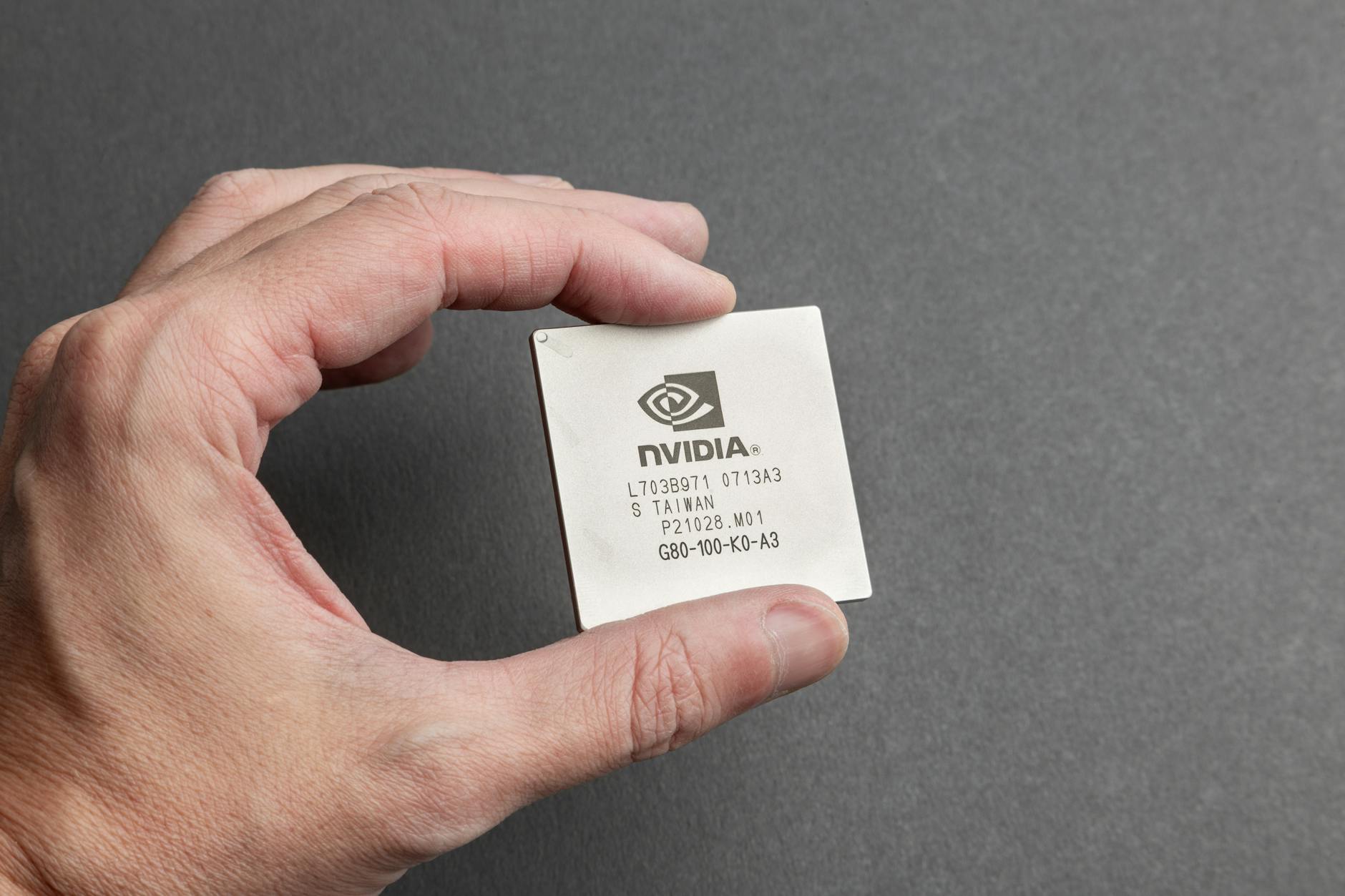
The H200 is at the centre of the current dispute — the Nvidia chip mentioned most directly in reporting on potential China sales and a shorthand for how much commercial room Washington will leave open inside a national-security regime designed to slow China’s access to high-performance computing. A summit that produced no clean answer preserved the tension rather than resolving it.
The politics go wider than semiconductors. CNBC’s account of the summit aftermath linked questions over chip exports to a broader negotiation involving rare earths and supply-chain access. Both governments still hold bargaining power in those areas, and the White House has reason to keep the issues connected. Beijing wants relief from technology curbs and more predictable commercial treatment. Washington wants to avoid handing away a strategic lever before it judges what it gets in return.
For Nvidia, the problem is practical as much as diplomatic. Reuters said Trump approved H200 sales to China in December 2025 and that Nvidia chief Jensen Huang was seeking a broader breakthrough, but the same report said zero H200 chips had been sold so far. The gap between clearance and delivery shows how fragile these openings are. A signal from the top of government creates expectations. Export policy still has to survive inter-agency caution, political optics, and the unresolved question of how far the United States wants Chinese firms to advance in artificial intelligence.
Chinese groups are pressing harder into domestic alternatives, including offerings from Huawei, even as American technology companies argue for clearer rules on what can and cannot be sold. The longer Washington leaves Nvidia’s position ambiguous, the more the commercial question becomes a strategic one: whether uncertainty itself pushes customers and policymakers to build around US chips rather than wait for them.
The summit appears to have lowered temperatures without settling the hardest issue for Nvidia in China. The company is not fully back in the market, but it has not been definitively shut out. Officials, customers and investors are now parsing Trump’s hints against Greer’s denials and waiting to see whether the administration turns diplomatic ambiguity into a written policy.
Kai Mendel
Technology editor covering fintech, AI and the platform economy. Reports from San Francisco.