Tennessee Republicans set Thursday vote on map that splits Memphis into three districts
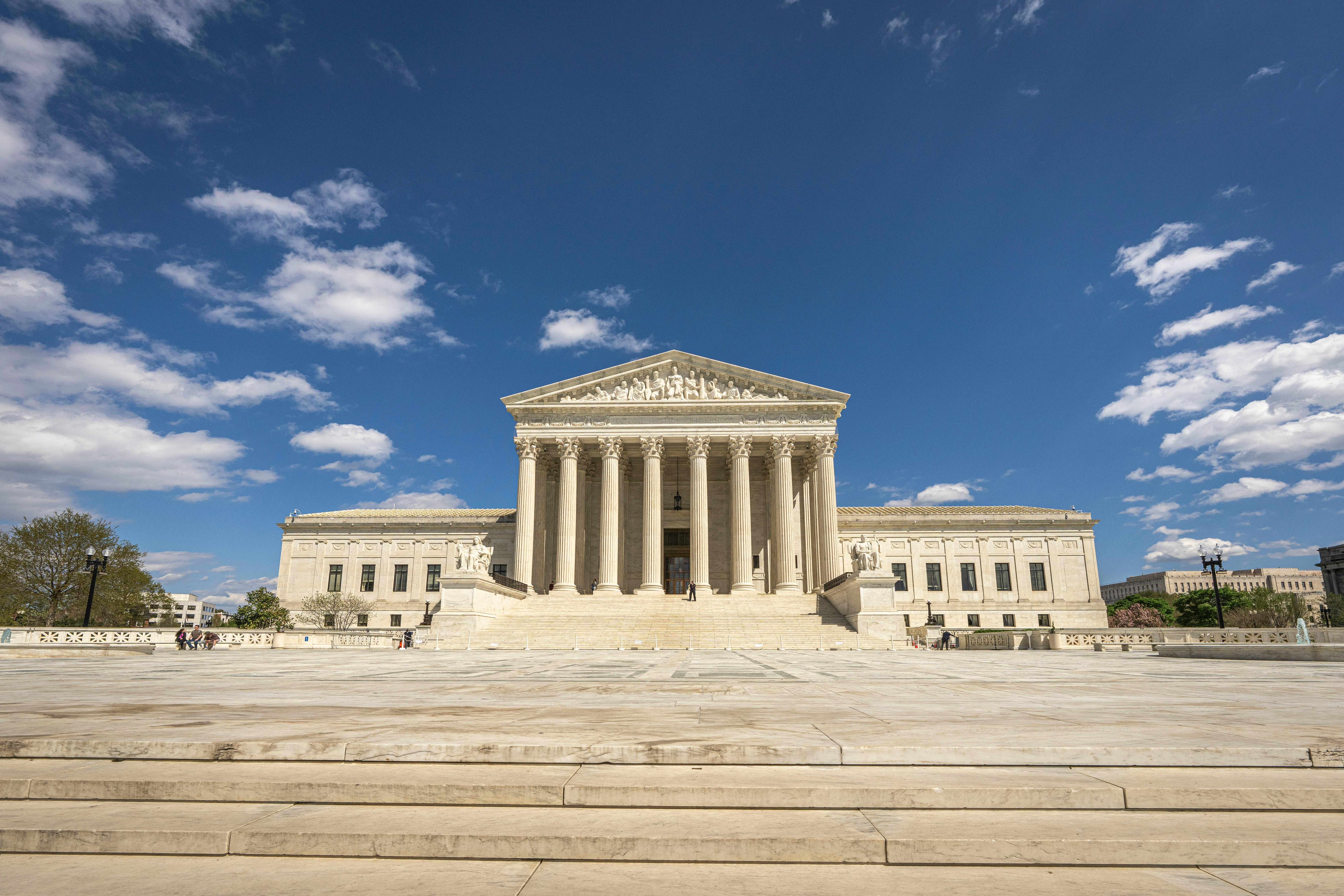
Tennessee Republicans were due to vote Thursday on a congressional map that would split Memphis into three districts and end the state's only Democratic House seat, days after the Supreme Court's Callais ruling.

Tennessee Republicans were due to vote Thursday on a new congressional map that would carve Memphis into three districts and eliminate the state's only Democratic-held US House seat, the latest in a wave of GOP-led mid-decade redistricting since the Supreme Court weakened a core section of the Voting Rights Act.
The map, filed Wednesday morning by House Speaker Cameron Sexton and Senate Majority Leader Jack Johnson, would split a 9th Congressional District that has elected a Democrat for two decades. The seat is currently held by Steve Cohen. Under the new lines, the district would stretch nearly 300 miles, from the southern edge of Memphis to the outskirts of Nashville. Memphis itself, a city of more than one million people, would no longer have a single representative in Washington.
Republican leaders said in a statement that the proposal "modernizes Tennessee's redistricting process by removing racial data from the mapmaking process entirely" and described the move as a "direct response" to two recent rulings by the US Supreme Court, Louisiana v. Callais and Alexander v. South Carolina State Conference of the NAACP. The April 29 Callais ruling held that Louisiana had relied too heavily on race in creating a second Black-majority district.
"The Supreme Court has opined that redistricting, like the judicial system, should be color-blind. The decision indicated states like Tennessee can redistrict based on partisan politics," Sexton said. "Tennessee's redistricting will reduce the risk of future legal challenges while promoting sound and strategic conservatism."
The legislative package goes beyond the map itself. It would repeal a state law that limits congressional redistricting to once a decade. It would also reopen the candidate qualifying window so that new candidates can enter the August 6 primary and existing ones can switch districts. Tennessee Republicans hold supermajorities in both chambers and are expected to pass the package on Thursday.
What the new lines do
Under the proposal, the 9th would no longer be anchored on Memphis. The map would also further fracture Nashville, which the 2022 round of redistricting already split into three districts, into five. All nine of Tennessee's congressional districts would lean Republican, in a state where roughly a third of voters backed Democrats in the past two presidential elections.
Kareem Crayton, vice-president of the Brennan Center for Justice's Washington office, said the consequences extend beyond partisan balance. "No single representative would have an incentive to show attention to the issues and concerns with people who live there," Crayton said, given that the redrawn lines are designed to elect Republicans and Memphis is a Democratic stronghold.
Sekou Franklin, a political scientist at Middle Tennessee State University and an officer in the state branch of the NAACP, called the proposal "Black vote dilution at an industrial scale." Cohen, the incumbent, led protests in Memphis this week and pledged to fight the changes.
State House Democrats noted the timing. The state Supreme Court declined a challenge to the current map in April 2022 on the grounds that it was too close to the election. With the August 6 primary now just three months away, Democrats said the rush risks confusing both candidates and voters.
A regional sweep
Tennessee is the latest stop in a Republican redistricting push that began when President Donald Trump prodded Texas to redraw its US House map last year. Since then, eight states have adopted new congressional districts. Republicans calculate the cycle could net them as many as 13 House seats. Democrats see a path to as many as 10. Some races will be competitive enough that neither side gets the full count.
Louisiana, the state at the centre of the Callais ruling, has postponed its congressional primary to give lawmakers time to redraw their map. Alabama is moving in parallel. The Alabama House passed legislation Wednesday authorising a special congressional primary, with a Senate vote possible by Friday. The state is asking a federal court to lift an order that produced a second near-majority Black district. Representative Shomari Figures, a Black Democrat, won that seat in 2024. Republicans want to revert to a 2023 map drawn by state lawmakers that would put Figures' seat in play.
Democratic state Representative Juandalynn Givan compared the Alabama legislation to historical voter-suppression tools during four hours of debate. "It is a calculated political maneuver born out of fear, a fear that is of Black people and most importantly Black political power," Givan said. The bill passed on a party-line vote.
South Carolina is preparing to follow. The state House passed a resolution Wednesday allowing lawmakers to return after their regular session to redraw the map. The proposal needs a two-thirds vote in both chambers and the Senate could take it up Thursday. Republican leaders said they planned to introduce a draft map on Thursday and hold committee hearings on Friday. Democrats pressed the majority during debate on the cost and timing of a rescheduled June 9 primary. Specific answers were not forthcoming.
What happens next
If the Tennessee package clears both chambers Thursday, Cohen's seat enters open competition under boundaries drawn for a Republican to win it. The fight over the map is then likely to move to the courts. Civil rights groups have already signalled litigation against several of the post-Callais maps. The Alabama, Louisiana and South Carolina cases provide a template for how those challenges will run.
The cumulative effect of the redistricting wave on the November midterms will not be visible for months. The map fights, the primary calendars and the legal challenges all interact. What is visible now is the pattern. Eight states have already redrawn maps. Three more are at advanced stages. Tennessee's vote on Thursday adds another, in the most ambitious form yet: a map that does not just dilute a Black-majority district but breaks one of America's largest majority-Black cities into three pieces.
The Voting Rights Act has not been repealed. The version Cohen and others relied on for decades has been narrowed by Callais. Tennessee's vote is the next concrete test of how much of it remains.

Eli Donovan
Supreme Court and legal affairs correspondent covering the federal judiciary and constitutional law. Reports from Washington.