AMD beats on Q1 as data-center revenue jumps 57%, lifting AI chip rally
Advanced Micro Devices reported $10.25 billion in first-quarter revenue and $1.37 EPS on Tuesday, with data-center sales up 57 per cent to $5.78 billion. Shares rose 18 per cent on Wednesday and lit a wider chip-stock rally.
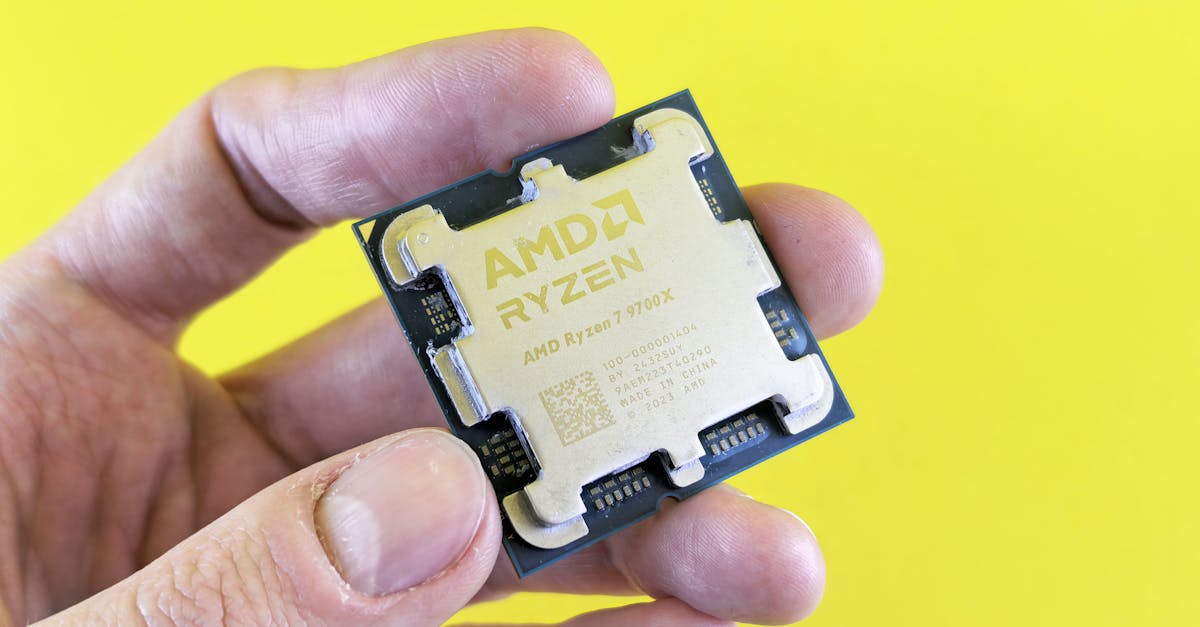
SAN FRANCISCO, May 6. Advanced Micro Devices beat Wall Street on every line of its first-quarter report Tuesday after the close, then watched its stock rise more than 18 per cent the next day. Revenue: $10.25 billion. Non-GAAP earnings per share: $1.37. Both ahead of consensus.
The Q2 guide did the rest of the work. AMD pointed analysts at $11.2 billion for the current quarter, plus or minus $300 million. Bloomberg's analyst poll had penciled in $10.52 billion. The midpoint of the AMD range works out to about 46 per cent year-on-year and 9 per cent sequential. Shares closed at $421.39, gaining $66.13 on the day.
Most of the noise is in one segment. Data center revenue printed $5.78 billion, up 57 per cent from a year earlier and ahead of the $5.6 billion the Street expected. Operating income from the segment hit $1.6 billion. That makes data center the company's biggest unit by sales, ahead of Client and Gaming, which used to drive AMD quarters.
"Data center now leads AMD's growth in both revenue and profit," chief executive Lisa Su told investors on the earnings call, citing AI infrastructure spending. Su also said Meta plans to deploy up to six gigawatts of Instinct GPUs over time, with the first gigawatt running on a custom MI450-based design. Wall Street is treating that figure as the floor under the second-half ramp.
Why the mix shift matters
Server CPUs and AI accelerators carry a different investor profile than consumer chips. Hyperscaler purchase decisions are tied to multi-year capacity commitments rather than the holiday PC cycle. Per-deal dollar values are an order of magnitude larger. AMD posted non-GAAP gross margin of 55 per cent and guided Q2 margin to about 56 per cent. Volume from Instinct shipments has not yet eroded the profit profile.
Client revenue came in at $2.89 billion, ahead of the $2.73 billion Street estimate. Gaming delivered $720 million versus expectations of $668 million. Embedded contributed $873 million, up 6 per cent. Each segment grew, but their share of the total has shrunk relative to data center. AMD management leaned into that pattern rather than around it.
The launch cadence backs up the guide. AMD is preparing its first rack-scale system, Helios, which packages EPYC server CPUs and Instinct GPUs into a single integrated rack of the kind hyperscalers now buy in bulk. Nvidia sells a comparable product under the Vera Rubin NVL72 banner. Helios is AMD's answer for customers asking for a credible second source on AI infrastructure.
Chip stocks ride the AMD print higher
The reaction was not confined to AMD. The Philadelphia Semiconductor Index rose 4.2 per cent on Wednesday morning to a fresh all-time high, up 55 per cent for the year, according to Reuters figures cited by ts2.tech. Intel, Arm Holdings, Qualcomm, Marvell and Micron all traded higher. The VanEck Semiconductor ETF gained 3.2 per cent. The Invesco QQQ trust climbed 1.3 per cent in premarket trading.
"AMD's narrative is shifting into a broader compute play, not simply a GPU battle with Nvidia," Matt Britzman, senior equity analyst at Hargreaves Lansdown, said in a note circulated by Reuters. The Dow, S&P 500 and Nasdaq Composite were each up more than one per cent in mid-morning trading on Wednesday. Strong results from Uber and Disney added to the lift.
Two adjacent stories reinforced the read. Nvidia and Corning announced a multi-year manufacturing partnership to expand US production of optical connectivity equipment used inside AI data centers. The tie-up signals supply-chain bottlenecks in fiber and high-speed networking. In Munich, Infineon Technologies forecast fiscal third-quarter revenue of about 4.1 billion euros, ahead of the 4.04 billion estimate. The German chipmaker also lifted its full-year outlook from a "moderate" rise to a "significant" one. It cited AI infrastructure as the source of strength in its power-chip business.
A different angle on the AI capex story
The earnings backdrop puts numbers behind a thesis Wall Street has been pricing for months. Capital expenditure on AI infrastructure by Amazon, Microsoft, Alphabet, Meta and Oracle is now estimated to drive about three-quarters of US economic growth, according to figures compiled this week. AMD's beat is the first major Q1 print to show that capex landing as supplier revenue in a measurable way, rather than as a forecast hung on hyperscaler guidance.
Elsewhere in computing the set-up is less rosy. The International Data Corporation expects global PC shipments to fall 11.3 per cent in 2026 and tablet shipments to drop 7.6 per cent. Both are pinched by an ongoing memory shortage. Apple chief executive Tim Cook flagged the same pressure on Apple's most recent earnings call. Higher memory prices will weigh on Apple margins, he said. AMD's data-center momentum offsets the consumer drag, but the divergence within the chip industry is widening.
What to watch next
AMD has bought itself a runway with the Q2 guide. Whether it converts depends on shipping, not demand. Three things will tell the tale: MI450 sampling and production schedule, customer acceptance of the Helios rack platform, and high-bandwidth memory supply for Instinct. A fourth, EPYC versus Intel in servers, sits underneath all three. Intel's own late-April quarter beat sent its stock up 24 per cent, with management pointing at the same data-center demand AMD just booked.
Free cash flow set a record this quarter. AMD said capital returns continue. The board's existing buyback, plus operating leverage, gives the balance sheet more room than at any point since the Xilinx deal closed. Wednesday's close lifted AMD's market value above $680 billion. No prior session had taken it that high.

Kai Mendel
Technology editor covering fintech, AI and the platform economy. Reports from San Francisco.