China holds rare earths and Hormuz cards as Trump heads to Beijing
President Donald Trump is scheduled to arrive in Beijing on May 14 for a state summit with Xi Jinping. Analysts and Taiwan officials say critical-minerals leverage, the Middle East energy fallout, and a contested Taiwan policy stack the meeting on Beijing's side.
President Donald Trump is scheduled to arrive in Beijing on May 14 for a state summit with Chinese President Xi Jinping. Critical-minerals leverage, Middle East energy fallout, and a contested Taiwan policy all weigh to Beijing’s advantage going in.
The contrast tightened in the week before the visit. On May 4, U.S. Treasury Secretary Scott Bessent appealed on Fox News for China to help reopen the Strait of Hormuz and ease pressure on global oil markets. Two days later, Iranian Foreign Minister Abbas Araghchi flew to Beijing, where Chinese Foreign Minister Wang Yi welcomed him in front of state cameras. That same week, China’s Foreign Ministry dismissed Secretary of State Marco Rubio’s threat of secondary sanctions on buyers of Iranian crude, calling them “illegal unilateral actions that lacked U.N. authorization.”
Steve H. Hanke, a professor of applied economics at Johns Hopkins University, argued in a Fortune commentary that Beijing’s preparation for this moment dates back to the December 2018 arrest of Huawei chief financial officer Meng Wanzhou at Vancouver International Airport. After Washington added Huawei to its Entity List six months later, Hanke wrote, Chinese officials began assembling commodity buffers across crude, gas, agricultural goods, and industrial metals. The crude reserve alone has reached roughly 1.4 billion barrels, equivalent to about 115 days of seaborne imports.
Rare earths as a quiet veto
Beijing’s most direct lever is on critical materials. Its grip on neodymium, praseodymium, samarium, europium, gadolinium, and yttrium oxides is close to total. The same elements are inputs for advanced U.S. weapons systems, electric vehicles, wind turbines, and consumer electronics. Hanke wrote that with weapons stockpiles depleted by support for Ukraine and the U.S. campaign against Iran, the Department of Defense now needs Beijing’s permission to restock.
That dependency was not yet visible at the start of the trade war in 2018. It is the binding constraint on any tariff threat Washington brings to Beijing on May 14. The U.S. National Defense Stockpile, run by the Defense Logistics Agency, covers some critical elements at modest tonnage. F-35 fighter production, Virginia-class submarine assembly, and precision-guided munition lines are the platforms most exposed to a Chinese export halt.
Officials at the Office of the U.S. Trade Representative have studied alternative supply lines through Australia, Canada, and Greenland. The substitution lead-times run several years. The bottleneck is the separation and refining stage, where China’s cost advantage runs deepest. Industry analysts say even an emergency build-out of allied refining capacity would take five to seven years to absorb the volume Washington currently sources from Chinese processors. A rare earths concession from Beijing, paired with a tariff pause from Washington, is the trade most analysts see as available. The harder question is what the White House would offer in exchange.
Energy diplomacy after Hormuz
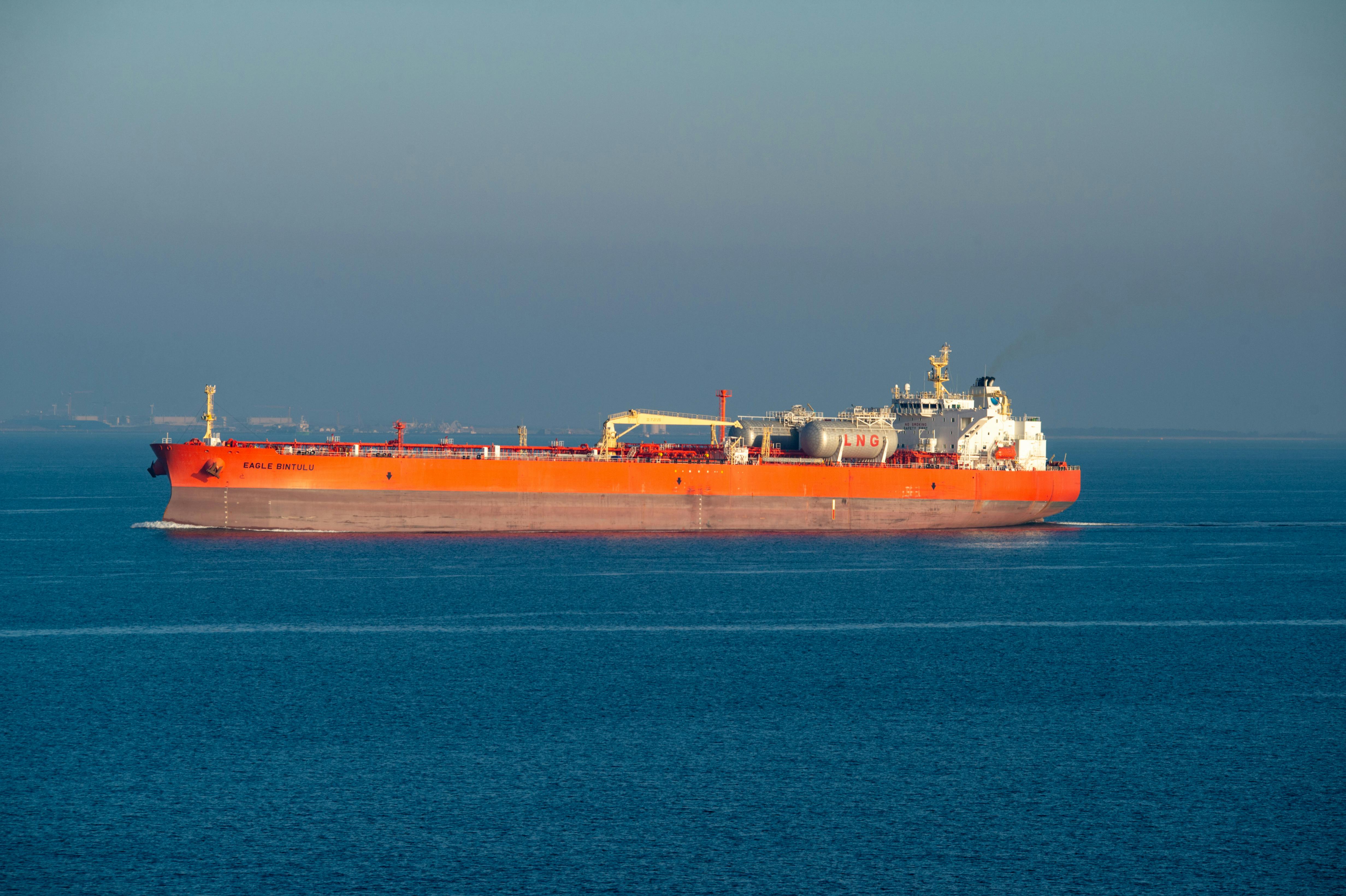
The closure of the Strait of Hormuz has tied Beijing’s stockpile to other governments’ near-term choices. Washington runs a maritime blockade. Beijing fills the gap. Officials in Seoul, Tokyo, and Jakarta have credited the Chinese cargoes with keeping refiners running. Sinopec and Sinochem have resold West African crude to Asian buyers through the disruption. Chinese majors have also resold a record 1.31 million tons of liquefied natural gas so far this year to South Korea, Thailand, Japan, Indonesia, and India, on figures Hanke cited.
South Korea and Japan are due to hold their own bilateral summit at Andong on May 19. Alternative crude supplies and economic security are on that agenda. From May 1, China cut tariffs to zero on imports from all 53 African countries with which it holds diplomatic ties. India’s government has fast-tracked minority Chinese investment in seven strategic sectors. The Alliance of Democracies released its Democracy Perception Index on May 8. China scored +7 per cent on net global perception. The U.S. came in at -16 per cent, against +22 per cent two years earlier.
Taipei watches the script
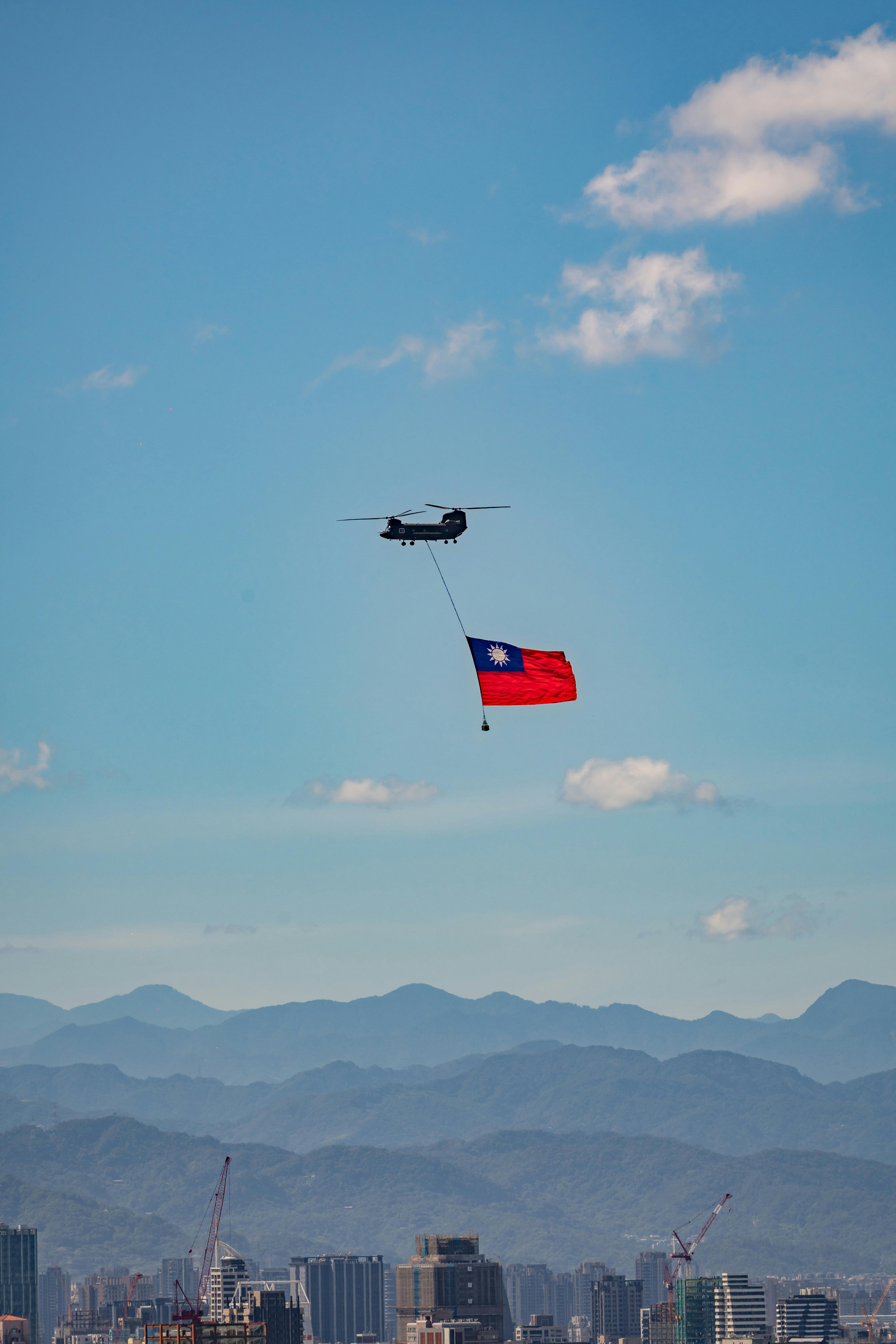
Taiwan officials have spent the run-up to the summit pressing Washington for reassurance. The Los Angeles Times reported on May 10 that researchers in Taipei fear an off-script remark by Trump could shift the diplomatic baseline.
“The most serious scenario would be if President Trump were to make an impromptu statement, such as, ‘I oppose Taiwanese independence,’ particularly if he were to link this to trade, the Iran issue, or a summit agreement,” Chienyu Shih of the Institute for National Defense and Security Research told the paper.
Brian Hart, deputy director of the China Power Project at the Center for Strategic and International Studies, said in the same report there was “concern that the conversation between the two leaders could veer into sensitive territory on the topic of Taiwan.” Jyh-Shyang Sheu, a Taiwan-based scholar of Chinese politics and military capabilities, said Taipei was “more focusing on what he does instead of what he says.”
The numbers help explain the anxiety. Taiwan produces more than 60 per cent of the world’s semiconductors and roughly 90 per cent of the most advanced chips. A pending U.S. arms package valued at more than $10 billion has waited on a Pentagon decision. Last week, Taiwan’s Legislative Yuan approved $24 billion in defense purchases, short of an originally proposed $40 billion. Those purchases cover munitions, missile defense, and undersea-warfare equipment. Pentagon stocks in each area have been thinned by the Iran campaign.
Strategic ambiguity, the policy Henry Kissinger applied 55 years ago, has been tested by improvised presidential remarks before. Earlier reporting tracked the Taipei reaction in detail.
What the White House says
Rubio has tried to dampen expectations. “I’m sure Taiwan will be a topic of conversation. It always is. The Chinese understand our position on that topic, we understand theirs,” he said in remarks reported by the Los Angeles Times. He added that “it is in neither one of our interests to see anything destabilizing happen in that part of the world.”
A White House official said in the same report that the U.S. One China policy remained “based on the Taiwan Relations Act, the three U.S.-PRC Joint Communiques and the Six Assurances to Taiwan.” Officials have not pre-briefed any deliverables. Bessent’s Fox News appeal on Hormuz was the closest thing to a public ask before the trip.
What to watch
The summit’s read-out lines will be parsed for any wording shift on Taiwan, tariffs, or Iran. A joint statement that makes no mention of the Strait of Hormuz would itself be telling. So would a tariff pause without a rare earths concession from Beijing. Energy markets, already adjusting to higher base prices after the closure of the strait, will move on the first wire confirmation.
Domestic conditions also frame the trip. A Financial Times poll this week put voter disapproval of Trump’s economic record at 58 per cent, and a federal trade court ruled this week that several of the global tariff orders he signed in the first quarter were unlawful, narrowing the leverage the executive branch can extend without legislation. The next 72 hours will indicate whether Washington can find a counterweight before Air Force One leaves Beijing.

Yara Halabi
Foreign affairs correspondent covering the Middle East, the Gulf and US foreign policy. Reports from London.
Related
Iran war pushes tariff and rare earth talks down Trump-Xi summit agenda
Taiwan officials press Trump for reassurance ahead of Xi summit
US awaits Iran ceasefire response as Rubio meets Qatari mediators
KMT chairwoman finalises June US trip as Trump-Xi summit looms