Cash piles top $8.2 trillion as US equity benchmarks set records
Money parked in US money market funds reached an all-time high of $8.2 trillion in early May as the Dow, S&P 500 and Nasdaq Composite traded near records. The simultaneous build in cash and equities is unusual in modern market history.
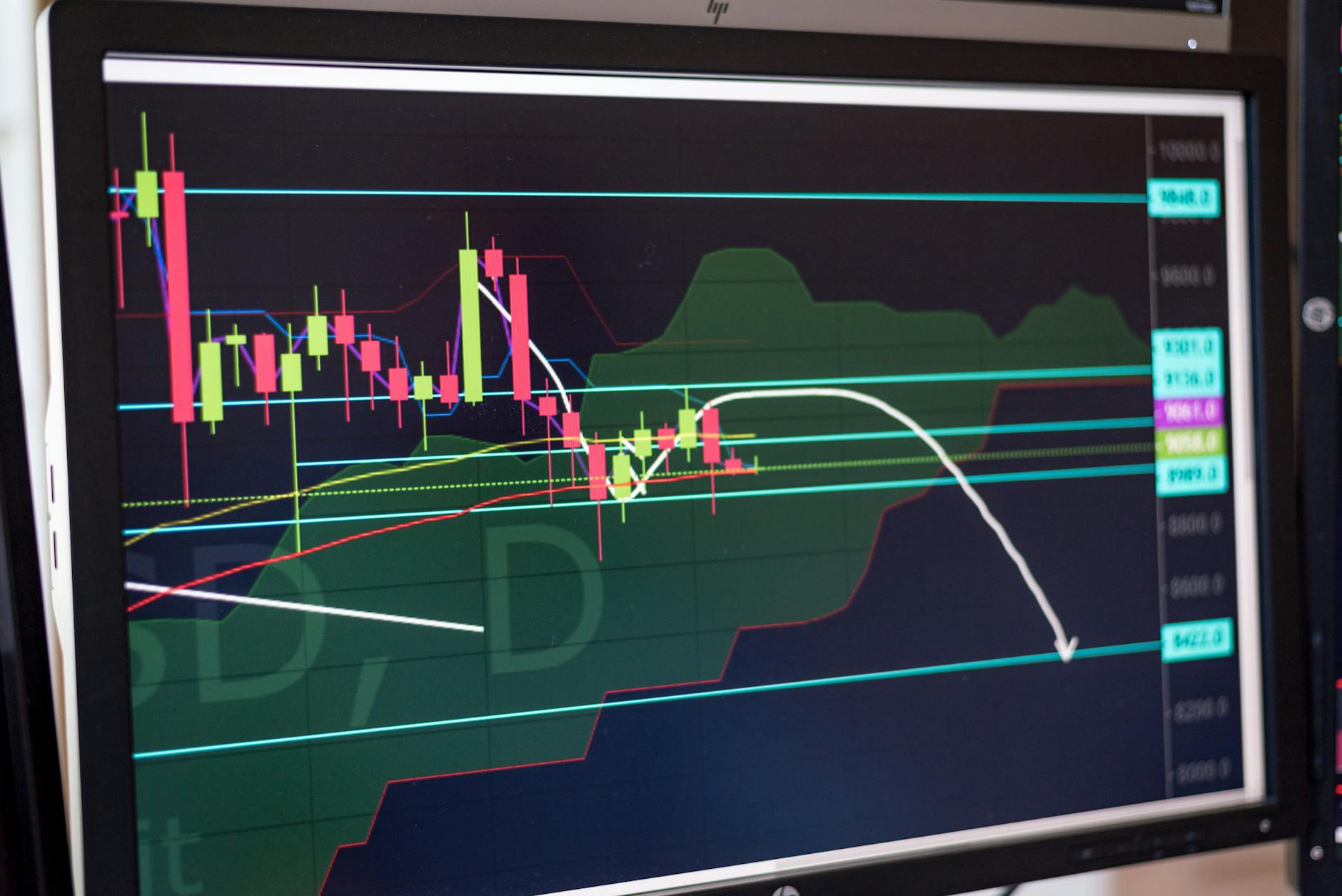
Money parked in US money market funds reached an all-time high of $8.2 trillion in early May, even as the Dow Jones Industrial Average, S&P 500 and Nasdaq Composite traded near records under Donald Trump’s second-term run, according to figures cited in a follow-the-money analysis published Saturday.
Money market balances have climbed from $5.22 trillion at the close of 2022 to the current $8.2 trillion, a roughly 57 per cent increase over a window in which the major US benchmarks compounded double-digit annual gains. Since the 20 January 2025 inauguration through 4 May, the Dow has risen about 13 per cent, the S&P 500 about 20 per cent and the Nasdaq Composite about 28 per cent. Household and institutional cash has nonetheless retreated into short-dated government paper at a record pace.
The two trends are difficult to reconcile. Cash on the sidelines historically lags equity moves, building up after drawdowns and emptying out after rallies. The current cycle has produced the opposite. Investors have collected the gains and added to liquid reserves at the same time, even as money market yields have begun to soften from their 2024 highs.
Cash on the sidelines
The composition of the $8.2 trillion stockpile points to a defensive posture rather than tactical patience. Retail investor balances at the major brokerages have tracked higher in line with overall money market growth, while corporate treasury teams have allocated more aggressively to short-duration government paper to lock in yields above 4 per cent before any further Fed easing. That structural bid for cash has persisted despite a softening rate path being priced into Fed funds futures.
In prior cycles, comparable spikes in money market balances have preceded major equity inflection points by between six months and two years. The 2000 peak in cash balances came roughly 18 months before the dot-com trough, and the 2008 spike preceded the post-Lehman drawdown by about a quarter. The current build does not necessarily imply a similar reversal is imminent, but the history is one reason analysts are treating the divergence between cash and equity flows as informative rather than noise.
Valuations stretched
The most cited valuation gauge, the Shiller cyclically adjusted price-earnings ratio, entered 2026 above 40, the second-highest reading in its 154-year history. Only the dot-com peak of 1999 and 2000 has registered higher, and every prior reading above 30 has eventually been followed by a cyclical drawdown of at least 20 per cent, though the lag from the threshold to the reversal has ranged from months to years.
Corporate buybacks have absorbed a meaningful share of the elevated valuations. S&P 500 constituents are on track to repurchase more than $1 trillion of their own stock during 2025, sustaining per-share earnings growth even where revenue gains have flattened. The buyback bid has helped narrow the disconnect between record indices and a softer macro tape, but it does not address the underlying multiple compression risk if earnings outlooks are downgraded.
Index gains since early 2025 have outrun the underlying earnings base, with the S&P 500’s premium over its trailing twelve-month operating earnings at one of the widest readings of the cycle. A separate topofhournews piece on AI-driven valuation expansion detailed the role of the largest hyperscaler names in pulling the broader index higher.
The trillion-dollar club expands
Concentration at the top of the index has accelerated. The cohort of public companies with market capitalisations above $1 trillion has expanded steadily, with a fresh cluster centred on artificial-intelligence infrastructure. According to a trillion-dollar-club roundup published this week, Samsung Electronics has now joined Nvidia, Taiwan Semiconductor Manufacturing Company and Broadcom as the AI-hardware quartet, while the original platform tier of Apple, Microsoft, Amazon, Alphabet, Meta Platforms and Tesla remains intact.
Berkshire Hathaway crossed the threshold in 2024 as the first non-technology US listing to do so, and Walmart joined in 2026 as the first retailer. Eli Lilly briefly touched $1 trillion on demand for its GLP-1 obesity therapies before slipping back below the line. Saudi Aramco and PetroChina round out the international roster.
The mechanical effect on broad-index returns is significant. Mega-cap leadership of the type seen since early 2025 produces strong headline performance for capitalisation-weighted benchmarks, but it also amplifies the risk of a sentiment shift in any single name. A 5 per cent move in Nvidia or Apple now moves the S&P 500 more than a 50 per cent move in a typical mid-cap constituent.
Tech earnings reset
Within the technology sector, recent earnings have resolved part of the valuation overhang that built up through 2025. Forward price-earnings ratios in the S&P 500 information-technology sector exceeded 30 times in October 2025 before quarterly results from the AI-exposed hyperscalers and chipmakers began closing the gap between price and reported profit, Benzinga reported Saturday.
Michael Field, chief equity strategist at Morningstar, told the publication that AI-exposed equities had reached their largest discount to fair value since 2019, calling the current setup a “fantastic entry point” for incremental purchases. J.P. Morgan Private Bank also remained constructive on the theme, saying tech leadership would persist even after a year of intense capital-expenditure scrutiny.
Semiconductors have driven the shift. The chip cohort now accounts for 41.9 per cent of total information-technology sector market capitalisation, more than double its share at the 2022 trough. Both AI infrastructure demand and the absorption of formerly distinct memory and equipment names into the broader semiconductor designation contributed to the swing.
Strait of Hormuz risk
Energy-cost shocks tied to the Iran conflict remain the most acute non-monetary risk for the Trump-era rally. The US average retail gasoline price rose by $1.32 per gallon between 28 February and 30 April as tanker traffic through the Strait of Hormuz, which carries about 20 per cent of world petroleum supply, was repeatedly disrupted.
A sustained gasoline shock historically transmits to consumer spending with a lag of one to two quarters and lifts headline inflation immediately, narrowing the Federal Reserve’s room to ease policy. Topofhournews has previously detailed why the Fed is running out of reasons to cut interest rates, with the Iran-driven energy spike now adding a fresh complication to that calculus.
What to watch
The combination of record cash balances, an unusually elevated Shiller multiple, narrow leadership and an active commodity shock is rare in modern market history. Each component has appeared individually before. The simultaneous overlap is the unusual feature of the current setup, and it is the part that some money market investors appear to be hedging against by holding short-dated paper rather than reaching for additional equity exposure.
The next pressure tests for the narrative are the May consumer price index print, the June FOMC meeting and the second-quarter earnings season for the largest AI-infrastructure names. A combination of softer inflation, a measured Fed and continued AI-driven earnings revisions would validate the constructive case set out by Morningstar and J.P. Morgan. A persistent energy shock or a downgrade to AI capital expenditure would tilt the balance toward the cautionary read implied by the $8.2 trillion sitting in money market funds.
A second set of pressure tests sits further out. Tariff-related cost pass-through into goods inflation tends to surface in the August and September prints, after a typical lag from import to retail shelf. The Treasury’s quarterly refunding announcement at the end of July will set bill issuance against an already-elevated cash bid, and any meaningful slowdown in repurchase activity flagged in the next round of corporate guidance would remove one of the structural supports underpinning current valuations. Each of those data points will be read in the context of whether the cash stockpile keeps growing or finally begins to draw down into risk assets.

Marcus Holloway
Markets editor covering UK gilts, sterling and the Bank of England. Previously a fixed-income strategist in the City.
Related

Fed warns rising risks even as financial system holds firm

Wall Street closes at record highs as oil eases and US hiring surges

AI lifts S&P 500 to record as valuations outrun earnings
Long bonds crack 5% then ease as Treasury holds $125bn refunding line