Alabama Senate runoff set after Trump-backed Moore advances
Alabama Senate runoff set for June 16 after Trump-backed Barry Moore failed to clear 50 per cent and advanced with Jared Hudson.
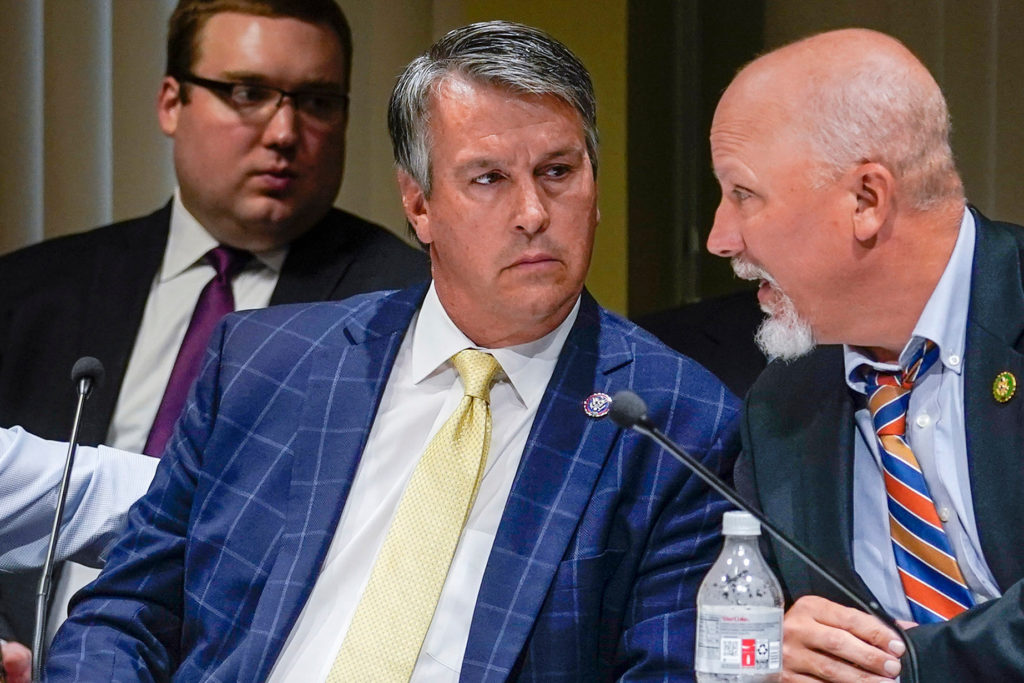
Barry Moore, backed by Donald Trump, advanced to a June 16 runoff in Alabama’s Republican Senate primary Tuesday, joined by former Navy SEAL Jared Hudson after neither candidate cleared the 50 per cent threshold required to win outright, according to AP’s race report.
Moore fell short of the 50 per cent mark Alabama demands to avoid a runoff, sending the race to a one-on-one contest in less than a month. For Republicans tracking the midterm map, that keeps a live question in play: whether Trump’s endorsement remains the party’s strongest primary asset in the South.
Under Alabama law, the top vote-getter must cross 50 per cent to win a primary outright. Moore led the field but could not close on the first ballot, which changes the arithmetic. He can claim momentum from advancing with Trump’s backing, but Hudson — who campaigned as an outsider and former Navy SEAL — now gets a one-on-one race that resets the contest.
Trump made his preference clear before the vote. Moore would “fight for you in the Senate,” the president said, according to PBS News, casting the Alabama primary as another measure of his endorsement’s weight. The runoff means that test runs through June 16 instead of ending on election night.
Hudson used the result to argue that the race remains open.
“We made history last night, Alabama!”
— Jared Hudson, via PBS News
Hudson, in PBS’s account, framed the result as proof his campaign survived the state’s most prominent endorsement and still made the runoff. His clearest argument heading into June 16: the runoff is a fresh contest, not a delayed ratification of Trump’s pick.
Moore answered with a message of confidence after advancing.
“We’re going to win this thing, and God’s going to bless this great nation.”
— Barry Moore, via AP News
Moore’s comments to AP gave him the post-election headline he wanted but also underlined the race’s unfinished nature. His campaign now shifts from a broad primary field to a shorter, sharper contest — one where turnout operations and local endorsements carry more weight than they did in the first round.
What the runoff means
For Trump, Alabama joins a list of Republican primaries where his endorsement shaped the race without delivering a first-round win. Party strategists and donors are reading these outcomes for a pattern: does Trump’s backing still produce quick victories, or is it a powerful asset that nonetheless forces allies into second fights?
The runoff matters beyond Alabama because it keeps Trump tied to the race through mid-June, forces Moore to prove his endorsement can convert to a majority, and gives Hudson a month to argue Republican voters deserve a second look. In a midterm cycle already defined by Trump’s candidate picks, a runoff extends the argument rather than resolving it.
The contest also sharpens the question voters face. Moore can argue he led the field and deserves the party’s consolidation. Hudson can reply that anyone below 50 per cent hasn’t closed the sale. That narrower choice makes the runoff a cleaner test of Trump’s sway — decisive, or simply influential — than the wider primary field offered.
What comes next
The nomination will be decided June 16. Until then, Moore and Hudson will press electability, loyalty and turnout arguments to the same Republican voters who just denied either man a majority. For the wider party, Alabama has become another state where the local outcome carries a national read: Trump still sets the terms of Republican primaries, but voters still reserve the right to demand a second round.

Ramona Castellanos
US politics correspondent covering Congress, primaries and the Trump administration. Reports from Washington.