Rival London marches test Starmer after day of protests
Tens of thousands joined separate anti-immigration and pro-Palestinian marches in central London, turning a major policing operation into a political test for Keir Starmer.
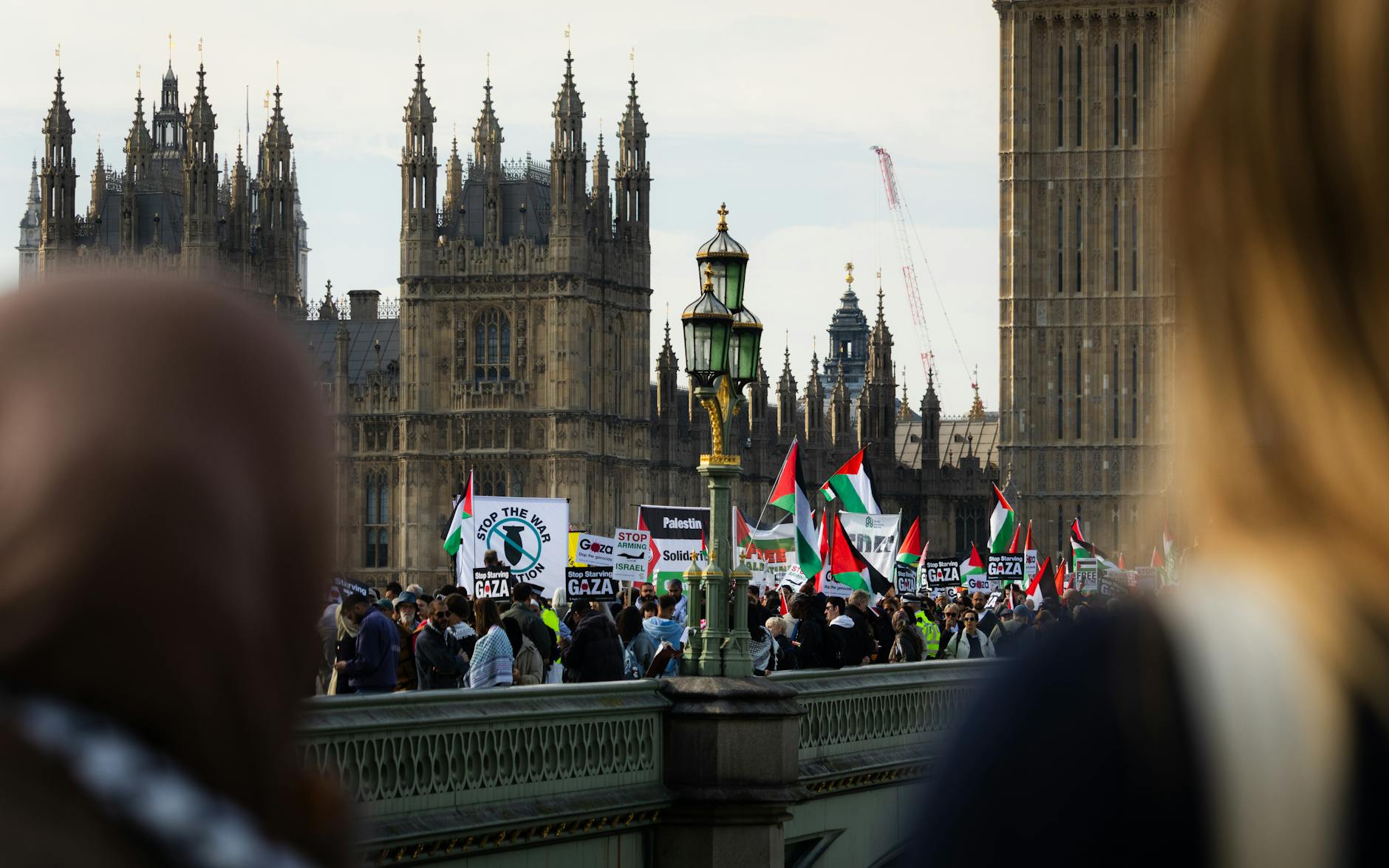
Tens of thousands of people marched through central London on Saturday in rival demonstrations over immigration and Gaza. Police deployed 4,000 officers and reported 43 arrests by early evening, according to a Reuters report. They had prepared for at least 80,000 people across the two rallies, Reuters said.
For Labour, already under pressure over migration, Gaza and internal discipline, the competing marches pushed those arguments into the streets. By 18:30 GMT, officers had made 43 arrests, Reuters and Al Jazeera reported, after spending hours keeping the groups apart.
One demonstration, billed as Unite the Kingdom, drew anti-immigration supporters behind Tommy Robinson, the hard-right organiser who has tried to convert anger over migration into a broader nationalist movement. British authorities barred 11 foreign nationals from entering the country for the rally, Reuters reported. Addressing supporters, Robinson said Britain was undergoing a cultural and spiritual awakening and framed the event as part of a longer campaign.
The other mobilisation brought pro-Palestinian demonstrators into the centre in large numbers. Marchers carried Palestinian flags and chanted against Israel’s war in Gaza. Al Jazeera reported that police erected barriers and used staggered routes as the rival gatherings moved through adjoining parts of the capital. Immigration anxieties, national identity and the Gaza war crowded into the same Saturday afternoon.
Starmer responded with unusually direct language. Robinson was “peddling hate and division, plain and simple”, he said, according to Reuters, casting the anti-immigration rally as a threat to social cohesion. The prime minister was balancing two demands: avoiding wider confrontation in the streets while showing voters his government had heard the anger over migration that protesters were trying to harness.
Among Robinson’s supporters, 53-year-old Allison Parr told Reuters that “too much migration” was upsetting what she called a delicate balance in Britain. Her words captured the way Saturday’s rally combined raw immigration anxiety with a broader sense of political estrangement — a mix no longer confined to fringe platforms or local flare-ups.
Pressure on Starmer
CNN said in its report on the march that Robinson has been trying to rebuild momentum for Britain’s hard right after earlier large turnouts, including a September rally it estimated at 150,000 people. That earlier mobilisation is why Saturday’s demonstration drew official attention before any arrests were reported. It tested whether a familiar organiser could again pull disparate anti-immigration currents into a single public spectacle.
The pro-Palestinian turnout complicated that picture. Authorities had to manage two mass movements with different causes competing for the same streets and national attention on the same day. Britain’s arguments over borders and Gaza occupied one security operation.
For Starmer’s government, the operational outcome was straightforward: officers prevented the rival demonstrations from collapsing into larger disorder and kept arrests to dozens, not hundreds. The political judgement is harder. Saturday showed how quickly frustration over migration, distrust of mainstream parties and anger over Gaza converged into a single public-order challenge in the capital. Downing Street was left to answer for the policing and for the pressures that filled the streets.
Dana Whitfield
Senior reporter covering UK politics, national security and community affairs.