Cassidy primary tests Trump's grip on GOP incumbents
Bill Cassidy's Louisiana primary has become a measure of whether Donald Trump can still punish Republicans who broke with him and shape the 2026 midterms from inside the party.
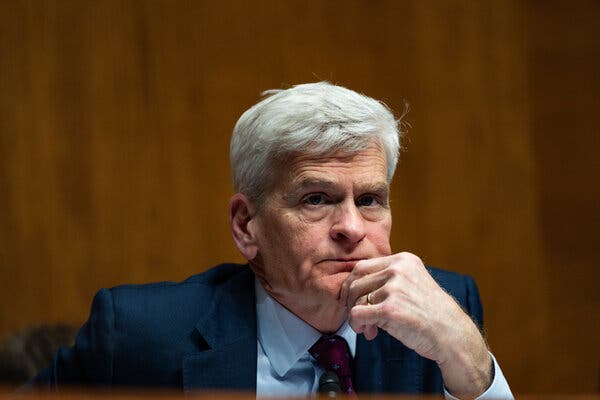
Sen. Bill Cassidy’s fight for another term in Louisiana is becoming an early measure of whether any Republican who crossed President Donald Trump can still survive once Trump chooses to make an example of him. The New York Times reported that Cassidy’s 2021 vote to convict Trump after the Jan. 6 attack still defines the race, while NBC News has described a Republican Party still debating how often to put Trump at the centre of the 2026 midterm campaign.
For national Republicans, that is why the Louisiana primary matters beyond one state. Cassidy is not simply another incumbent defending a seat. He is one of the rare Republicans who broke with Trump at the decisive moment of impeachment, and his contest now offers a cleaner read than most general-election battlegrounds on whether dissent inside the party remains politically survivable. If a sitting senator with a statewide profile cannot outlast a Trump-backed challenge five years after that vote, other Republicans will draw their own conclusions about the cost of crossing him.
Cassidy himself has not pretended the relationship can be repaired. “I don’t really think President Trump likes me that much,” he told the Times. The line was dry. The politics are not. Trump has since endorsed Letlow and said he “will be voting Bill Cassidy OUT OF OFFICE in the upcoming Republican Primary!”, according to Al Jazeera. The intervention left little room for ambiguity. Trump was not merely siding in an open contest. He was identifying a dissenter and inviting Republican voters to finish the punishment.
Yet the early shape of the race suggests an endorsement is not the same thing as immediate control. An Emerson/KLFY poll cited by Bayou Progressive put Fleming at 28 per cent, Letlow at 27 per cent and Cassidy at 21 per cent, with 22 per cent undecided. The numbers showed a fractured field rather than a clean transfer of Trump’s clout to one challenger. They also left open the possibility that the anti-Cassidy vote could remain split long enough for the senator to stay competitive even if he never becomes the favourite of the party’s base.
The endorsement matters because Trump is backing a candidate who has tried to make his support the organising fact of the campaign. “That endorsement has been a huge source of energy for our campaign, because Louisiana Republicans trust President Trump,” Letlow told NBC News. Her argument is straightforward: Republican primary voters do not need a long case against Cassidy if Trump has already delivered the verdict. But an energy boost and a settled electorate are not the same thing. A field with three serious lanes can turn a presidential blessing into only one variable among several, especially if undecided voters are still weighing loyalty against familiarity or a confrontation.
The race inside the party
Cassidy’s national significance turns on the kind of Republican he represents. He is not an anti-Trump centrist running in a blue state. He is a conservative senator from Louisiana who aligned with his party on most issues but cast one vote that Trump and his allies never forgave. That makes the primary a sharper test of internal party discipline than a general-election race would be. If Trump can still end the career of an incumbent on that basis, he will have shown that the memory of disloyalty can outlast shifts in issue salience, approval ratings and the usual midterm noise.
Across the broader Republican map in 2026, the same question hangs over every campaign decision. NBC News has reported that party strategists are split over how much Trump should appear on the campaign trail. They see him as a turnout engine for loyal voters but also as a figure who can crowd out local messages and sharpen opposition. Cassidy’s contest compresses that debate into a closed intraparty fight. Here, Trump does not need to persuade swing voters. He needs to show that his endorsement still structures ambition inside the GOP. For members of Congress watching from Washington, that may be the more consequential measure.
Brookings has argued that intraparty tensions are a defining feature of the 2026 primary cycle, with candidates and factions testing how far Trump’s backing can settle arguments that once would have been mediated by incumbency, local machines or committee seniority. Louisiana fits that pattern, but with a cleaner story line than most states. Cassidy carries the original sin. Letlow carries the endorsement. Republican voters are being asked to decide whether one outweighs the other. The result will not explain every midterm contest, but it can still offer a signal about where power sits when loyalty and experience pull in different directions.
There are limits to the analogy. Louisiana is its own political market, and primary turnout can magnify habits that do not travel well to other states. Coverage by PBS NewsHour and the Associated Press has pointed to the mechanics of the state’s primary system as part of the backdrop, while other reporting has asked whether turnout and field structure could complicate any simple reading of Trump’s strength. Cassidy also retains the advantages of incumbency and name recognition, even if those assets are no longer enough to shield him from a challenge framed around personal loyalty to the president.
Even signs of softness in Trump’s wider standing do not necessarily change that calculation. Al Jazeera cited a 34 per cent approval rating for Trump at the end of April, a reminder that his national position and his primary leverage are not identical measures. Republican incumbents are not mostly worried about a general-election audience when they weigh whether to challenge him. They are worried about a smaller, more motivated electorate that can turn an old grievance into a live threat.
What survival or defeat would mean
A Cassidy defeat would suggest that the sanction for crossing Trump remains active years later and can be enforced even against a senator who has had time to rebuild standing at home. Such a result would not only settle one Louisiana contest. It would also narrow the already thin space for independent manoeuvre inside the Republican conference, where lawmakers still make calculations about nominations, investigations and public dissent with Trump’s reaction in mind.
A Cassidy survival, or even a result that leaves the Trump-backed challenger short of a clear breakthrough, would point to a different conclusion. It would suggest that endorsement politics still have boundaries, and that incumbency, fragmented fields and local calculations can keep a dissenter alive longer than national operatives expect. That would not amount to a repudiation of Trump inside the party. It would, however, show that Republican voters are capable of ranking other considerations alongside personal allegiance when they are choosing one of their own.
For now, the Louisiana race is less a referendum on Trump’s general popularity than a measure of his continuing power to police the party’s memory. His approval rating may fluctuate nationally, and strategists may keep arguing over how visible he should be in the midterms. But if Cassidy’s 2021 impeachment vote remains the central fact of his 2026 campaign, that alone tells Republicans that some acts of dissent still come due at the ballot box. The question Louisiana may answer first is whether that warning is still enough to decide a race.

Ramona Castellanos
US politics correspondent covering Congress, primaries and the Trump administration. Reports from Washington.