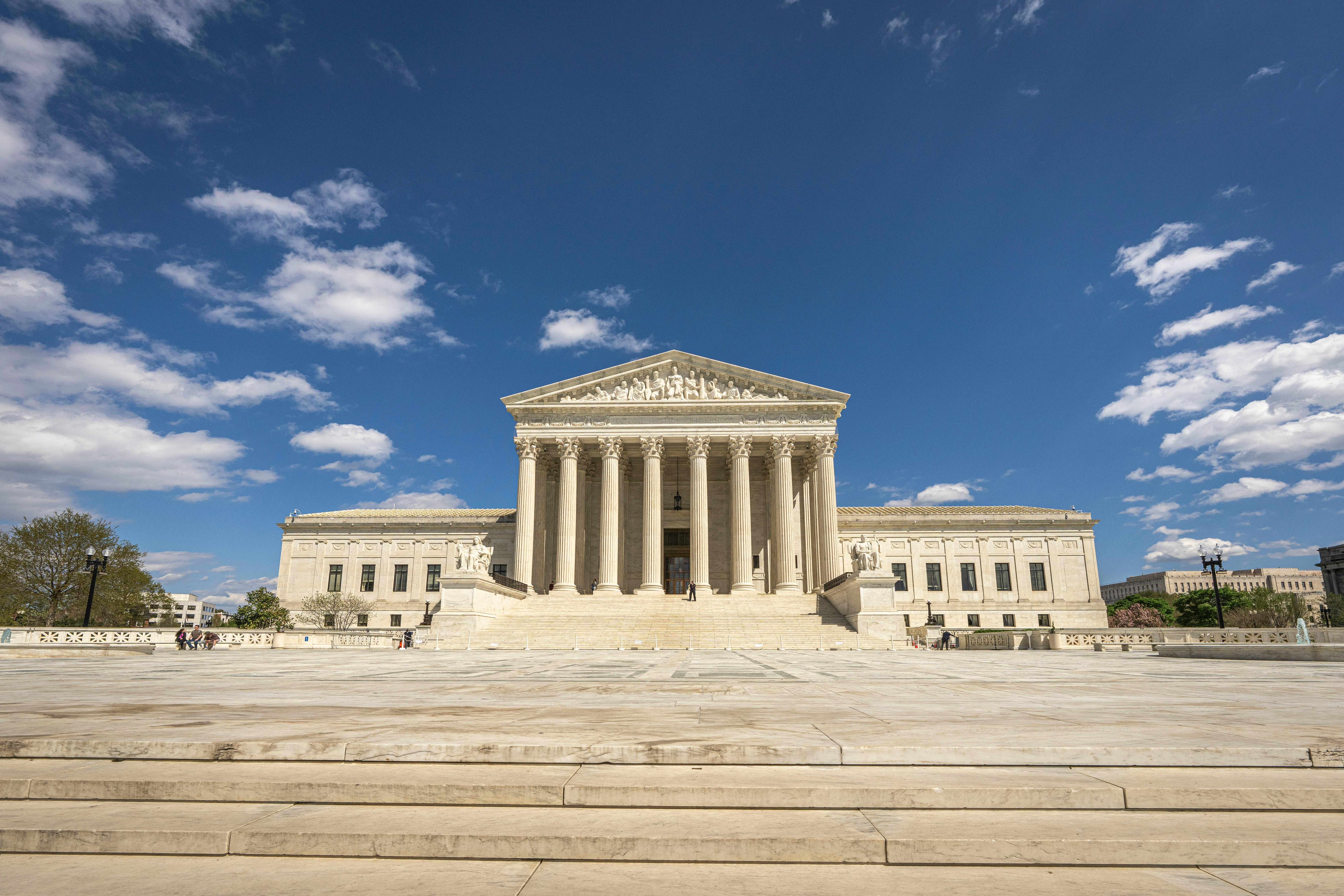
Virginia Supreme Court throws out Democratic-backed US House map
The Virginia Supreme Court threw out the Democratic-backed congressional map that would have flipped four Republican-held US House seats, ruling that the rushed referendum used to enact it failed constitutional muster. Existing district lines stand for 2026.

The Virginia Supreme Court on Friday threw out the Democratic-backed congressional map that had been crafted to flip four Republican-held U.S. House seats, ruling that the rushed referendum used to enact it failed constitutional muster. The decision leaves Virginia’s existing district lines in place for the 2026 midterms and hands Republicans a procedural win in the state-by-state redistricting fight that has reshaped the path to the U.S. House majority.
The court did not rule the underlying redistricting unconstitutional. The opinion focused on the process, finding the abbreviated public-comment window and the way the constitutional amendment was placed before voters violated state law. Democrats can return to the question with a slower process. They cannot do so before November.
Friday’s ruling lands less than a month after the U.S. Supreme Court’s Callais decision allowed southern Republican-led states to redraw House districts mid-decade. The combination of the two rulings has tilted the redistricting balance back toward Republicans after months of Democratic counter-moves in California, Tennessee’s Memphis split and Indiana.
What the court found
Virginia’s seven justices ruled unanimously that the referendum process violated the state constitution’s separation-of-powers provisions. The opinion, written for the full court, said the General Assembly had compressed the timeline so aggressively that the public-comment requirement was nullified in practice. Republicans had argued that the legislature placed the amendment on a ballot the same week it was introduced, leaving no meaningful opportunity for voter input.
The four congressional seats the Democratic map would have flipped were held by Representatives Rob Wittman, Ben Cline, Morgan Griffith and Jen Kiggans. All four had filed amicus briefs supporting the lawsuit. The plaintiffs were Republican voters from each of the four districts, organised through the Republican State Leadership Committee.
Democrats had argued the abbreviated process was justified because of the urgency created by Republican gerrymandering elsewhere. The court rejected that framing in a single sentence: the urgency of partisan response did not relax the constitutional obligation to follow process.
How the national map shifts
Republicans now project net gains of 10 to 12 House seats once the full cycle of redistricting concludes. The headline number from GOP strategists is a 16- to 18-seat swing through Republican-led redraws, partially offset by Democratic gains of five seats in California and one in Utah. Friday’s Virginia ruling preserves the Republican advantage Democrats had hoped to neutralise in the commonwealth.
Texas remains the largest single shift. The Texas redraw passed in March moves the delegation from 25 Republicans and 12 Democrats to a projected 30-8 split. Florida’s revised map, signed by Governor Ron DeSantis last month, tightens it from 20-8 to 24-4. Ohio’s redraw produced a 12-3 outcome. Smaller swings in Alabama, Louisiana, Tennessee and Missouri each net one to two seats.
The Democratic counter-redistricting in California, signed by Governor Gavin Newsom in April under the state’s new emergency redistricting authority, recovers five of the seats the GOP push has cost. The Utah special session pickup adds one more. The math leaves Democrats short of breaking even.
Where the legal fights now sit
Louisiana’s primaries remain on hold under Governor Jeff Landry’s emergency declaration while the state finalises its post-Callais redraw. Tennessee Governor Bill Lee signed his state’s gerrymander into law on Wednesday after the special session that drew the Memphis split into three districts. South Carolina Governor Henry McMaster has now reversed course and called a special session for May 19. The U.S. Court of Appeals for the Eleventh Circuit has scheduled emergency oral arguments on the Alabama map for May 22.
Federal courts have so far declined to intervene in the state-level redraws, citing Callais. The Justice Department has not filed challenges. State supreme courts have become the primary venue for redistricting litigation. Virginia’s ruling is the third state-level decision in two weeks. Tennessee’s state supreme court declined to enjoin the new map on Wednesday. North Carolina’s state court ruled for Republicans on Tuesday.
What Democrats can do
The path back into Virginia’s redistricting requires a constitutional amendment that follows the regular two-session process, plus a referendum at the next regularly scheduled election. The earliest viable timeline puts a new map in front of voters in November 2027, with a redrawn delegation taking effect in January 2029. That is two election cycles too late to affect the 2026 majority fight.
Democratic strategists privately concede the most plausible offset is electoral. Trump’s approval rating sits at 34 per cent in Pew Research’s May reading, his lowest since taking office for a second term. A wave election could neutralise the structural Republican advantage even on the new maps. The 2018 midterm precedent, when Democrats picked up 41 seats against a comparably gerrymandered map, is the comparison point most often cited.
For Republicans, Friday’s ruling reinforces the calculation that holding the redistricting line in Virginia matters as much as winning new ground in Texas or Florida. The eight-seat Virginia delegation under existing lines breaks 6-2 Republican. Under the rejected Democratic map, it would have been 4-4. Holding the current split is worth four House seats in a chamber where the Republican majority sits at 219 to 216.

Eli Donovan
Supreme Court and legal affairs correspondent covering the federal judiciary and constitutional law. Reports from Washington.