Beijing tests its growth model with a hukou overhaul
China's State Council has moved to decouple public services from the hukou household registration system, a reform that could unlock consumption from 357 million migrant workers — if local governments can afford it.
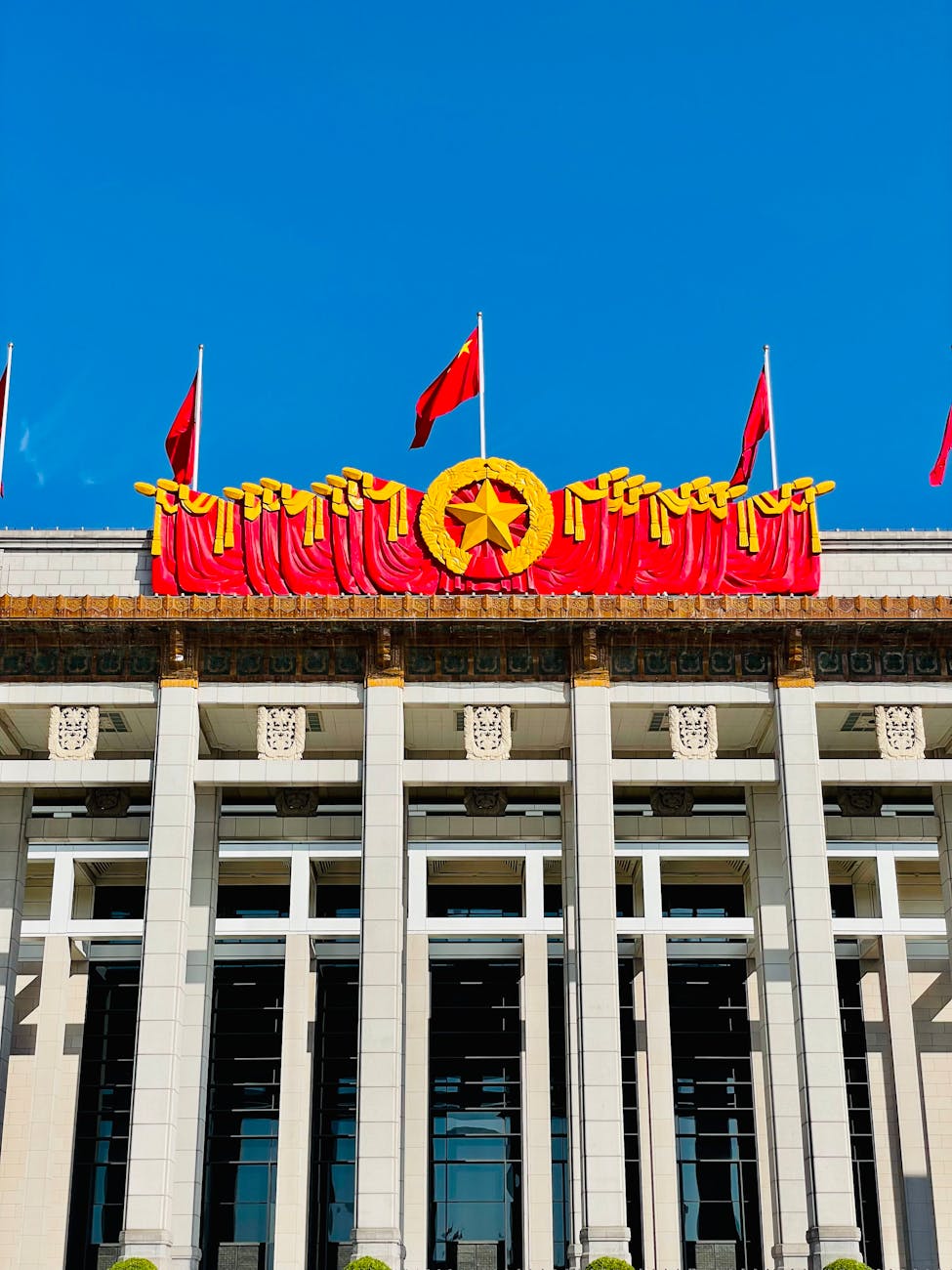
China has moved to overhaul its hukou residency system, a policy shift that analysts say could narrow the country’s urban-rural divide and ease one of the biggest structural constraints on labour mobility and household spending.
Guidelines issued by the State Council on 22 May direct local governments to decouple access to public services — social insurance, education, healthcare and housing — from the household registration system that has bound Chinese citizens to their place of birth since the Mao era. The reform, if implemented, would affect an estimated 300 million to 400 million internal migrant workers who keep China’s cities running but have been locked out of the safety nets available to urban hukou holders, according to Semafor.
The macroeconomic logic is direct. Migrant workers without local hukou save between 20 and 30 per cent more of their income than urban residents with full registration, according to research cited by the Rhodium Group, because they cannot rely on public pensions, healthcare or schools in the cities where they work. Forcing roughly 357 million people — about 40 per cent of China’s total labour force — into precautionary saving has been a structural drag on domestic consumption, the engine Beijing has spent a decade trying to ignite as investment-led growth runs out of road.
“Providing basic public services by the place of residence, gradually eliminating the link between basic public services and household registration, is conducive to meeting the people’s ever-growing aspirations for a better life,” the State Council guidelines stated, according to a translation published by the Irish Times.
But the reform arrives without the one thing that would make it binding: a central government funding commitment. Local authorities, already struggling under the weight of the multi-year property crisis and accumulated debt, are being asked to extend social insurance, education and healthcare to tens of millions of new claimants with no new fiscal transfer from Beijing. Henry Gao, an analyst at the Centre for International Governance Innovation, described the risk in plain terms to Plataforma Media: the policy is directionally correct but arrives “too little, too late” without funding to back it.
Trivium China, a Beijing-based consultancy, noted that officials “stopped short of promising major new funding support” when the guidelines were published. The Bank of Finland’s Institute for Emerging Economies said in its weekly monitoring note that no reform schedules were specified. Without a timetable or a budget, the reform risks repeating the pattern of previous hukou easing rounds that barely shifted access in tier-one cities.
The geopolitical dimension is unusually direct for a domestic administrative reform. Weak consumption in China has forced manufacturers to dump excess output onto export markets, widening the trade surplus with the European Union to levels that prompted Brussels to begin drafting safeguard tariffs on Chinese goods. The Irish Times reported this month that the Commission’s growing frustration with Beijing’s export overhang is directly linked to the demand shortfall at home — a shortfall the hukou reform is designed, in part, to close.
“This is exactly what they need to do. I don’t see it as a heartfelt policy,” Dexter Roberts, author of The Myth of Chinese Capitalism, told Semafor. Roberts and other analysts frame the overhaul as an act of economic necessity rather than social conviction. Consumption from the bottom half of the income distribution is now the only large, untapped pool of demand left, and the property sector — once the primary vehicle for household wealth accumulation — has now stalled for three consecutive years.
The human stakes of the old system are measured in children. Roughly 70 million children are classified as “left-behind” in rural villages while their parents work in factories and construction sites hundreds of miles away, according to Andy Browne, Semafor’s China editor. Research by Scott Rozelle of Stanford University found that more than 70 per cent of rural children in China show signs of clinical anxiety or depression. The reform would, in theory, allow those children to attend school in the cities where their parents live. Theory, however, has a long record of colliding with municipal resistance in China.

Urban elites in Beijing and Shanghai have deep reasons to resist dilution of the hukou privileges they hold. A Beijing hukou carries access to the city’s top public schools, its best hospitals and, indirectly, its property market — entry points that residents guard. The Irish Times reported that Beijingers routinely prefer to marry other locals, “fearing outsiders might be after them for their benefits and property rights.” Internal security forces, which oversee hukou administration, are not known for fast-tracking reforms that reduce their gatekeeping role.
Sixty-eight million migrants work in a province different from the one where their hukou is registered, according to National Bureau of Statistics data cited by BOFIT. Even if the reform moves at the pace of the most willing local governments — smaller, second-tier cities hungry for workers — the gap between the policy’s ambition and its implementation could take years to close.
What would turn the guidelines from aspirational into transformational is the sequence that followed China’s poverty-alleviation campaign: conditional grants from the central budget tied to measurable outcomes, backed by the political weight of a leadership that had staked its credibility on delivery. No such sequence has been announced. The State Council document is a directive, not a funded programme, and in China’s fiscal federalism the distinction is everything.
“eliminating the major rural-urban inequality which has characterised the post-1980s Chinese economy”
— Agrarian political economist, via Semafor
The reform is the most significant attempt to unwind the urban-rural binary since Deng Xiaoping’s reforms set it in motion four decades ago. Whether it succeeds will depend less on the elegance of the guidelines and more on the willingness of the centre to pay for what it has directed — and to override the municipal interests that have quietly buried previous rounds of hukou liberalisation.
The European Commission’s trade defence machinery will be watching closely.

Yara Halabi
Foreign affairs correspondent covering the Middle East, the Gulf and US foreign policy. Reports from London.