China launches Shenzhou 23 with astronaut set for year in orbit
China launched Shenzhou 23 with three astronauts headed to Tiangong, where one crew member is expected to remain in orbit for about a year.
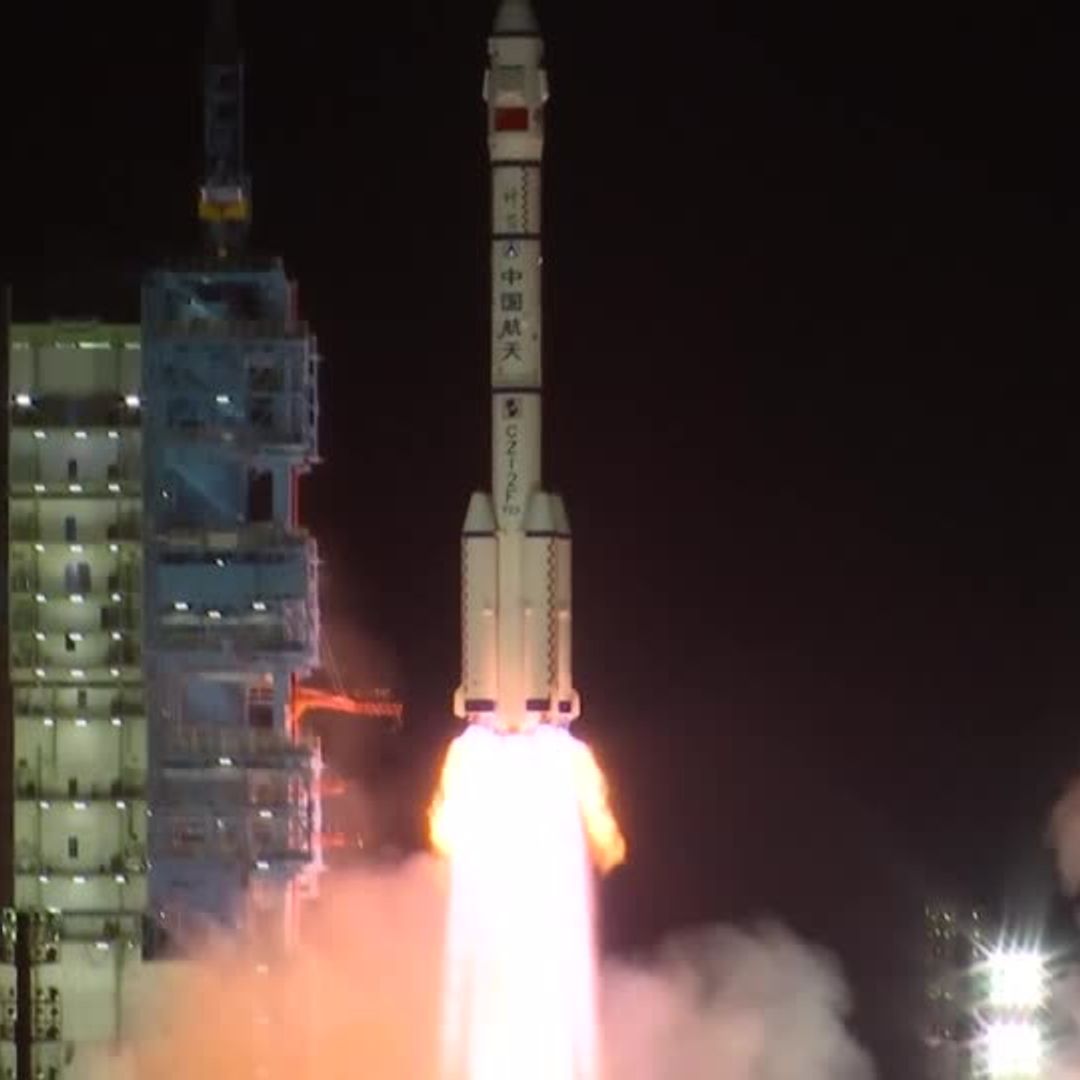
China launched the Shenzhou-23 mission late Sunday from the Jiuquan Satellite Launch Center, sending three astronauts toward the Tiangong space station with one crew member expected to remain in orbit for about a year in China’s latest test of long-duration human spaceflight.
The spacecraft lifted off at 11:08 p.m. Beijing time, Xinhua said. Reuters reported that the planned yearlong stay is part of China’s effort to gather more data on longer missions as it works toward a crewed moon landing by 2030.
Mission commander Zhu Yangzhu was joined by Zhang Zhiyuan and payload specialist Lai Ka-ying, according to Xinhua. State media said the flight was both a station mission and a science mission, with the crew assigned to station operations, space-science experiments and an attempt at a new in-orbit stay record.
Xinhua described Lai as the first astronaut from Hong Kong to fly to space, giving the launch a separate public milestone.
Xinhua’s launch coverage said Shenzhou-23 raised the number of Chinese astronauts sent into space to 30 and marked the 644th flight of the Long March rocket family. Those totals show how often China now flies crewed missions and how routine Tiangong operations have become.
Reuters quoted the China Manned Space Agency as saying the mission would help researchers “explore human adaptability and performance limits” during a longer stay in orbit.
In its report on the launch, Reuters said the extended stay would give China more data on how astronauts cope with longer periods away from Earth and on the demands of keeping a crew in orbit beyond a standard station visit. Those repeated missions have helped China turn Tiangong into a standing platform for work in orbit while building operational experience for more ambitious missions later in the decade. Reuters linked Sunday’s launch to Beijing’s 2030 lunar goal.
Xinhua said crowds and public displays in Hong Kong followed the mission closely. It quoted Lee Cheuk Hei Trevis as saying, “Being able to witness history in person has ignited my imagination about space exploration.”
The next test now shifts to Tiangong. If the mission stays on plan, the yearlong stay will give Beijing another benchmark as it pushes toward longer and more demanding human missions later in the decade.

Yara Halabi
Foreign affairs correspondent covering the Middle East, the Gulf and US foreign policy. Reports from London.