Tulsi Gabbard resigns as Trump's intelligence chief
Tulsi Gabbard resigned as director of national intelligence, with Aaron Lukas set to take over on an acting basis while Trump weighs a successor.
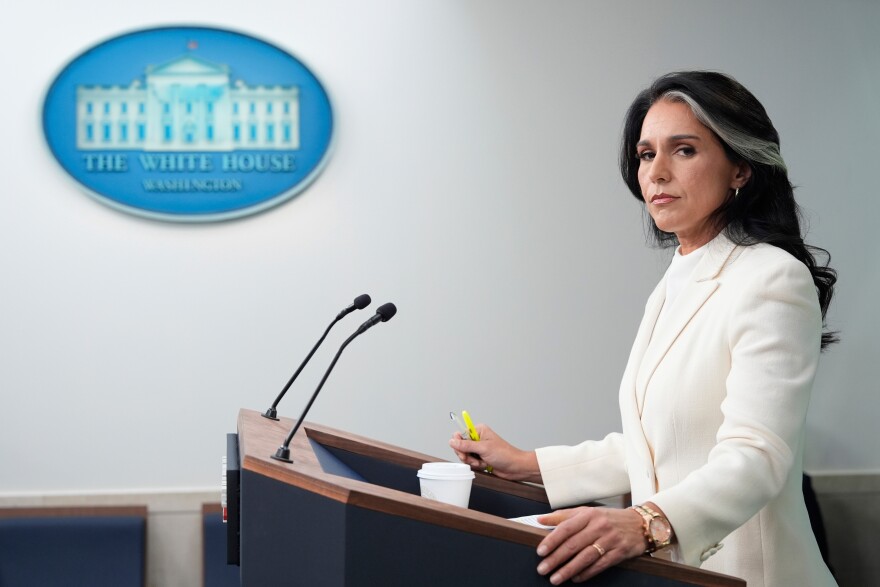
Tulsi Gabbard resigned Friday as President Donald Trump’s director of national intelligence, leaving principal deputy Aaron Lukas in line to serve as acting director and opening an immediate vacancy atop the US intelligence community.
She said she was leaving to care for her husband after a rare cancer diagnosis. NPR reported that she told the White House she would step down by June 30. The departure hands Trump a sudden personnel decision in the Office of the Director of National Intelligence, which coordinates work across 18 intelligence agencies and carries their assessments to the president.
In a statement cited by Reuters, Gabbard said the decision was personal, not policy-driven. “I cannot in good conscience ask him to face this fight alone while I continue in this demanding and time-consuming position,” she said.
Trump praised Gabbard after the announcement. An Associated Press account carried by MPR News quoted him as saying, “Tulsi has done an incredible job, and we will miss her.”
Lukas is expected to take over on an acting basis while the White House considers a permanent replacement. Any nominee would need Senate confirmation, turning the resignation into an early test of who Trump wants overseeing the administration’s intelligence briefings and disputes between agencies.
Sen. Mark Warner of Virginia, the top Democrat on the Senate Intelligence Committee, moved quickly to frame that fight. Reuters reported that Warner said the White House should use the opening to install “an independent, experienced intelligence professional.”
The same MPR/AP account said Gabbard was the fourth Cabinet official to leave during Trump’s second term. That gives the resignation a broader political frame even though Gabbard described the move in personal terms.
The office of the director of national intelligence sits at the center of a system built to reconcile competing intelligence judgments and deliver a common picture to the White House. An acting director can keep that machinery running, but lawmakers will watch for any shift in priorities or in how disputes between agencies are handled.
Even a short vacancy can matter because the office brokers those disputes. Career officials still produce the daily intelligence work, yet the director decides how forcefully to press agencies toward a common assessment and how to present disagreements when the president wants faster answers on a live crisis.
What happens next
For Trump, the resignation removes a senior national-security official while the White House is handling several foreign-policy decisions. If the administration moves quickly on a nominee, senators will have a fresh chance to press for evidence that intelligence assessments can reach the Oval Office without political pressure.
The June 30 timeline reported by NPR suggests the White House had some warning, even if the public announcement still forced an immediate transition. Lukas can provide short-term continuity, but the larger question is whether Trump chooses a figure prized for institutional standing, political trust or both. That decision will shape how lawmakers and the intelligence agencies judge the handover.

Ramona Castellanos
US politics correspondent covering Congress, primaries and the Trump administration. Reports from Washington.