PJM price spike pushes AI buildout into utility politics
A 76 per cent jump in first-quarter power costs on the biggest U.S. grid is turning data-center growth into a fight over who pays for transmission, capacity and reliability.
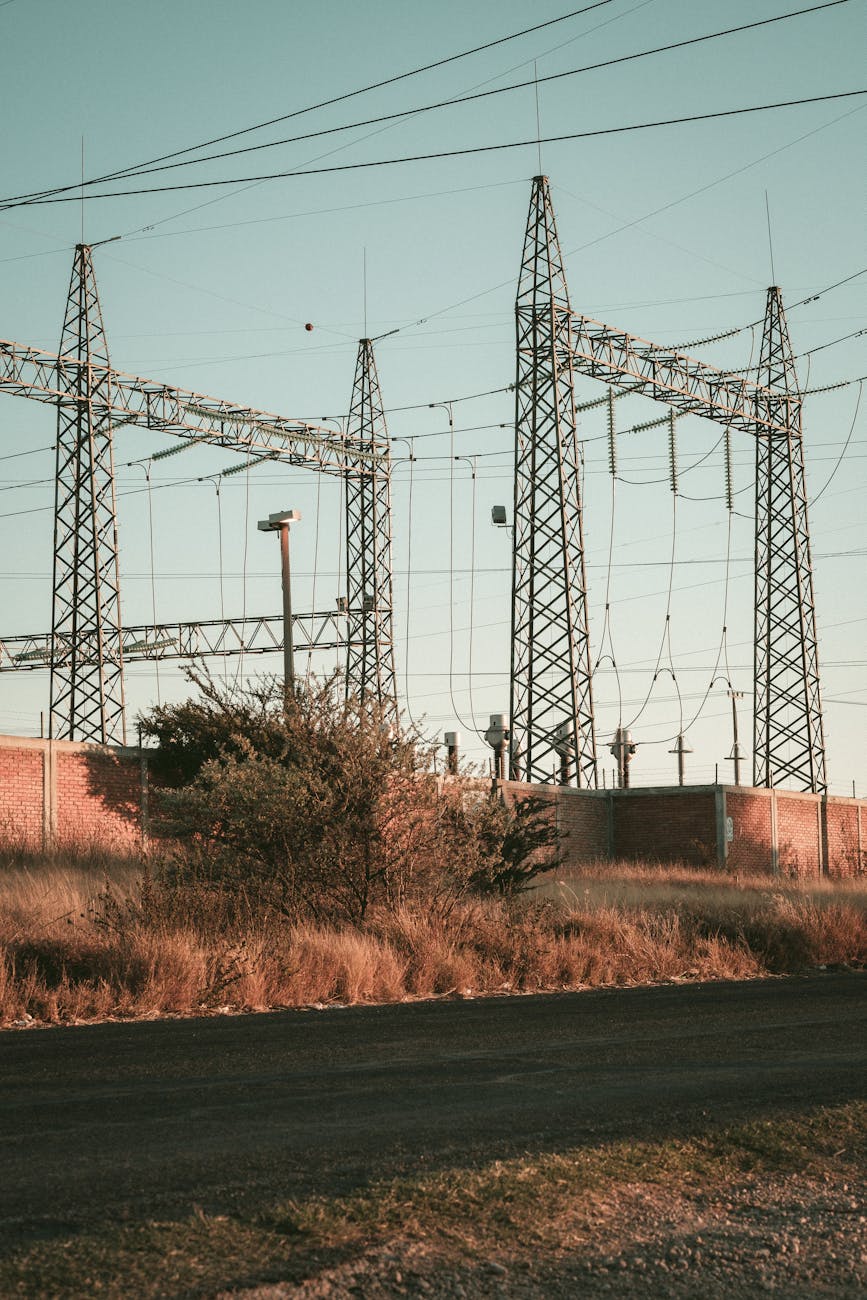
Wholesale power costs on the biggest U.S. grid climbed to an average $136.53 per megawatt-hour in the first quarter, up 76 per cent from a year earlier, as data-center demand tightened conditions across PJM, according to Bloomberg. That figure captures only part of the story. The AI buildout is beginning to reprice basic infrastructure — semiconductors, server leases, and now the electricity markets that underpin everything else.
What once would have stayed inside an electricity-market niche is now a broader industrial-policy question. Large developers can still line up land and chips. Harder is whether PJM Interconnection and the states inside its footprint can connect vast new loads without offloading transmission, capacity and reliability costs onto households and legacy businesses.
Pressure is already visible in market data. E&E News and Utility Dive have both reported on it. Monitoring Analytics, the grid’s independent market monitor, warned that the price impacts on customers “have been very large and are not reversible.” In a filing cited by Utility Dive, the firm calculated that data-center load across PJM’s last three capacity auctions carried roughly $23.1 billion in system costs.
PJM is the country’s largest grid operator. A sustained move in its pricing feeds quickly into rate cases, factory siting and state economic-development strategy. At $136.53/MWh against $77.78/MWh a year earlier, the first-quarter average is not a one-off volatility print. The grid is being asked to absorb a different class of customer.
Data centers arrive as large, concentrated loads on short development timelines and expect firm power around the clock. That profile collides with a market that must procure reserve capacity years ahead, upgrade transmission in stages and hold enough slack to stay reliable when demand spikes. Monitoring Analytics put the problem directly in comments cited by Utility Dive: the aim is to ensure that data centers do not shift costs and risks to other customers.
Where the strain shows
Some of the strain is most visible in PJM’s capacity market. Utility Dive reported a 6,520 MW reserve-margin shortfall in the 2027/2028 base capacity auction, an uncomfortable backdrop for a wave of new high-intensity load. Scrambling for supply while planning transmission for large new campuses turns AI infrastructure economics into a public question about reliability buffers and who finances them.
The board itself has started framing the issue in those terms. Interim chief executive and board chair David Mills said in a recent post that the operator’s approach to large new loads was meant to preserve reliability while creating a “predictable, transparent path for growth.” The operator appears to see the policy problem as a commercial-rules question: under what terms and timelines should data centers connect.
That narrows the space between growth policy and market discipline. PJM wants a clearer connection path. Monitoring Analytics, in material cited by Utility Dive, is pressing the cost-allocation question harder. If large-load customers reserve transmission and capacity on optimistic timelines, existing users absorb costs before the promised demand, tax base or local employment ever arrives.
Geography adds a second layer of tension. Data-center development is concentrated, but PJM’s market effects travel across a much wider footprint. State advocates outside the main development corridors are scrutinising transmission planning and auction design for that reason. A price move of this scale on the country’s largest grid shifts the argument beyond whether northern Virginia can add one more campus. It becomes a question of how a regional market spreads the consequences.
Who pays for growth
State consumer advocates and regulators are not arguing that data centers should be blocked. Their concern is that transmission upgrades, interconnection changes and capacity costs can be socialised long before the tax base or employment gains from a project are clear. A complaint from Maryland’s Office of People’s Counsel over PJM transmission cost allocation shows how quickly those disputes move from technical planning into state-level politics.
By itself, the first-quarter price jump is less a weather or fuel story than an early market stress test. Describing the AI boom through semiconductor orders and data-center announcements was easy. Harder is how the surrounding power system prices the second-order costs. When wholesale prices move this sharply the debate widens from technology ambition to cross-subsidy, queue management and industrial competitiveness.
This is a beat-crossing story at its core. Artificial-intelligence infrastructure drives the load, so the story nominally begins in Technology. Consequences land in power markets, utility regulation and state policy. Higher wholesale costs influence procurement strategies, crowd other large industrial users and intensify arguments over whether new loads should face special tariffs, separate market treatment or tougher readiness tests before securing a place in the queue.
Manufacturers and other industrial customers with no connection to generative AI will watch that debate. For a manufacturer planning an expansion, or a state trying to recruit one, the question is whether power remains available at a price that supports investment. If data-center growth changes that equation, governors, regulators and large employers will push for more explicit rules on who pays.
Investors and policymakers already know that AI uses a great deal of electricity. What is new is visible price evidence from the largest U.S. power market that load growth has outrun the old planning assumptions. If that pattern persists through PJM’s next auction and transmission cycle, the fight over AI infrastructure will become a contest over who bears the cost of keeping the grid running.

Kai Mendel
Technology editor covering fintech, AI and the platform economy. Reports from San Francisco.