Trump 'seriously considering' making Venezuela 51st US state
President Donald Trump said he is 'seriously considering' statehood for Venezuela, extending US citizenship to 32 million Venezuelans and making it the second-most populous US state. Acting President Delcy Rodríguez rejected the proposal while calibrating a restrained response.
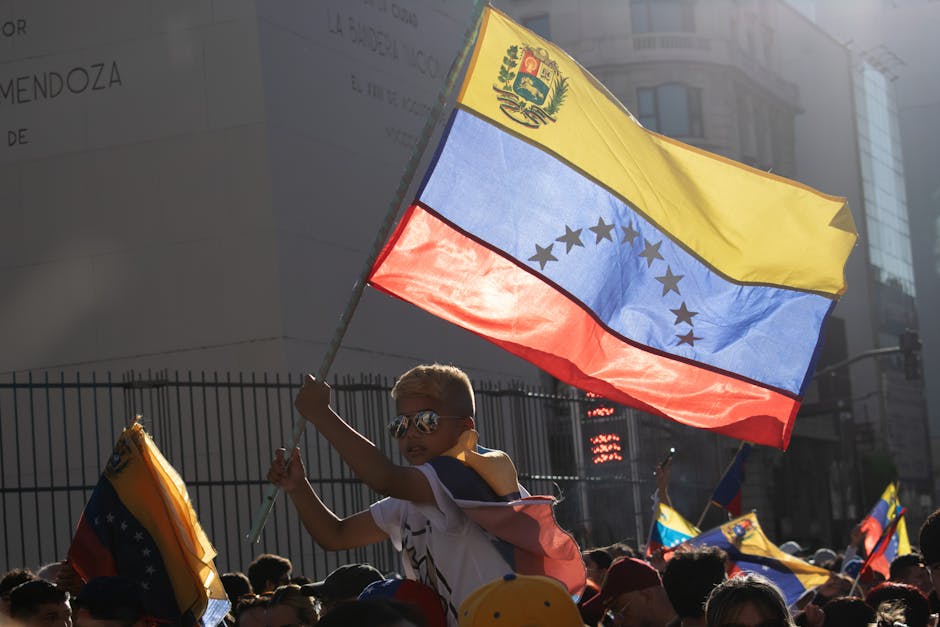
President Donald Trump said he is “seriously considering” statehood for Venezuela during an interview with Fox News, a proposal that would extend US citizenship to the country’s estimated 32 million residents and make it the second-most populous American state behind California.
Delcy Rodríguez, Venezuela’s acting president, rejected the idea on Wednesday. Her response was unusually measured for a government built on anti-American rhetoric, analysts said.
“We will continue to defend our integrity, our sovereignty, our independence, our history,” Rodríguez said in a televised address. “Venezuela is not a colony, but a free country.”
She added: “That would never have been considered, because if there is one thing we Venezuelan men and women have, it is that we love our independence process, we love our heroes and heroines of independence.”
Trump put Venezuela’s oil reserves at $40 trillion in the interview, citing the figure as a central reason for the proposal. Fox News anchor John Roberts repeated the number on air. Venezuela’s heavy-crude deposits are among the largest in the world.
The proposal lands five months after a US military operation captured former president Nicolás Maduro in Caracas on 3 January. Maduro, whose 2018 re-election was rejected as illegitimate by Washington and dozens of allied governments, is awaiting trial. Rodríguez, previously vice-president, has run the country on an acting basis since.
Christopher Sabatini, senior fellow for Latin America at Chatham House, said the muted response reflected a survival strategy rather than ideological softening.
“This is probably the most public and sharp manifestation of the government’s transactional, self-survival approach above everything else right now,” Sabatini told the Associated Press. “It’s better that they hold their tongue, not offend the US right now. Why overreact to a ridiculous claim by Donald Trump?”
Statehood for a foreign territory would require approval from both chambers of Congress and the consent of the territory’s government — a near-impossibility given current dynamics on Capitol Hill and Rodríguez’s public rejection.
The 32 million figure would make Venezuela larger than Texas and second only to California in US state population rankings. Under current apportionment formulas, the new state would hold 55 electoral votes — enough to redraw the presidential map, if any of it ever happened.
The statehood remark also arrives as Venezuela faces an escalating territorial dispute with neighbouring Guyana over the oil-rich Essequibo region, where ExxonMobil is producing roughly 900,000 barrels per day. Rodríguez’s government has kept pressing Caracas’s historical claim to the area even as it tries to rebuild relations with Washington.
Venezuela’s own oil exports hit 1.23 million barrels per day in April, the highest level since 2018, as the transitional government moved to restore output that had collapsed under years of mismanagement and US sanctions.
Neither the White House nor the State Department issued formal statements on Trump’s remarks. Congressional reaction was muted; no senior Republican or Democratic leadership member had addressed the proposal on the record by Thursday afternoon.
Ramona Castellanos
US politics correspondent covering Congress, primaries and the Trump administration. Reports from Washington.