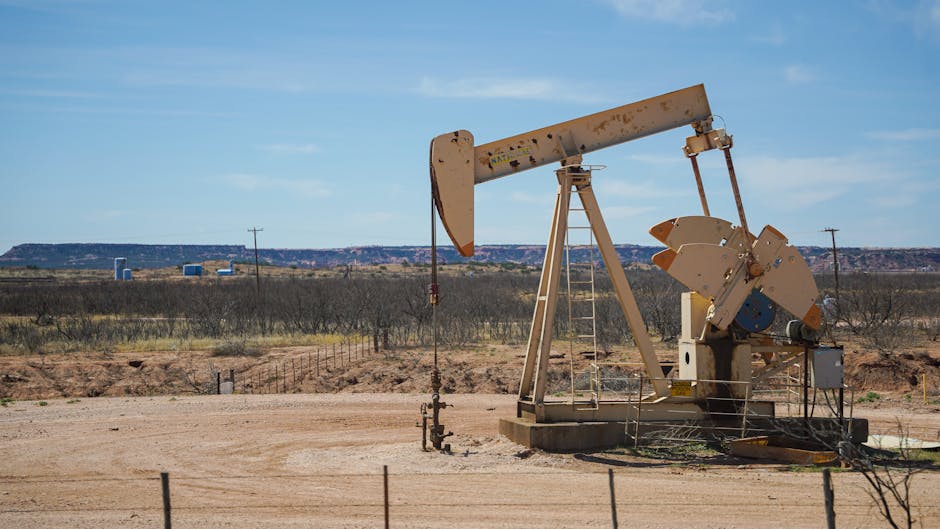
African oil producers face revenue risk as UAE quits OPEC
African oil exporters face a revenue squeeze while import-dependent economies stand to gain from lower fuel costs after the UAE exited OPEC on 1 May, ending 59 years of membership in the producers' group.
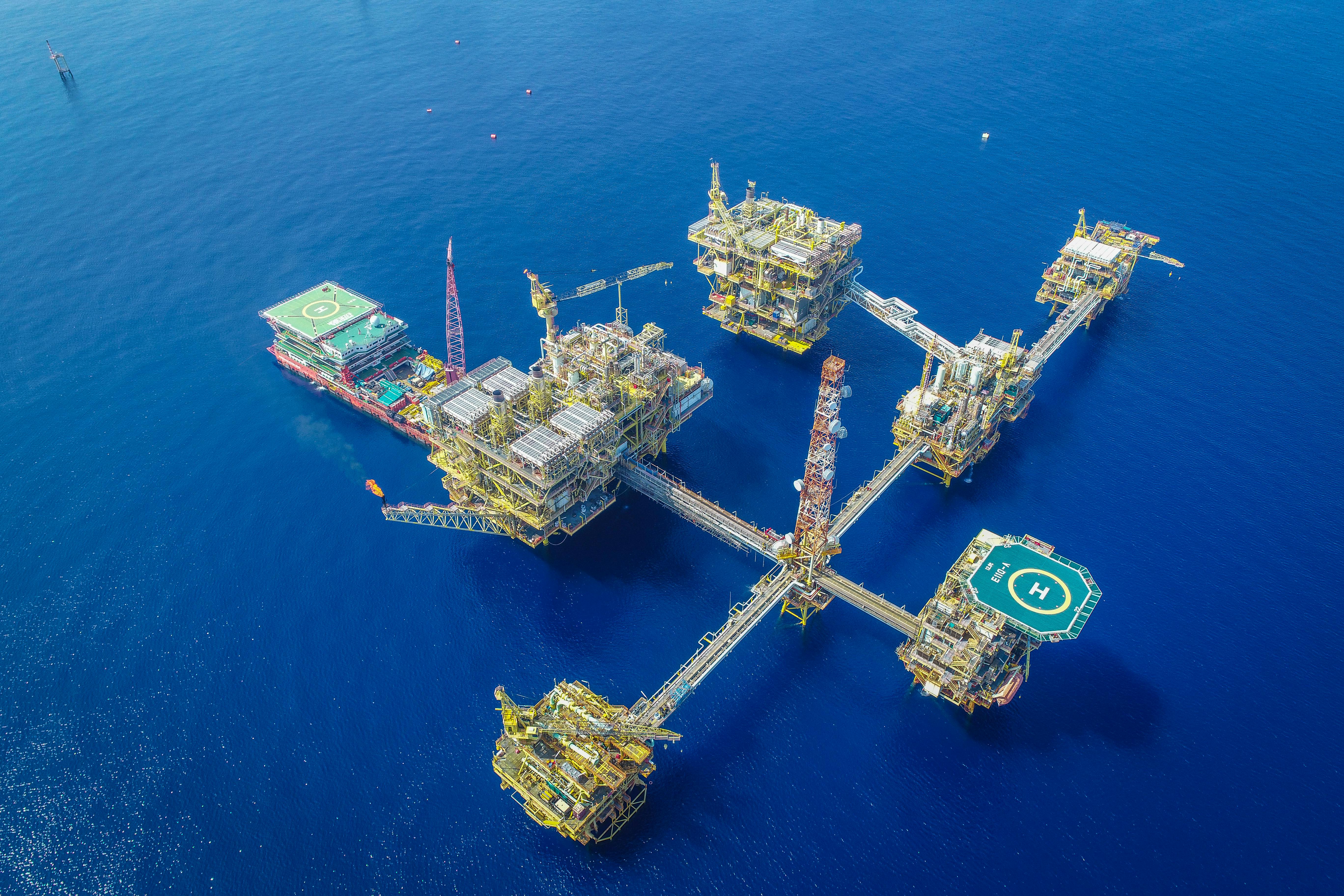
African oil exporters face a revenue squeeze while import-dependent economies on the continent stand to gain from lower fuel costs after the United Arab Emirates exited OPEC on 1 May, ending 59 years of membership in the producers’ group and reshaping the market for crude.
The departure of the world’s third-largest oil producer from the cartel threatens to weaken the price coordination that has underpinned the budgets of Nigeria, Angola, Algeria, Libya, Gabon, and Equatorial Guinea, according to analysts. Those six countries depend on hydrocarbons for the bulk of export earnings and fiscal revenue. For net importers, most of the continent’s 54 countries, cheaper crude could ease balance-of-payments pressures at a moment when global energy markets are already disrupted by the effective closure of the Strait of Hormuz.
“The competitive pressure on African crude intensifies when the UAE operates freely, unconstrained by quota agreements,” said Rolake Akinkugbe-Filani, chief executive of Lagos-based EnergyInc Advisors.
Once free of OPEC production limits, the UAE can increase output by more than 40 per cent to 5 million barrels per day, intensifying competition in markets where sub-Saharan African producers are struggling with declining investment and ageing infrastructure. Pre-war, the UAE produced roughly 3.4 million barrels per day, about 3 per cent of global crude supply. It spent $150 billion expanding capacity before the exit and its state oil company, ADNOC, aims to reach 5 million barrels per day by 2027.
Goldman Sachs said the move “implies upside risk” to its base case for UAE crude output recovery. The bank had previously expected UAE production to reach 3.8 million barrels per day by October 2026. The exit could push that higher once maritime traffic through the Strait of Hormuz normalises. The strait’s effective closure, triggered by the US-Iran conflict, currently constrains Gulf exports, muting the immediate impact on global supply and buying African producers time.
The most exposed
Smaller producers with limited fiscal buffers, Equatorial Guinea and South Sudan, are the most vulnerable to any sustained price decline, according to a Semafor Africa analysis. Neither country has the reserves or diversified revenue base to absorb a prolonged dip in crude prices.
Algeria and Libya are more resilient. Algeria’s economy relies more heavily on natural gas, which trades on different contractual structures less sensitive to spot crude movements. Libya is constrained by internal instability rather than cartel discipline and remains temporarily exempt from OPEC quotas.
Nigeria, Africa’s largest oil producer, faces a more complex calculation. Its upstream revenues are directly exposed to any weakening of the OPEC price floor, but the country’s growing refining capacity, anchored by the Dangote Refinery, could partially offset the loss by capturing more value from domestic processing rather than exporting raw crude. The Nigerian government has not publicly commented on the UAE’s exit.
A divided continent
Not all of Africa loses. The continent’s oil importers, from Kenya to South Africa, could benefit from lower crude prices if the UAE’s departure increases global supply and depresses the cost of refined products. Fuel subsidies in several import-dependent economies have strained public finances; cheaper oil would ease that burden.
Carlos Lopes, a professor at the University of Cape Town’s Nelson Mandela School of Public Governance, said the moment is “both a risk and an opportunity for Africa.”
“At a time when global energy markets are already in flux, this shift adds another layer of uncertainty,” Lopes said. “Reducing vulnerability to oil price fluctuations will require diversifying energy systems, strengthening regional markets, and investing in both traditional and renewable sources.”
Mohamed H’Midouche, chairman of Inter Africa Capital Group, writing in New African magazine, said the exit should force a reckoning among African oil states. “For countries such as Nigeria, Algeria, Libya, Gabon, and Equatorial Guinea, influence in the global energy system is not only about resource endowment, but also about the ability to sustain production, secure infrastructure, attract investment, and build local value chains,” he wrote.
H’Midouche pointed to the proposed African Energy Bank as a vehicle that could help finance new production and refining capacity, reducing the continent’s reliance on imported fuel even as global crude markets realign. “In different ways, both Africa and the UAE are pursuing a similar objective,” he wrote, “regaining control over the tools of energy sovereignty.”
What happens next
The UAE’s exit follows earlier departures by Angola in 2024, Ecuador in 2020, and Qatar in 2019, each driven by disputes over production quotas. But the UAE is by far the most significant producer to leave, with capacity exceeding the combined output of those three predecessors. Its departure also follows years of tension with Saudi Arabia over the UAE’s quota of 3.5 million barrels per day, which Abu Dhabi argued was below its expanded capacity.
Akinkugbe-Filani said the moment demands action from African policymakers rather than passive exposure to global price swings. “This is the moment for African energy ministers and national oil companies to have a sharper, more honest conversation about how we price, market, and monetise our resources going forward,” she said.
For now, the Strait of Hormuz blockade limits how quickly the UAE can bring additional barrels to market. Goldman estimates cumulative Gulf crude production losses of 1.83 billion barrels by December 2026, with global inventories needing replenishment once the strait reopens. That gives African producers a narrow window, measured in months not years, to adapt before the full competitive pressure of an unconstrained UAE arrives.

Pria Kothari
Energy and commodities correspondent covering OPEC, oil markets and the Gulf. Reports from London.