Bond-market crisis warning puts Dimon debt fears in focus
Bond-market crisis warning from Jamie Dimon shows how deficits, Treasury yields and global debt risks could force policy choices.
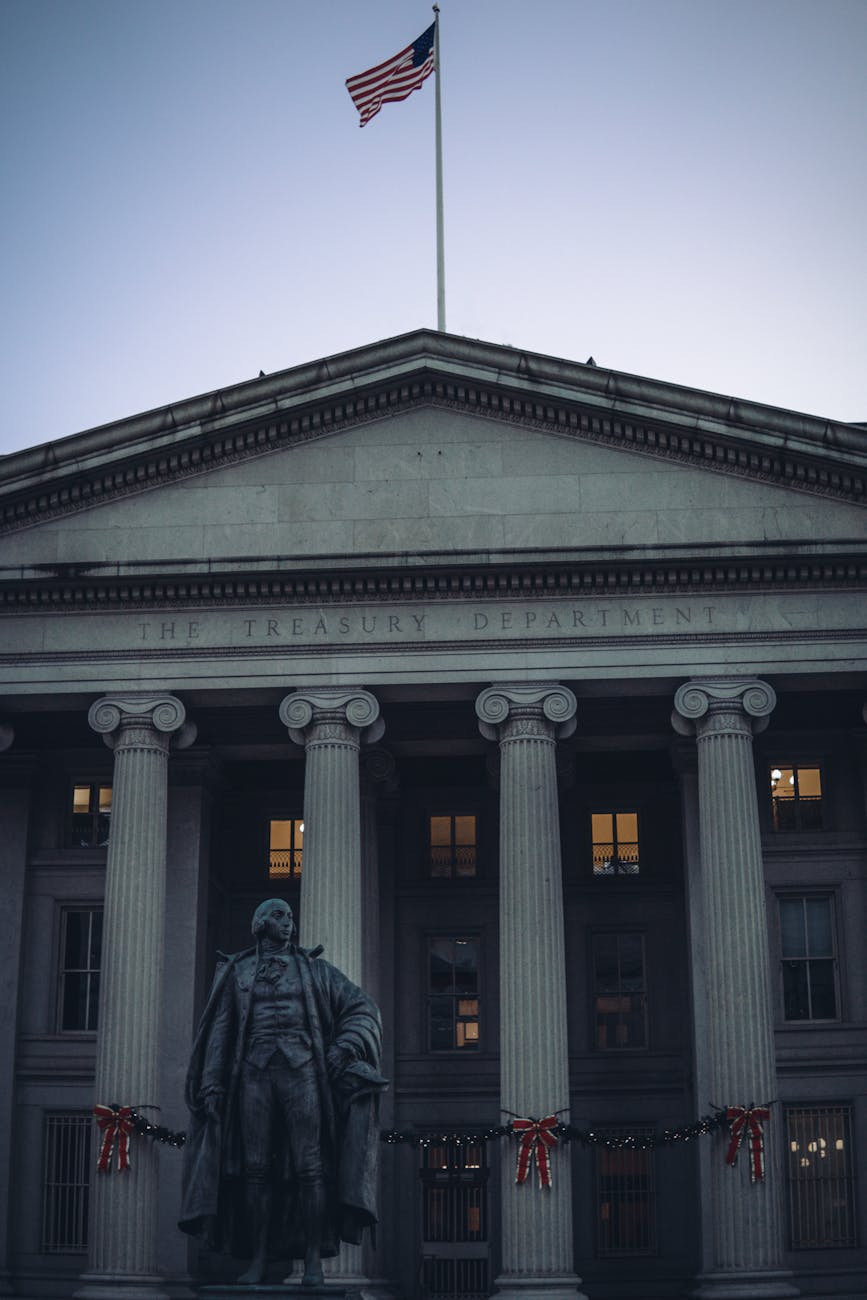
JPMorgan Chase chief executive Jamie Dimon has warned that rising government debt, persistent deficits and geopolitical shocks could eventually force a bond-market reckoning, putting one of Wall Street’s most familiar risk signals back at the centre of the rates debate.
His warning matters because it is not a prediction of a single bad auction or one week of selling. Dimon’s point is broader: if elected officials keep delaying fiscal choices, bond investors may eventually make the adjustment for them through higher yields, weaker demand for long-dated debt and tighter financial conditions across mortgages, corporate credit and government borrowing.
During a conversation with Nicolai Tangen, chief executive of Norges Bank Investment Management, Dimon described the risk as cumulative, according to CNBC’s account of the interview. Public debt was only one part of a wider strain on markets.
“The way it’s going now, there will be some kind of bond crisis, and then we’ll have to deal with it.”
Jamie Dimon, CNBC
Yields are already doing more of the market’s work. The 10-year US Treasury yield was 4.510 per cent on May 26 and 4.465 per cent on May 27, while the 30-year yield stood at 5.028 per cent on May 26, according to recent CNBC Treasury-market coverage. Those levels are not a crisis by themselves. They are the price investors are charging to finance a government that is issuing heavily while the Federal Reserve remains cautious.
What Dimon is warning about
A bond crisis usually starts as a confidence problem, not as a headline event. Buyers ask for more yield to hold longer debt. Governments then face higher interest costs. Higher costs worsen the deficit path, which requires more issuance. At some point, routine funding begins to look self-reinforcing.
Dimon’s second quote explains why he sees that spiral as more than a theoretical risk. The debt burden sits alongside wars, energy risk and private-market opacity.
“The level of things that are adding to the risk column are high, like geopolitics, oil, government deficits.”
Jamie Dimon, CNBC
Private credit, cited at $1.7 trillion in CNBC’s Dimon coverage, is part of that shadow. It does not cause a Treasury sell-off on its own, but it can transmit stress if yields rise quickly and borrowers who refinanced cheaply during the low-rate years discover that private lenders are no longer willing to roll risk at old prices.
Seen that way, the market signal is more important than the personality attached to the warning. Dimon has been early, and sometimes loud, on risks that took time to materialise. Treasury investors do not need to accept his full crisis language to see the constraint. The longer end of the curve is already asking whether US debt can keep expanding without a higher term premium.
The policy trap
Policy makers have fewer easy stabilisers than the scale of the Treasury market suggests. The Treasury can alter auction sizes and maturity mix. The Federal Reserve can cut rates if inflation and employment data justify it. Congress can change taxes or spending. None of those tools is quick, clean or politically painless.
For Treasury Secretary Scott Bessent, the risk is that a market repricing outruns the calendar. Bloomberg reported that Bessent would have limited options to halt a climb in yields if investors demanded more compensation to hold US debt. A bond-market move can compress months of policy argument into days of repricing.
Fiscal arithmetic is also becoming harder to talk around. A CNBC analysis of US debt and deficits cited national debt of $31.4 trillion and noted that the 10-year Treasury note affects borrowing costs for mortgages, auto loans and credit cards. That connection turns an abstract deficit argument into a household and business financing story.
No default would be required to deliver pain. Investors would only need to demand a higher real return. That would lift the government’s debt-service bill, pressure equity valuations and make private borrowers compete more directly with the sovereign borrower at the centre of the system.
The counter-argument
Dimon is not arguing that the debt problem is impossible to manage. In a separate interview covered by Fortune, he paired the crisis warning with a more measured view of the United States’ capacity to adjust.
“I’m not that worried about debt levels… We’ll be able to deal with it.”
Jamie Dimon, Fortune
That caveat matters. The United States still borrows in the world’s reserve currency. Treasuries remain the deepest pool of high-quality collateral. A large part of global finance is built around the assumption that US government debt is the safest asset available, not simply another sovereign credit.
One answer from markets is growth. Some investors believe artificial intelligence and related productivity gains could lift output enough to soften the debt burden over time. GeekWire argued that Wall Street is quietly betting on AI to beat inflation, a view that helps explain why long-term inflation expectations have not broken higher despite large debt loads.
Productivity can improve the denominator in the debt-to-GDP ratio, but it does not determine how quickly Congress spends, how much revenue it raises or how much term premium investors require in the meantime. Markets can believe in future growth and still demand more yield today.
Not only a US story
Global context makes the warning harder to dismiss as a Washington-only fight. Japanese bond yields have reached their highest levels in 40 years, with budget comments from Prime Minister Sanae Takaichi sending what CNBC described as a red flag to bond markets. France, meanwhile, has been trying to narrow its deficit while absorbing the economic drag from war and energy risk.
Different countries face different debt math. The common thread is investor patience. Governments that borrowed cheaply for years are now discovering that inflation risk, supply and politics can change the price of that patience. Long bonds are where the shift tends to show first.
Across sovereign markets, the test is not whether investors still buy government debt. They usually do. The question is what price they demand and how much room that price leaves for fiscal plans built during the low-rate period. That is why Dimon’s warning has a longer shelf life than most market calls.
The Financial Times has warned that America’s hegemonic position is under pressure, with long-term Treasuries still looking expensive against the debt backdrop. That is not the same as saying the dollar’s role is about to collapse. It is a narrower claim: the premium investors once granted US debt may be less automatic.
For investors, the practical signal is not to trade every Dimon interview as an alarm bell. It is to recognise that fiscal risk has moved from the background to the pricing screen. A bond-market shock would not need to look like 2008. It could look like a grind higher in yields that slowly changes what governments, companies and households can afford.
For policymakers, the message is more direct. Bond markets usually give warnings before they give ultimatums. Dimon’s argument is that the warning is already visible. The unanswered question is whether Washington treats it as a market signal or waits until it becomes the constraint.

Marcus Holloway
Markets editor covering UK gilts, sterling and the Bank of England. Previously a fixed-income strategist in the City.