Chinese agents spying in US draw scrutiny on diaspora
Chinese agents spying in US cases are renewing scrutiny of Beijing's alleged pressure on dissidents and diaspora communities abroad.
Two espionage cases in the United States are renewing scrutiny of how Chinese operatives are accused of monitoring dissidents and shaping narratives far beyond China’s borders, turning a foreign-intelligence problem into a domestic security test for US prosecutors.
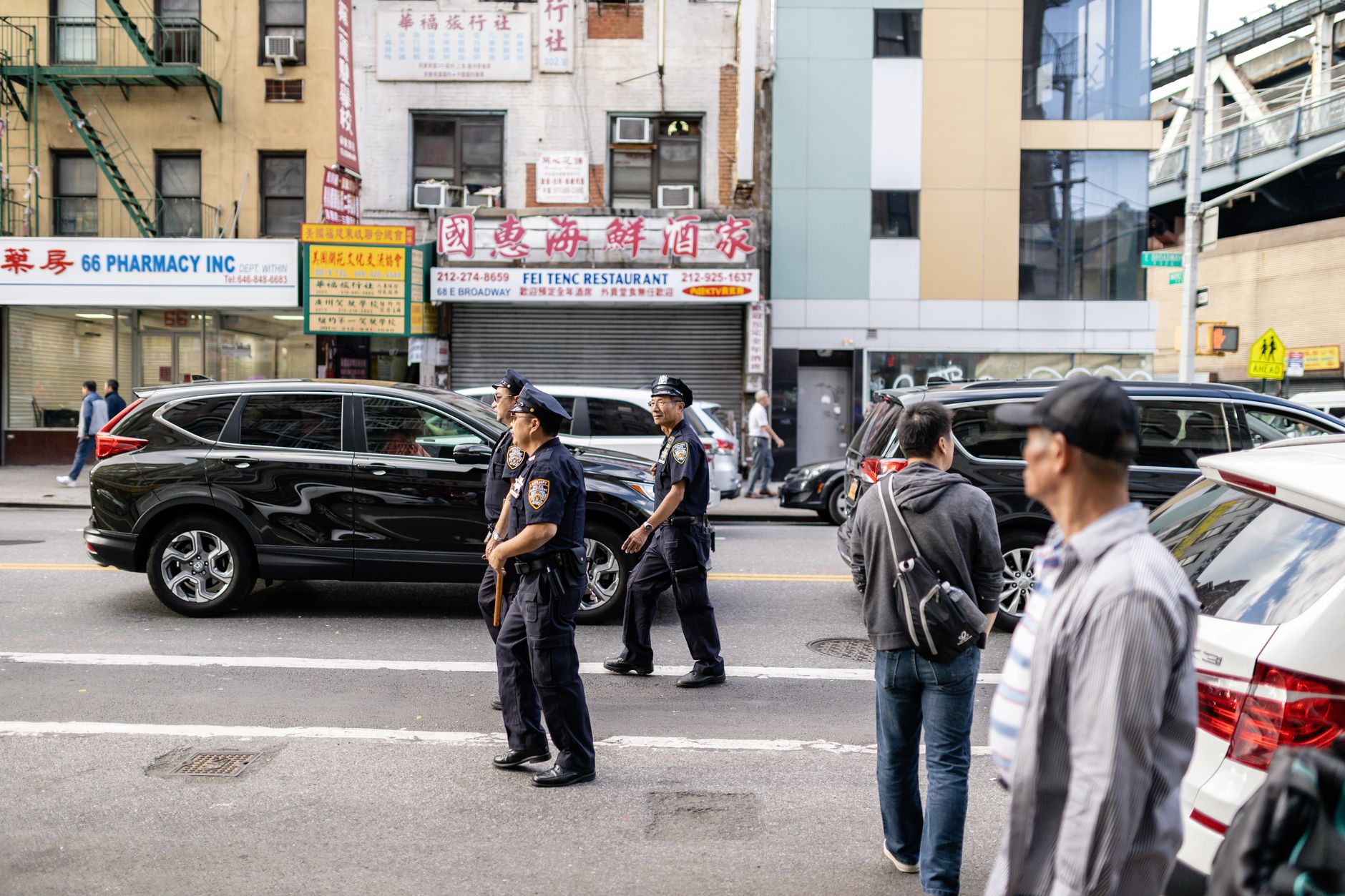
In New York, Lu Jianwang was convicted in a prosecution tied to what authorities described as a covert Chinese police station in Manhattan’s Chinatown. In California, Eileen Wang, the former mayor of Arcadia, agreed to plead guilty to acting as an illegal agent of China after prosecutors said she helped advance Beijing’s interests through a local media operation and political access.
Across both files, the pressure point is hard for law enforcement to police neatly: diaspora communities reached through local relationships, community groups, online messaging and fear for relatives still inside China. Analysts and former intelligence officials see a broader system, one built to be distributed, deniable and difficult to deter one case at a time.
The BBC report that linked the two cases quoted former CIA officer Douglas London describing China’s approach as a “volume enterprise”. London’s wording shifts attention away from a single spy ring and toward many smaller channels that can gather information, apply pressure or carry propaganda without always resembling classic espionage.
Claims about the overseas footprint are broad. The BBC cited more than 100 Chinese police stations across 53 countries, a scale that helps explain why US officials view the issue as a networked security problem rather than a series of isolated local disputes.
China views espionage as a “volume enterprise”.
Douglas London, former CIA officer, BBC
Two cases, one pattern
Lu’s case gave prosecutors the more visible version of the problem: an alleged police outpost operating inside New York’s Chinese community. Reuters reported that Lu, arrested in 2023, was found guilty in the secret-police-station case and could face as much as 30 years in prison. Prosecutors said the station operated out of a Chinatown office building.

Wang’s case was less cinematic, though no less revealing for counterintelligence officials. The Justice Department said the former Arcadia mayor acted at the direction of Chinese officials and used a local news website to publish material favorable to Beijing. Reuters reported that Wang agreed to plead guilty to a single felony count and faced a maximum prison term of 10 years.
Placed side by side, the prosecutions show why US authorities increasingly treat overseas Chinese influence work as more than a diplomatic irritant. One alleged channel was physical. Another ran through influence, reputation and access. Both sit in the grey area where community organizing, political relationships and message control can be difficult to separate until an indictment lays out the trail.
Even the phrase “secret police station” can obscure as much as it clarifies. It invites an image of uniforms and files. The alleged activity described by US authorities and reporters is messier: community leaders, local officials, media platforms and informal pressure points.
John Carman, a former US Secret Service agent quoted by the BBC, warned against treating the cases like a film plot.
This isn’t “Spy Time”.
John Carman, former US Secret Service agent, BBC
His caution cuts both ways. Overstatement can make the allegations sound theatrical. Understatement can miss the reason these cases matter. Beijing does not need every overseas contact to be a trained intelligence officer if the goal is to collect information, shape narratives and make critics feel watched.
The diaspora effect
For dissidents and emigrants, the immediate issue is not the legal architecture of foreign-agent law. It is whether public speech abroad carries a cost at home or inside one’s community. The New York Times’ profile of Li Ying, known online as Teacher Li, placed the problem in that wider frame, describing China’s transnational repression as reaching millions of people in at least 36 countries.

At that level, the prosecutions become a social problem as well as a criminal one. If a dissident believes a local group may relay information, or a family member in China may be contacted after a post, the effect can be self-censorship before any official threat is made. The coercion does not have to be public to work.
Lauryn Williams, the deputy director of the Center for Strategic and International Studies, told the BBC that the pattern was not fading.
I don’t think we’re seeing a downtick here.
Lauryn Williams, CSIS deputy director, BBC
Her assessment addresses one of the central questions raised by the recent cases: whether prosecutions like Lu’s and Wang’s are likely to chill the activity. They may raise the cost for individual participants. They may also make community institutions more cautious. By themselves, they do not erase the incentives that make diaspora monitoring useful to Beijing.
NPR’s reporting on the Arcadia case quoted experts who described Wang’s conduct as part of a broader tradecraft strategy. That does not mean every Chinese community organization is suspect, a claim that would be both wrong and corrosive. It means influence operations can exploit ordinary civic structures precisely because they are ordinary.
What prosecutors can prove
The US response runs into a practical problem. Conduct that worries counterintelligence officials often sits near lawful activity: community outreach, political networking, media publishing and contact with foreign officials. Prosecutors have to prove agency, direction and concealment, not just sympathy with Beijing’s position.
That burden is necessary. It also means many influence networks may remain visible only in fragments. A local political figure may host delegations. A community association may maintain ties with consular officials. A website may publish material aligned with Chinese state narratives. Any one of those facts can be lawful. The legal question is whether someone was acting under direction or control while failing to register or disclose it.
For Washington, the useful lesson is procedural as much as political. A criminal case can identify a defendant, a channel and a statutory violation. It cannot map every informal pressure point inside a diaspora community. That wider work depends on counterintelligence warnings, community trust and a willingness to distinguish foreign direction from ordinary cultural or political engagement.
Prosecutors and analysts are therefore looking at different slices of the same problem. Prosecutors build cases against named defendants. Analysts look for operating patterns across cases, including the mix of surveillance, coercion and propaganda. Both views are needed, but they answer different questions.
Chinese Americans and Chinese nationals in the United States can be harmed twice: first by the possibility of monitoring or intimidation, and second by broad suspicion if authorities and politicians describe the threat carelessly. A useful policy response has to target covert foreign direction without turning diaspora ties into evidence of disloyalty.
US-China competition is usually framed through tariffs, technology controls and military risk. The domestic security dimension is quieter. It is also harder to manage because it runs through neighborhoods, city halls, community media and family networks.
Washington’s next test is not simply whether it can win one prosecution. It is whether it can expose covert direction, protect dissidents and avoid casting a cloud over the communities that are often the first targets of the pressure. Precision is not a legal nicety in these cases. It is the difference between countering influence and amplifying the fear that influence campaigns are meant to create.

Yara Halabi
Foreign affairs correspondent covering the Middle East, the Gulf and US foreign policy. Reports from London.