As commissions vanish, the hidden costs of stock trading come into focus
Commission-free stock trading is now an industry standard — 19 of 22 major brokerages charge zero per trade. But the real costs have simply moved: margin rates ranging from 5.14 to 12.33 per cent, options contract fees of up to $0.65, and execution-quality gaps driven by payment-for-order-flow arrangements. Here is what investors actually pay in 2026.
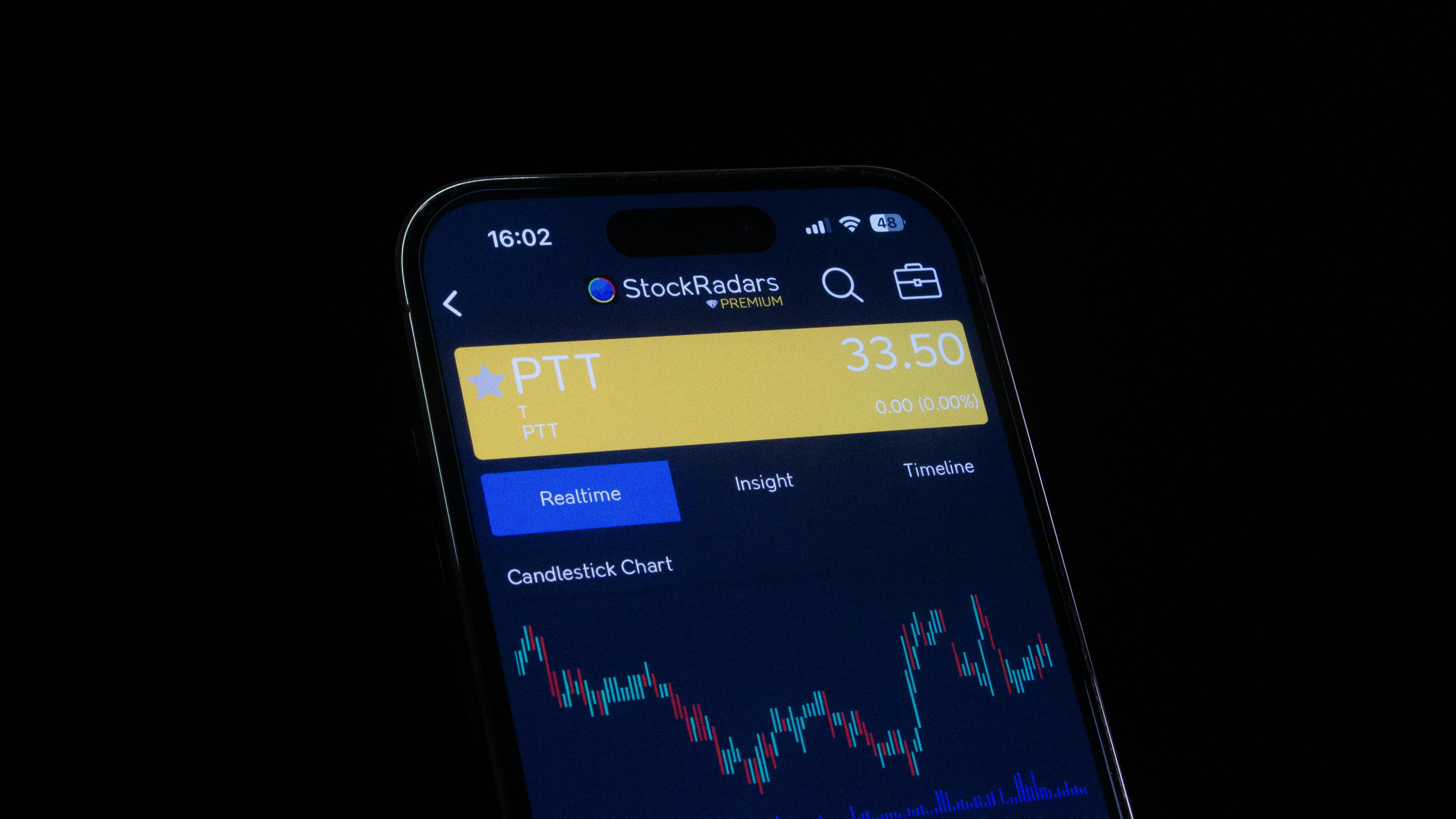
The calculation that drove brokerage commissions to zero was straightforward enough. By 2015, Robinhood had demonstrated that a mobile app with no per-trade fees could onboard millions of first-time investors. The incumbent brokerages — Fidelity, Charles Schwab, E*TRADE — faced a choice: match zero or lose the next generation of retail traders to a startup. One by one, they matched.
By mid-2026, the result is near-total capitulation. Nineteen of 22 major US brokerages now charge nothing for stock and ETF trades, according to a Westmount Research fee analysis published in May. The three holdouts are niche operators serving institutional or high-net-worth clients. For the retail investor, the headline price of a trade has collapsed.
But Westmount’s fee comparison, which normalises costs across 22 platforms, arrives at a different conclusion than the marketing would suggest: the bill did not disappear. It moved. And it moved into places most investors are not trained to look.
The margin-rate spread
An investor who borrows $100,000 on margin from Charles Schwab pays an annual interest rate of 12.33 per cent — roughly $12,330 in interest per year. The same margin balance at Interactive Brokers (IBKR Lite) costs 5.14 per cent, or $5,140. The $7,190 annual difference has nothing to do with commissions, and everything to do with how each broker prices the services that sit behind the trade button. Options contracts add another layer: Robinhood, Webull, and SoFi charge $0 per contract, while Fidelity, Schwab, and E*TRADE levy $0.65, according to PriceWorld’s 2026 investing fee tracker. For a trader executing 100 contracts per month, that amounts to $780 per year in fees that never appear on a commission schedule.
So if commissions are universally zero, where does the revenue come from?
That question has occupied academic researchers and securities regulators for half a decade. Does a platform that earns revenue every time its users trade have an incentive to encourage them to trade more often? A 2025 study in the Journal of Finance measured the “actual retail price” of equity trades inclusive of execution quality — the spread, the price improvement, the routing delay — and found round-trip costs ranging from 0.07 per cent to 0.46 per cent depending on the broker’s payment-for-order-flow arrangements. A trade at one broker is not the same trade at another, even when both are listed as free.
Robinhood, which pioneered zero-commission trading in 2013, relies on payment for order flow for most of its revenue. Market makers such as Citadel Securities pay Robinhood to route customer orders to them rather than directly to exchanges. The broker captures the payment; the customer may capture a slightly worse execution price. The OMFIF, in a 2022 note on financial gamification, catalogued the design patterns — confetti animations on completed trades, push notifications flagging price movements, trending-stock leaderboards — that critics argue nudge users toward higher-frequency, lower-conviction trading.
“Every broker advertises $0 stock trades,” the Westmount/PriceWorld analysis notes. “The real differences are in margin rates, options fees, robo-advisor costs, and transfer fees. We compare what actually matters.”
Because the comparisons reveal a fragmented field where no single platform wins every category. The choice that matters is not which broker has zero commissions — they all do — but which bundle of hidden costs and platform features matches the investor’s behaviour.
Where each platform stands
Fidelity emerges as the consensus leader for overall value in 2026 rankings from CNBC Select, Investopedia, and Money.com. Its pitch is three-part: zero expense ratios on a suite of proprietary index funds, a 4.95 per cent cash sweep on uninvested balances, and access to more than 20 independent research providers — Morningstar, Argus, Ned Davis, Thomson Reuters — at no additional cost. For a buy-and-hold investor who trades infrequently and wants deep research without paying for a Bloomberg terminal, the combination is difficult to match.
Charles Schwab, which completed its acquisition of TD Ameritrade in 2025, now offers the thinkorswim trading platform to all retail clients at no extra charge. The platform’s institutional-grade charting — 400-plus technical studies, custom scripting, backtesting, Level II order books — makes it the default choice for technically oriented traders, according to the Investing and Retirement May 2026 rankings. Schwab remains the research king, the analysis concluded, citing free access to Morningstar and Credit Suisse reports alongside the thinkorswim toolset. The trade-off is cost: Schwab’s options contracts and margin rates sit at the high end of the competitive set.
Interactive Brokers occupies a specific niche. Its IBKR Lite tier — $0 stock commissions, no account minimum — is the entry point for retail investors. Yet the platform’s real differentiator is margin pricing: at 5.14 per cent, IBKR’s blended rate undercuts every major competitor by at least 2 percentage points. For active traders and those who use leverage strategically, the savings on a six-figure margin balance compound to thousands of dollars annually. The platform also offers access to 150 global markets across 34 countries, a feature that most US-only brokers cannot replicate.
The accessibility trade
Then there is the accessibility question. Opening a brokerage account, for most of the investing public, was once a multi-day process involving paper forms, minimum-deposit requirements, and enough friction to deter the uninitiated. Robinhood’s mobile-first onboarding — identity verification completed in minutes, fractional shares purchasable for as little as $1 — reset expectations across the industry. Fidelity, Schwab, and Webull have all now matched the fractional-share minimums, but none matches Robinhood’s three-minute account-opening flow.
“The barrier is mostly psychological, not practical,” the Rational Growth editorial team noted in its step-by-step guide for first-time investors. “Opening a brokerage account today is simpler than most people imagine — and fractional shares make it accessible with as little as $1.”
That accessibility has a flip side. Webull, which like Robinhood charges $0 per options contract and offers fractional shares at a $5 minimum, layers on a suite of technical tools — 50-plus indicators, pre-market and post-market trading from 4am to 8pm Eastern, advanced order types — that appeal to active traders. The risk, flagged by sceptics of gamified design, is that a novice investor downloading an app for long-term wealth-building ends up day-trading leveraged ETFs on a platform engineered to maximise engagement rather than returns. And the data support the concern: accounts that trade most frequently systematically underperform buy-and-hold portfolios, a pattern documented across multiple brokerages in the Journal of Finance execution-cost study.
“Commission-free trading is now table stakes,” the Investing and Retirement analysis summarised. “Platforms that stand out offer meaningful extras — high-yield cash sweeps, retirement accounts, fractional shares, advanced charting, and access to alternative assets.”
The SEC’s ongoing scrutiny of brokerage design — the Gensler administration has signalled that a formal rule on payment for order flow could arrive before the end of 2026 — may reshape the competitive landscape again. If PFOF is banned or capped, brokers that built their revenue model on routing customer orders to wholesalers will need to find new income streams. Those that already charge for margin, options, and research — Fidelity, Schwab, Interactive Brokers — would face less disruption. Robinhood and Webull, which earn a larger share of revenue from order-flow payments, would have the most to lose.
For the retail investor in mid-2026, the practical takeaway stands: zero-commission trading has democratised market access in the way its advocates promised. The remaining task is understanding what each platform charges for the services that sit one layer beneath the trade — and whether those costs align with how often, and why, you trade.

Kai Mendel
Technology editor covering fintech, AI and the platform economy. Reports from San Francisco.